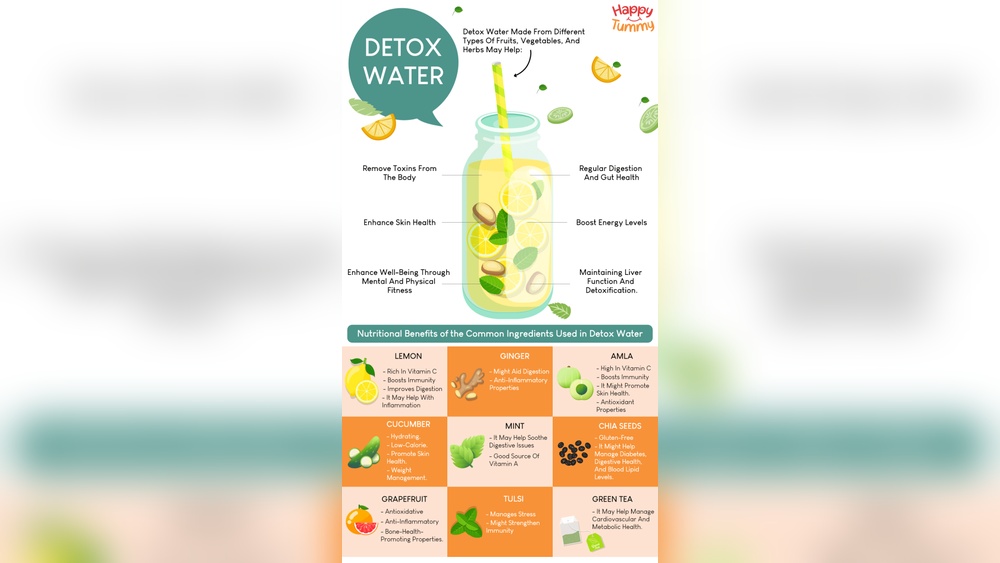
Every day, your body faces toxins from food, air, and even stress. Many people look for ways to remove these harmful substances and feel healthier. One of the simplest, most effective ways to support your body’s natural detox process is by drinking enough water.
But how does water really help detox the body? Let’s explore this topic in detail, using research, real-life examples, and practical tips you can use right away.
Understanding Detoxification And The Role Of Water
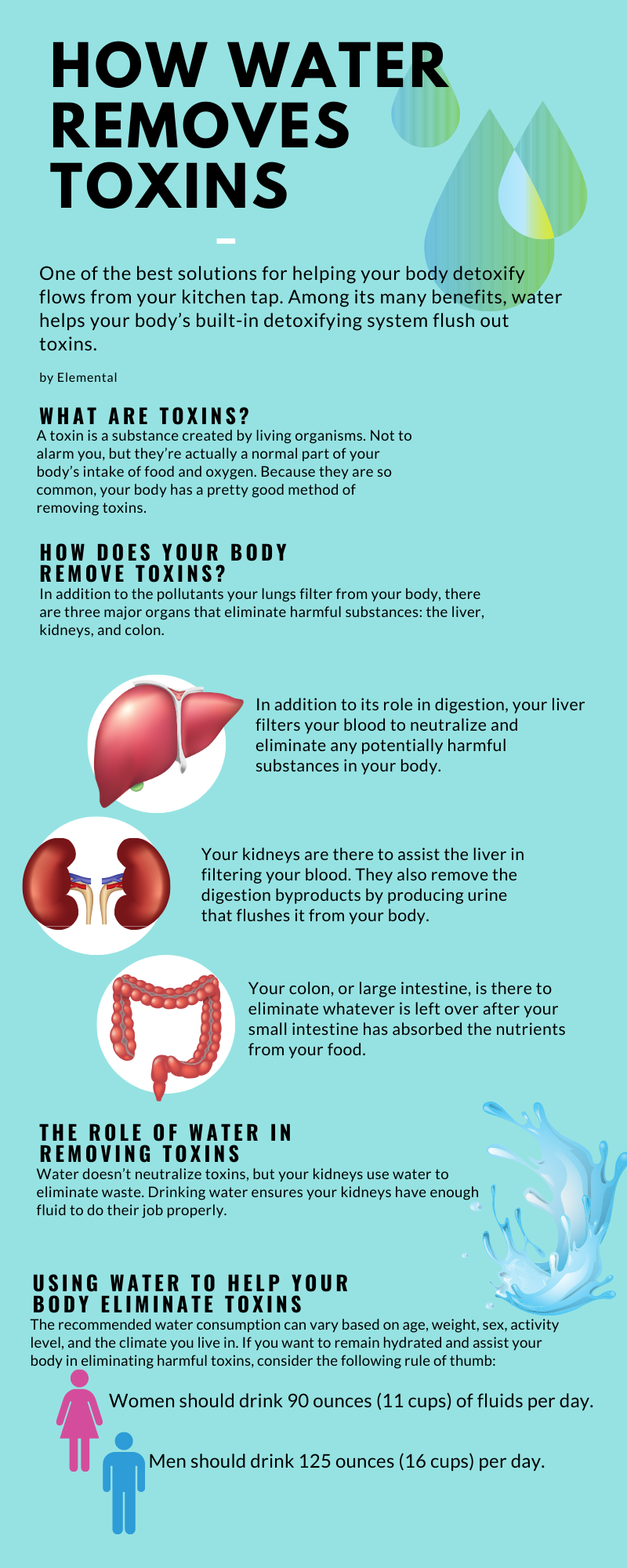
Detoxification is the process your body uses to get rid of unwanted chemicals and waste. Your liver, kidneys, skin, lungs, and digestive system all play a part in this process. While detox diets and supplements are popular, the truth is that your body already has powerful systems to keep you healthy. Water is essential for these systems to work well.
Water acts as a carrier. It moves nutrients into your cells and helps flush waste out. Without enough water, your organs can’t function at their best. This can lead to the build-up of toxins, causing fatigue, headaches, and even illness.
How Water Supports The Body’s Detox System
Your body uses water in many ways to remove toxins. Here’s how the process works:
1. Kidney Function
Your kidneys are like natural filters. They use water to remove waste from your blood and send it out in your urine. Each day, your kidneys filter about 120 to 150 quarts of blood and produce 1 to 2 quarts of urine. If you don’t drink enough water, your urine becomes more concentrated, and it’s harder for your kidneys to remove waste. This increases the risk of kidney stones and urinary tract infections.
2. Liver Function
The liver breaks down toxins and turns them into harmless substances. It uses water to create bile, which is needed to carry waste products out of your body. Dehydration slows down this process and can cause toxins to build up in your system.
3. Digestion And Elimination
Water helps your digestive system break down food and absorb nutrients. It also softens stool, making it easier to pass. Without enough water, you may suffer from constipation, which means waste stays in your body longer.
4. Sweating And Skin Health
When you sweat, your body releases toxins through your skin. Water is needed to make sweat. Staying hydrated also keeps your skin healthy and helps prevent acne, which can be made worse by toxins trapped under the skin.
5. Breathing And Lung Function
Your lungs remove carbon dioxide, a waste product, every time you breathe out. Water keeps the mucous membranes in your lungs moist, making it easier to get rid of waste gases.
Why Adequate Hydration Matters
Most adults need about 2 to 3 liters of water a day. The exact amount depends on your age, weight, activity, and climate. Here’s a quick summary of how much water your organs need for detox:
| Organ/System | Main Detox Function | Water Needed per Day |
|---|---|---|
| Kidneys | Filter blood, produce urine | 1.5-2 liters |
| Liver | Process toxins, make bile | 0.5 liters |
| Digestive System | Move waste, absorb nutrients | 0.5-1 liter |
| Skin | Sweat out toxins | 0.5 liters |
Note: These are average needs. High temperatures, exercise, or illness may increase your water requirement.
Practical Examples Of Water’s Detox Effects
Consider someone who drinks only 1 liter of water per day compared to someone who drinks 2. 5 liters. The person with higher water intake will usually have clearer urine, better digestion, and fewer headaches. Athletes who hydrate well recover faster and get sick less often.
People with chronic constipation often see improvement just by drinking more water.
A 2013 study published in the journal Nutrition Reviews found that increasing water intake improves kidney function and can help prevent urinary tract infections. Another study by the CDC showed that people who drink enough water have healthier skin and better digestion.
Credit: elementalbottles.com
Signs You Need More Water For Detox
It’s not always easy to know when your body needs more water. Look for these signs:
- Dark yellow urine or strong smell
- Dry skin or lips
- Headaches and tiredness
- Constipation
- Muscle cramps
If you notice these symptoms, try increasing your water intake over a few days and watch for improvement.
Step-by-step Guide To Using Water For Detox
1. Start Your Day With Water
Drink a glass of water as soon as you wake up. This helps rehydrate your body and kick-starts your metabolism.
2. Spread Water Intake Through The Day
Don’t drink all your water at once. Aim for one glass every two to three hours.
3. Drink Before Meals
Having a glass of water 20 minutes before meals supports digestion and may help you eat less.
4. Use Water To Replace Sugary Drinks
Swap soda, juice, and energy drinks for water. This reduces your toxin load and calories.
5. Monitor Urine Color
Pale yellow urine is a good sign of hydration. If it’s dark, drink more water.
6. Add Fruits And Vegetables
Foods like cucumber, watermelon, and oranges are high in water and support detox.
7. Adjust For Activity And Weather
On hot days or during exercise, increase your water intake by 500–1000 ml.
Credit: www.thewellnesscorner.com
Common Problems And Solutions
Problem 1: Forgetting To Drink
Many people simply forget to drink water during a busy day. Set reminders on your phone or use a reusable water bottle as a visual cue.
Problem 2: Disliking The Taste
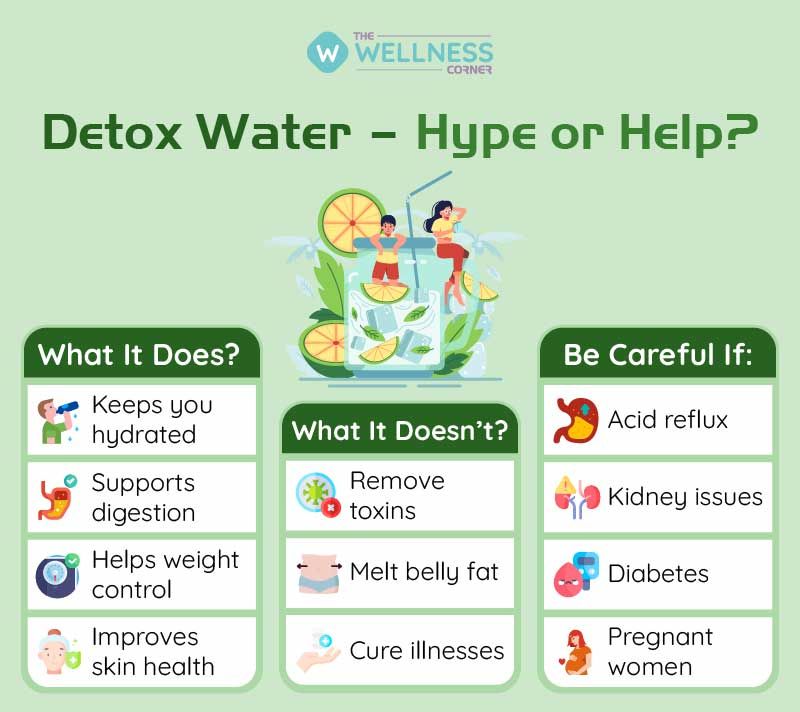
If you find plain water boring, add a slice of lemon, lime, or cucumber for flavor. Herbal teas are also a good option, but avoid too much caffeine.
Problem 3: Frequent Urination
At first, you may need to use the bathroom more often. This is normal and usually settles after a few days as your body adjusts.
Problem 4: Not Sure How Much Is Enough
Check your urine color and aim for pale yellow. For most adults, 2 to 3 liters a day is a safe target.
Problem 5: Medical Conditions
If you have kidney, heart, or liver disease, talk to your doctor before increasing your water intake. Too much water can be dangerous in some cases.
Tips For Maintaining Healthy Hydration
- Carry a water bottle with you at all times.
- Drink water before, during, and after exercise.
- Eat water-rich foods such as lettuce, celery, and strawberries.
- Limit caffeine and alcohol as they increase water loss.
- Check in with your thirst often and drink when you feel thirsty.
Here’s a summary of smart hydration habits:
| Tip | Reason | How to Apply |
|---|---|---|
| Drink with meals | Improves digestion | One glass before eating |
| Use reminders | Prevents forgetting | Phone apps or alarms |
| Add fruit slices | Better taste | Lemon, cucumber, berries |
| Choose water over soda | Reduces toxins | Carry water, avoid sugary drinks |
Non-obvious Insights Most Beginners Miss
First, even mild dehydration (just 1–2% loss of body weight in water) can slow down your body’s detox system. This small amount of water loss can happen quickly in hot weather or after exercise, so it’s important to drink before you feel thirsty.
Second, water quality matters. Using filtered or clean tap water is best. Polluted water can add toxins instead of helping you remove them. Always check your local water safety reports or use a water filter if needed.
Frequently Asked Questions
How Much Water Should I Drink Daily For Detox?
Most adults need 2 to 3 liters per day, but your needs may be higher if you exercise, live in a hot climate, or are pregnant. Use urine color as a guide: pale yellow means you are well hydrated.
Can I Drink Too Much Water?
Yes, drinking too much water too quickly can lead to water intoxication or hyponatremia, which is dangerous. Spread your water intake through the day and avoid drinking large amounts in a short time.
Does Coffee Or Tea Count Towards My Water Intake?
Yes, but only partly. While coffee and tea provide fluids, they also act as mild diuretics, increasing water loss. Try to balance caffeinated drinks with plain water.
Are Detox Diets Better Than Just Drinking Water?
There’s no strong evidence that detox diets work better than a healthy diet and enough water. Your body’s organs do most of the detox work naturally if you support them with hydration and nutrition. See the CDC hydration guidelines for more details.
What If My Tap Water Isn’t Safe?
If you’re unsure about your tap water, use a certified filter or buy bottled water. Unsafe water can add toxins, so always choose a trusted source. For more, visit World Health Organization.

Credit: www.healthline.com
Key Takeaway
Drinking enough water is one of the simplest, most effective ways to support your body’s detox process. By staying hydrated, you help your kidneys, liver, skin, and digestive system remove waste and keep you healthy. Remember to drink regularly, adjust for your needs, and choose clean water.
Your body’s natural detox systems work best when you give them the water they need.

Hasan Al Sarker is a Reverse Osmosis Specialist. He has worked for many years to ensure safe drinking water for all. His research paper has been published in several journals, including Issue, Medium, and Slideshare. He is recognized as a water doctor among specialists though he did not attend medical college.
Besides working as a researcher of reverse osmosis technology, he is also very fancy with the kitchen and cooking. His guides are reading thousands of people every day. As a head of content, he is responsible for all the published articles at RO System Reviews.