
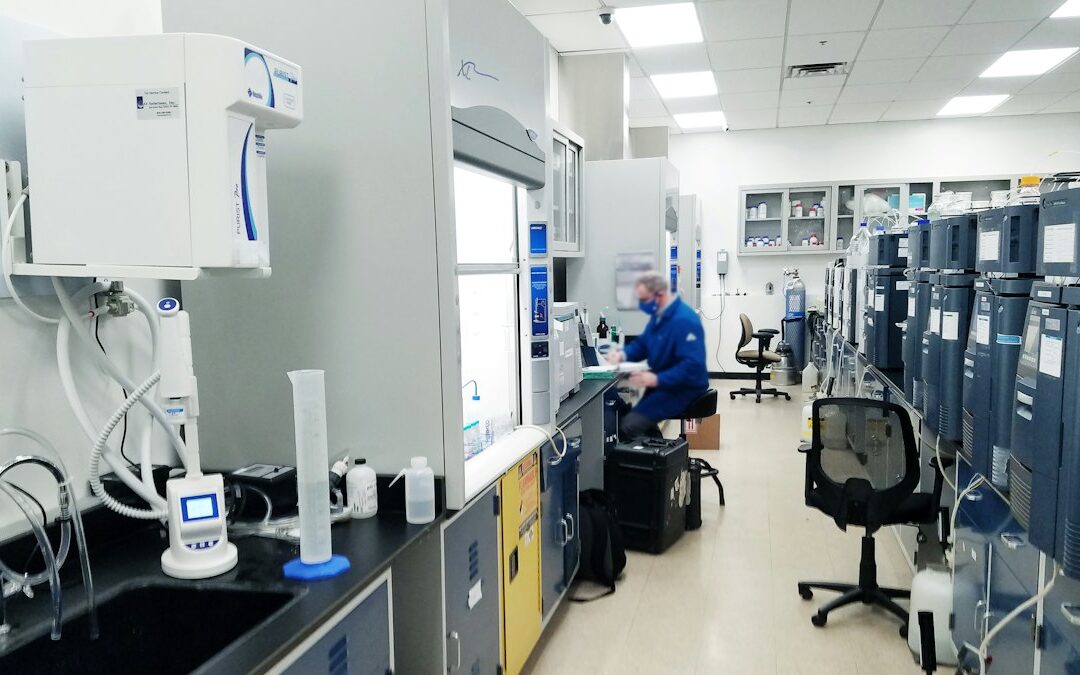
A PFAS laboratory report can contain dozens of analytes, tiny concentrations and unfamiliar qualifiers. Reading the units and reporting limits correctly matters more than a single headline number.
Check the sample identity
Confirm the address, sample location, collection date and whether the sample came from untreated tap water or after a filter. Check the laboratory name and analytical method. A result from a different faucet or date may not represent the water you drink today.
Understand the units
PFAS concentrations in drinking water are commonly expressed as nanograms per liter (ng/L), approximately equivalent to parts per trillion for dilute water. One microgram per liter equals 1,000 nanograms per liter. Mixing these units can lead to a thousandfold interpretation error.
Read each analyte separately
PFOA, PFOS, PFHxS, PFNA, PFBS and other PFAS are distinct substances. A report that says ‘total PFAS’ may refer only to the sum of the chemicals included in that laboratory’s test panel. It does not prove that every possible PFAS compound was measured.
What ND and qualified results mean
ND means not detected at the applicable analytical threshold, not necessarily absolute zero. The method detection limit and reporting limit may differ. J or estimated flags can indicate a concentration with greater uncertainty. Ask the lab for its legend rather than assuming the meaning of every qualifier.
Compare with the correct standard
Identify whether you are reading a federal drinking water standard, a state-specific limit, a health advisory or a laboratory reference value. These are not interchangeable. Regulatory requirements can change, so use current EPA and state drinking-water pages. A one-time result is not necessarily the same as a regulatory compliance determination.
What to do with an elevated result
Contact your water supplier or health department for context. For a private well, discuss confirmation sampling and treatment with a qualified specialist. Select equipment based on verified claims for the specific PFAS and retest treated water to confirm performance.
Practical checklist
- Identify the contaminant and use a qualified laboratory for confirmation.
- Read the manufacturer’s contaminant-specific performance data rather than generic marketing claims.
- Follow maintenance schedules and verify treated-water quality when necessary.
- Consult your local water supplier or health department for location-specific guidance.
Further reading
For background, see our related water quality guide and the U.S. EPA’s technical information. This article is educational and is not a substitute for a laboratory assessment or site-specific engineering advice.

Hasan Al Sarker is a Reverse Osmosis Specialist. He has worked for many years to ensure safe drinking water for all. His research paper has been published in several journals, including Issue, Medium, and Slideshare. He is recognized as a water doctor among specialists though he did not attend medical college.
Besides working as a researcher of reverse osmosis technology, he is also very fancy with the kitchen and cooking. His guides are reading thousands of people every day. As a head of content, he is responsible for all the published articles at RO System Reviews.