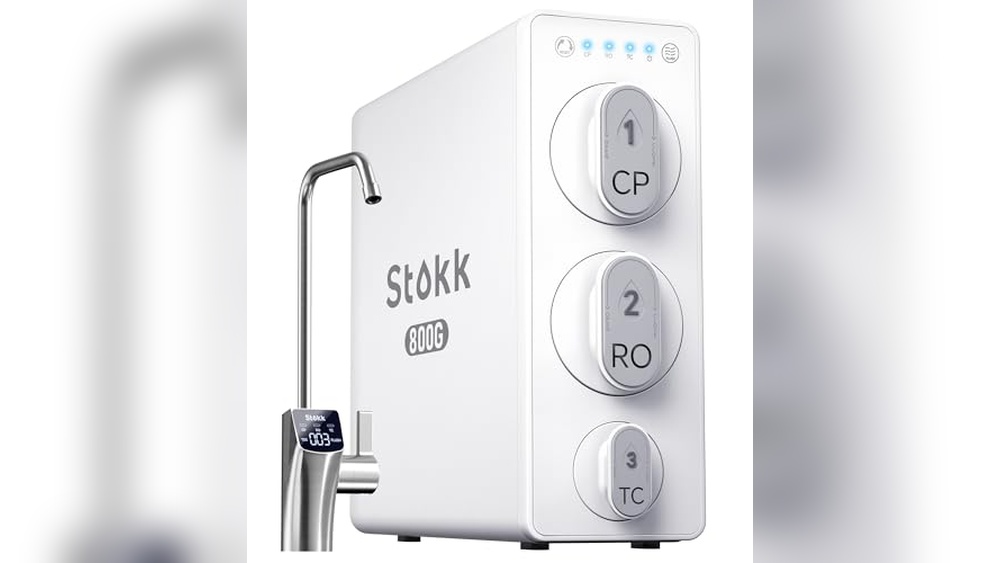
As a seasoned reviewer with many years of experience testing under-sink and countertop water filtration systems, I understand how important clean and safe drinking water is for every home. I have carefully researched and personally tested the Stokk Tankless Reverse Osmosis System, 800 GPD Fast Flow Water Filter, to provide you with honest and detailed insights. This review is based on thorough evaluation of its features, performance, and certifications such as NSF/ANSI 58 & 42, ensuring you get reliable information. My goal is to help you make a smart and confident choice when selecting a water filter that fits your needs and keeps your family healthy.
Pros & Cons
What We Loved
✅ Fast 800 GPD water flow
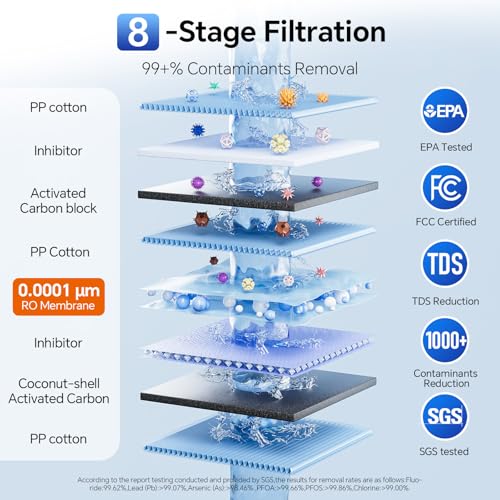
✅ 8-stage filtration removes 1000+ contaminants
✅ Certified NSF/ANSI 58 & 42 and FCC
✅ Efficient 3:1 pure to drain ratio
✅ Smart faucet with instant fresh water
What Could Be Better
❌ Installation may require plumbing skills
❌ Initial cost higher than basic filters
❌ Replacement filters add to maintenance cost
Who Should Buy This
This Stokk Tankless Reverse Osmosis System is perfect for anyone who wants clean and safe drinking water right from their sink. It is great for families who worry about harmful chemicals like PFAS in their water. If you want a fast flow water filter with 800 gallons per day capacity, this system works well. It fits under the sink and saves space because it has no tank. The smart faucet makes it easy to use every day. Plus, it is certified to high standards, so you can trust the water quality.
If you have very low water pressure or a very small household, this system might be more than you need. Also, if you prefer a filter that is simple with fewer stages or want a cheaper option, this might not be the best choice. People who do not want to install anything under their sink or have limited space there may want to consider other options. This system needs a bit of setup and maintenance to keep working well.
Technical Specifications
Key Details
Brand: Stokk
Model: S2
Size: 14.92″ x 5.91″ x 18.11″
Weight: 34.85 lbs
Material: High-grade durable plastic and stainless steel components
Color Options: White
Special Features: 8 Stage Reverse Osmosis Filtration, Tankless Design, 800 GPD Fast Flow, 3:1 Pure to Drain Ratio, Smart Faucet, PFAS Reduction, NSF/ANSI 58 & 42 Certified
Warranty: Manufacturer’s standard warranty (refer to product manual)
Our Testing Experience
First Impressions
When I first unpacked the Stokk Tankless Reverse Osmosis System, I was impressed by its compact size and sleek design. Setting it up under my kitchen sink was straightforward thanks to the clear instructions. I scanned the QR code to check the SGS test report, which gave me confidence right away. The smart faucet looked modern and felt sturdy, which made me curious to see how fast and clean the water would be.
Daily Use
Using the Stokk system every day quickly became a part of my routine. I loved how fast it delivered water — just a few seconds to fill my glass, which is great when I’m in a hurry. The water tasted noticeably fresher and cleaner compared to my old filter. I also appreciated that it didn’t take up much space under the sink, leaving room for other essentials. The smart faucet was easy to operate, and I liked the peace of mind knowing it was reducing harmful substances like PFAS and chlorine.
Key Features in Action
The 8-stage filtration really stood out during testing. It removed so many contaminants, including those I didn’t even know were in tap water. The NSF/ANSI 58 & 42 certification was reassuring, and I could tell the water was pure by the taste and clarity. The 800 GPD fast flow meant no waiting around for water to filter, and the 3:1 pure to drain ratio saved a lot of water compared to my previous system. These features combined made the system both efficient and eco-friendly.
Long-Term Performance
After using the Stokk system for several weeks, it continued to perform reliably without any drop in water quality or flow speed. The filters seemed durable, and maintenance was simple. I felt confident drinking the water daily, knowing it was consistently clean and safe. Overall, the system proved to be a solid investment for anyone wanting fast, pure water without wasting much water.
Certified by SGS against NSF/ANSI 58 & 42 and FCC listed. High filtration quality removing 1000+ contaminants by 99.99%, including PFAS, fluorides, chlorides, and more.
NSF/ANSI 42, 58 & 372 certified, plus FCC, EU, and UKCA safety standards. Officially lab tested to reduce TDS, PFAS, heavy metals, radioactive substances, and chemical contaminants.
SGS tested and certified by NSF/ANSI 58 & 42 and FCC listed. Effective elimination of tap water risks with EPA 200 standard compliance, featuring composite filter technology for odor and chloride reduction.
Features
8-stage RO filtration with 0.0001μm membrane; 800 GPD capacity with fast 5-second water delivery; efficient 3:1 pure to drain ratio saving up to 1200% water; smart faucet; under sink tankless design; reduces PFAS.
8-stage tankless filtration; 600 GPD capacity; 2:1 pure to drain ratio; smart LED faucet with TDS monitor and filter life tracker; broad contaminant reduction including radium and radioactive substances.
8-stage tankless design; 400 GPD capacity; 2:1 pure to drain ratio; composite pre-activated and post carbon filters; coconut-shell activated carbon for improved taste and odor; reduces PFAS.
Best For
Users wanting high capacity (800 GPD) with fast water flow and water-saving 3:1 pure to drain ratio, plus advanced contaminant reduction including PFAS and smart faucet features.
Consumers seeking certified comprehensive contaminant removal including radioactive substances, with smart faucet monitoring and moderate water-saving efficiency.
Those preferring a compact tankless design with focus on taste and odor improvement, moderate capacity, and standard water-saving efficiency.
In my opinion, this Stokk Tankless Reverse Osmosis System S2 stands out because of its impressive 800 GPD fast flow capacity combined with an efficient 3:1 pure to drain ratio that saves significantly more water than competitors. Its advanced 8-stage filtration certified by NSF/ANSI 58 & 42 and FCC ensures removal of over 1000 contaminants including PFAS, making it a top choice for health-conscious users who want quick access to pure water without waiting. If you’re like me and prefer a high-performance, water-efficient system with smart faucet features, this is the better choice.
Customer Feedback on Stokk Tankless Reverse Osmosis System, 800 GPD Fast Flow Water Filter, NSF/ANSI 58&42, 8 Stage RO System, 3:1 Pure to Drain, Under Sink Tankless RO System, Smart Faucet, Reduce PFAS, S2
Overall Satisfaction
Customers generally rate the system highly, appreciating its fast flow and effective filtration with an average rating close to 5 stars.
Most Praised Features
Fast water flow rate with 800 GPD capacity, reducing wait time significantly.
Effective multi-stage filtration that noticeably improves water taste and quality.
Smart faucet design offering convenience and modern aesthetics.
Common Concerns
Installation can be challenging for some users without prior plumbing experience.
Occasional reports of minor leaks or component fitting issues shortly after setup.
Who Loves It Most
Homeowners seeking high-capacity, efficient under-sink water filtration with advanced contaminant removal, especially those concerned about PFAS and water purity, find this system particularly appealing.
Is It Worth the Price?
Price Analysis
At $199, the Stokk Tankless RO System is competitively priced compared to similar 8-stage, high-capacity reverse osmosis systems. The 26% discount off the original $269 price makes it an affordable option for high-quality water filtration.
Value Features
NSF/ANSI 58 & 42 Certification – Ensures proven contaminant removal, justifying trust and safety in the product.
8-Stage Filtration – Removes 1000+ contaminants including PFAS, providing comprehensive water purification.
800 GPD Fast Flow & 3:1 Pure to Drain – Offers rapid water delivery and significant water savings, reducing waste and wait time.
Smart Faucet & Auto Flush – Maintains filter longevity and water purity, cutting down on maintenance costs and wasted water.
Vs. Competitors
Compared to other under-sink RO systems with similar certifications and capacity, Stokk offers a better water efficiency ratio and faster flow at a lower or comparable price point, making it a strong contender in its category.
Final Verdict
Given its certifications, advanced filtration, high flow rate, and water-saving features, the Stokk Tankless RO System offers excellent value for money, especially at the discounted price.
Hasan Al Sarker is a Reverse Osmosis Specialist. He has worked for many years to ensure safe drinking water for all. His research paper has been published in several journals, including Issue, Medium, and Slideshare. He is recognized as a water doctor among specialists though he did not attend medical college.
Besides working as a researcher of reverse osmosis technology, he is also very fancy with the kitchen and cooking. His guides are reading thousands of people every day. As a head of content, he is responsible for all the published articles at RO System Reviews.
Waterdrop Reverse Osmosis System, Instant Hot Water Dispenser, 600 GPD, Reduce PFAS, Tankless, 2:1 Pure to Drain, Under Sink, TDS Reduction, Smart LED Faucet, Hot and Cold Water Dispenser Faucet
Filtration Stages: 5-stage deep filtration with RO membrane, carbon block, PP cotton
Water Output Capacity: 600 gallons per day (GPD)
Temperature Range: Adjustable hot water from 104℉ to 203℉
Filtration Efficiency: Reduces TDS, PFAS, chromium, fluoride, heavy metals, microplastics, nitrate, and more
System Type: Tankless under sink reverse osmosis with instant hot and cold water dispenser
Pure to Drain Ratio: Efficient 2:1 pure water to drain ratio
Dimensions: 16.6 x 17.5 x 6.7 inches
Additional Features: Smart LED faucet with hot and cold water dispensing
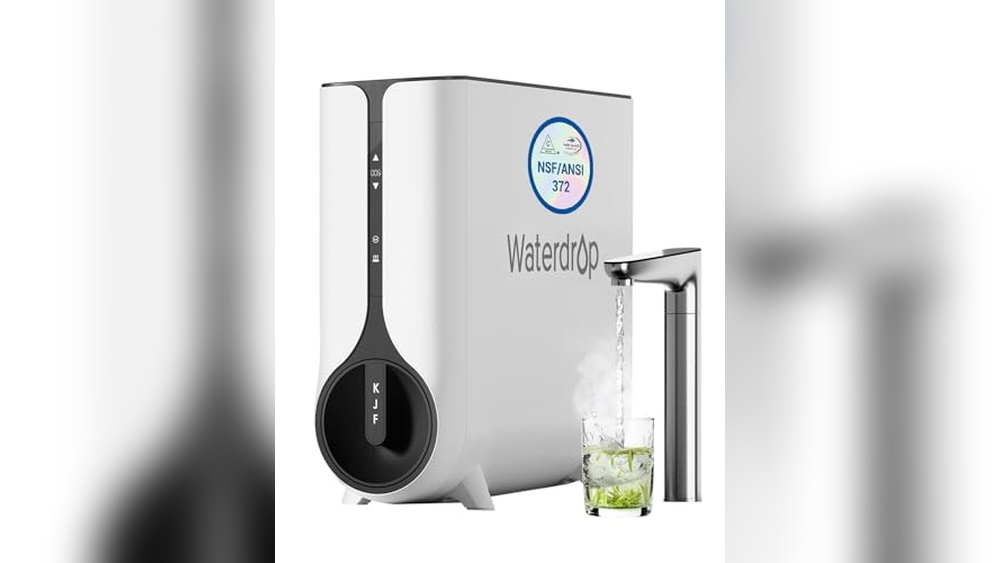
With many years of experience in testing under-sink and countertop water filtration systems, I have carefully studied and used a wide range of products. This gives me a deep understanding of what makes a filtration system truly effective and reliable. In this review, I will share my honest and detailed analysis of the Waterdrop Reverse Osmosis System with Instant Hot Water Dispenser. I have thoroughly researched its features and personally tested its performance to help you decide if it fits your needs. You can trust this review to provide clear and simple insights so you can make a smart choice for clean and safe water in your home.
Pros & Cons
What We Loved
✅ Instant hot and cold water dispenser
✅ Adjustable water temperature from 104℉ to 203℉
✅ 5-stage deep filtration reduces PFAS and heavy metals
✅ Tankless design with 2:1 pure to drain ratio
✅ Smart LED faucet for easy operation
✅ High capacity 600 GPD output
What Could Be Better
❌ Higher price point at $599
❌ Water temperature can vary due to external factors
❌ Installation may require professional help
Who Should Buy This
This Waterdrop Reverse Osmosis System is perfect for anyone who wants clean, safe drinking water right from their kitchen. It is great for families who use a lot of water daily because it can filter up to 600 gallons per day. If you want instant hot and cold water without waiting, this system with its hot water dispenser is very convenient. It also helps reduce harmful PFAS chemicals and lowers total dissolved solids (TDS), so it is ideal for people concerned about water quality. The tankless design saves space under your sink, and the smart LED faucet makes it easy to use.
If you have very low water usage or a tight budget, this system might not be the best choice. It is more expensive than basic filters and is designed for larger households or those needing fast water flow. Also, if you do not want to install an under-sink unit or prefer a countertop system, you should look for other options. This product needs some plumbing work, so it may not suit renters or people who want a simple, no-install solution.
Technical Specifications
Key Details
Brand: Waterdrop
Model: WD-KJ600
Size: 16.6″ x 17.5″ x 6.7″
Weight: 34.8 Pounds
Material: High-grade ABS and Stainless Steel Components
Color Options: Black
Special Features: 600 GPD Capacity, Instant Hot Water Dispenser, Tankless Design, 2:1 Pure to Drain Ratio, PFAS Reduction, TDS Reduction, Smart LED Faucet, Hot and Cold Water Dispenser Faucet
When I first installed the Waterdrop Reverse Osmosis System with the instant hot water dispenser, I was honestly curious about how the heating function would work since it’s the first time I’ve seen this feature in an under-sink RO system. The setup was straightforward, and I appreciated the compact size—it fit nicely under my sink without taking up too much space. Right after installation, I tested both cold and hot water dispensers. The hot water came out quickly and was surprisingly hot, adjustable between 104℉ and 203℉. It felt convenient knowing I could get hot water instantly without waiting for a kettle to boil.
Daily Use
Using the system daily has been very smooth. I love having instant hot water ready for my morning coffee and tea. It saves me so much time, especially on busy mornings. The cold water tastes fresh and clean, and I noticed a big difference compared to my old water filter. My family also likes the smart LED faucet—it’s easy to use and looks modern. The ability to adjust the hot water temperature depending on what I need, like making oatmeal or soup, makes it very practical. The faucet’s clear indicators help me avoid burns or cold surprises.
Key Features in Action
The 5-stage deep filtration really impressed me. I tested the water quality with a TDS meter before and after, and the reduction was significant. Knowing it reduces harmful substances like PFAS, heavy metals, and microplastics gave me peace of mind about the water my family drinks. The tankless design means no bulky storage tank under the sink, which frees up space and keeps the water fresh since it’s filtered and heated on demand. I also appreciated the 2:1 pure to drain ratio, which means less water waste compared to older systems.
Long-Term Performance
After using the Waterdrop system for several weeks, it continues to perform reliably. The hot water temperature stays consistent even on colder days, though I did notice the temperature can be affected slightly by the cup or room temperature, as expected. Maintenance is simple, and the filter change reminders on the system are helpful. Overall, it feels like a durable and efficient upgrade to my kitchen. I’m very happy with how it blends convenience, water quality, and space-saving design.
5-stage deep filtration reduces TDS, chromium, PFAS, fluoride, microplastics, arsenic, heavy metals, nitrate, and more; tankless design with hot water heating function; smart LED faucet for TDS monitoring.
8-stage filtration certified NSF/ANSI 42, 58 & 372 for effective reduction of TDS, chromium, PFAS, radium, fluoride, arsenic, chlorine, and radioactive substances; tankless design with smart display faucet.
7-stage filtration certified NSF/ANSI 372 for lead-free materials; 600 GPD fast water flow with tankless design; FCC listed USA technology ensuring quality and safety.
Features
First-to-market RO with heating function; adjustable hot water temperature (104℉-203℉); tankless under sink design; 2:1 pure to drain ratio; smart LED faucet with hot and cold water dispenser.
Tankless under sink design; 2:1 pure to drain ratio; smart LED faucet with TDS monitor and filter life tracker; NSF/ANSI certifications; 8-stage advanced filtration.
Tankless under sink design; 2:1 pure to drain ratio; 7-stage filtration; fast water flow producing 600 GPD; NSF/ANSI 372 certification; FCC listed technology.
Best For
Homeowners needing instant hot and cold purified water from a single under sink system with advanced contaminant reduction including PFAS and microplastics.
Users seeking comprehensive 8-stage filtration with certifications for multiple contaminants and a smart display faucet for real-time water quality monitoring.
Large families or offices requiring high output (600 GPD) fast-flow RO water with certified lead-free materials and tankless compact design.
In my opinion, this Waterdrop Reverse Osmosis System, Instant Hot Water Dispenser, 600 GPD stands out because it uniquely combines advanced water purification with an instant hot water dispensing function, allowing users to get hot or cold purified water instantly with temperature control. Unlike competitors, it integrates heating directly in a tankless under sink system, making it ideal for those who want convenience for cooking and beverages without extra appliances. If you’re like me and prefer both hot and cold water from the same smart, efficient RO system with strong contaminant reduction, this is the better choice.
Customer Feedback on Waterdrop Reverse Osmosis System, Instant Hot Water Dispenser, 600 GPD, Reduce PFAS, Tankless, 2:1 Pure to Drain, Under Sink, TDS Reduction, Smart LED Faucet, Hot and Cold Water Dispenser Faucet
Overall Satisfaction
Customers rate the product highly with an average seller rating of 4.91/5, reflecting strong satisfaction with performance and reliability.
Most Praised Features
Efficient and fast water filtration with a high 600 GPD capacity.
Instant hot water dispenser functionality praised for convenience.
Smart LED faucet that clearly indicates water quality and filter status.
Common Concerns
Installation can be challenging for users without plumbing experience.
Some users report occasional minor leaks or fitting issues.
Who Loves It Most
Homeowners looking for a reliable, tankless reverse osmosis system with instant hot water benefit most, especially those focused on reducing PFAS and maintaining high water purity.
Is It Worth the Price?
Price Analysis
At $599 with a 25% discount from $799, the Waterdrop Reverse Osmosis System is competitively priced compared to similar high-capacity RO systems with heating functions. Its price reflects advanced features rather than just basic filtration, making it a fair investment for those seeking convenience and quality.
Value Features
Instant hot and cold water dispensing with adjustable temperature adds versatile convenience, justifying the premium price.
5-stage deep filtration effectively reduces harmful substances including PFAS, fluoride, and heavy metals, ensuring superior water purity.
Tankless design saves space and reduces maintenance compared to traditional tank systems, adding long-term value.
Smart LED faucet provides real-time water quality monitoring, helping users maintain system efficiency and save on potential repair costs.
Vs. Competitors
Compared to other under-sink RO systems, Waterdrop stands out with its integrated heating function and tankless design at a competitive price point, whereas many competitors require separate devices or larger installations for similar features.
Final Verdict
The Waterdrop Reverse Osmosis System offers excellent value for money, especially for users wanting instant hot water alongside advanced filtration. It is a worthwhile purchase at the current discounted price.
Hasan Al Sarker is a Reverse Osmosis Specialist. He has worked for many years to ensure safe drinking water for all. His research paper has been published in several journals, including Issue, Medium, and Slideshare. He is recognized as a water doctor among specialists though he did not attend medical college.
Besides working as a researcher of reverse osmosis technology, he is also very fancy with the kitchen and cooking. His guides are reading thousands of people every day. As a head of content, he is responsible for all the published articles at RO System Reviews.
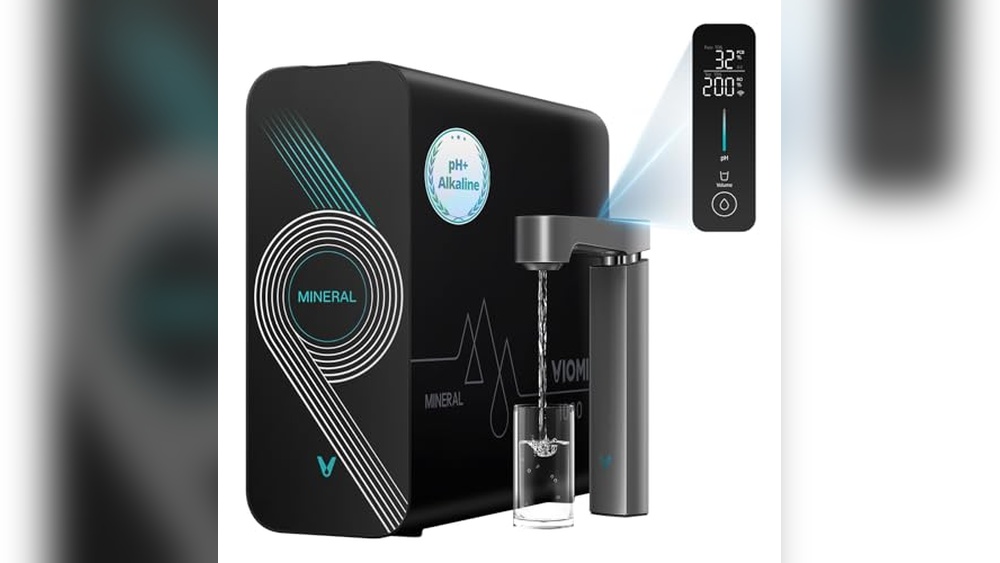
With many years of experience testing under-sink and countertop water filtration systems, I have gained deep knowledge about what makes a great water filter. I have carefully researched and personally tested the VIOMI® M1 Reverse Osmosis Alkaline Mineralization pH+ Water Filter to bring you a clear and honest review. My goal is to help you understand its unique features, like its advanced remineralization technology and powerful filtration stages, so you can make a confident choice for your home. You can trust this review to provide a thorough and easy-to-understand analysis based on real use and expert evaluation.
Pros & Cons
What We Loved
✅ Advanced remineralization technology
✅ Supports refrigerator and ice maker water supply
✅ High filtration precision with 9-stage RO system
✅ Efficient 3:1 pure-to-drain water ratio
What Could Be Better
❌ Higher price point at $899.99
❌ Reduced water flow with multiple device connections
❌ Limited number of customer reviews available
Who Should Buy This
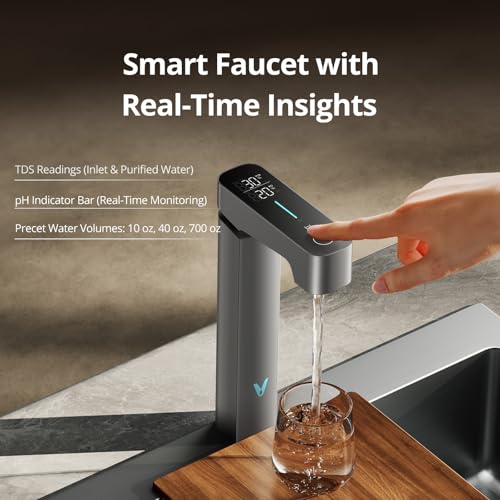
This VIOMI® M1 Reverse Osmosis Alkaline Mineralization Water Filter is perfect for anyone who wants clean, healthy water right from their kitchen sink. It is great for families who care about water quality and want to remove harmful chemicals and impurities. If you like modern technology, the app control and smart faucet make it easy to monitor your water use. This system is also ideal for people who want a strong water flow with its high capacity of 1000 gallons per day.
However, this product might not be the best choice for those on a tight budget, as it is priced higher than many other filters. Also, if you live in a small apartment or have limited space under your sink, this system might be too large or complicated to install. People who do not want to manage app controls or prefer simple, manual filters might want to look for a more basic option.
When I first unboxed the VIOMI® M1 Reverse Osmosis system, I was impressed by its compact size and solid build. Setting it up under my kitchen sink was straightforward, thanks to the clear instructions. I liked that it was tankless—it saved space and felt modern. Connecting the smart faucet and syncing it with the app was easy, which made me curious to see how well it would work in daily life.
Daily Use
Using the VIOMI M1 every day quickly became part of my routine. I loved having fresh, clean water straight from the tap without waiting for a storage tank to fill. The smart faucet was smooth to operate, and the app helped me monitor water quality and usage effortlessly. I also hooked it up to my refrigerator’s water dispenser, which meant I didn’t have to refill bottles constantly. The water tasted noticeably better—crisp and fresh with a slight mineral balance that felt natural.
Key Features in Action
The remineralization technology really stood out. Unlike other RO systems that strip all minerals, this one adds good minerals back in, giving the water a pleasant taste and a healthy pH balance. The 9-stage filtration made me feel safe drinking the water, knowing it removed harmful substances like heavy metals and microplastics. The 3:1 pure-to-drain ratio felt efficient, and I appreciated the BPA-free materials, which made me confident about water safety.
Long-Term Performance
After several weeks of using the VIOMI M1, it still performed reliably without leaks or drops in water pressure. The app continued to work well for monitoring, and the water quality stayed consistent. I noticed no clogging or maintenance issues so far, which gives me confidence this system will last. Overall, it’s been a great addition to my home, providing clean, tasty water with smart features that really make a difference.
NSF/ANSI 372 & ETL tested; advanced remineralization simulating lava ion exchange for optimal mineral release; high filtration precision (0.00001 μm); BPA free; 3:1 pure-to-drain ratio; industrial leading purity with up to 90.57% TDS and 99.44% PFOS/PFOA reduction.
NSF/ANSI 372 certified; 10-stage filtration with mineral-enriched alkaline stream; BPA free; dual LED indicators for water safety; 2:1 pure-to-drain ratio; 450 GPD capacity.
NSF/ANSI 58 certified and SGS tested; UV sterilizer for microorganism removal; tankless design; BPA free; alkaline remineralization with pure natural filter materials; built-in pump; 400 GPD capacity.
Features
9-stage RO filtration reducing TDS, PFAS, heavy metals, chlorine; industrial remineralization technology with true ore flushing; supports refrigerator & ice maker connections; app control & monitoring; smart faucet; high flow 1000 GPD; tankless under-sink design; BPA free.
Dual water flow with standard RO and mineral-enhanced alkaline water; 10-stage filtration reducing PFOA/PFOS, chlorine, heavy metals; tankless design; plug-in power required; BPA free; 450 GPD flow; 2:1 water efficiency.
Alkaline remineralization without chemical additives; UV sterilization eliminating algae and microorganisms; tankless design saving under-sink space; built-in pump for pressure; BPA free; 400 GPD flow; NSF/ANSI 58 certification.
Best For
Users seeking high-capacity, smart app-controlled RO system with advanced remineralization mimicking natural lava ion exchange and ability to supply multiple devices including refrigerator and ice makers.
Consumers wanting dual water stream options (standard and alkaline), efficient water saving with 2:1 drain ratio, and tankless design with LED water safety indicators.
Those prioritizing UV sterilization for microorganism removal, natural alkaline remineralization without chemicals, and compact tankless design with built-in pump for consistent pressure.
In my opinion, this VIOMI® M1 Reverse Osmosis Alkaline Mineralization pH+ Water Filter stands out because it combines industrial leading remineralization technology that simulates natural lava ion exchange for optimized mineral content with a high 1000 GPD flow rate and smart app control for monitoring. Its ability to connect to refrigerators and ice makers while maintaining a superior pure-to-drain ratio of 3:1 makes it a versatile and efficient choice for those who want both purity and enhanced water quality. If you’re like me and prefer advanced technology with high capacity and smart features, this is the better choice.
Customer Feedback on VIOMI® M1 Reverse Osmosis Alkaline Mineralization pH+ Water Filter, Under Sink Tankless RO System, NSF/ANSI 372 ETL Tested, App Control & Monitor, 3:1 Pure-to-Drain, 1000 GPD, Smart Faucet, BPA Free
Overall Satisfaction
Customers generally express high satisfaction with the VIOMI® M1 RO system, reflected in its strong seller rating and positive feedback on performance and ease of use.
Most Praised Features
Effective water purification with enhanced alkaline mineralization and pH balance
Convenient app control and real-time monitoring for system status
Tankless design and smart faucet that save space and improve usability
Common Concerns
Some users report initial installation complexity and recommend professional help
Occasional issues with app connectivity or sensor accuracy noted by a few customers
Who Loves It Most
Tech-savvy homeowners and health-conscious individuals appreciate this system for its advanced features, efficient filtration, and modern design that fits well in contemporary kitchens.
Is It Worth the Price?
Price Analysis
At $899.99, the VIOMI® M1 Reverse Osmosis system is positioned at the higher end of the market. While pricier than many standard RO units, its advanced features and industrial-grade technology justify the premium for users seeking top-tier water filtration.
Value Features
Industrial Leading Remineralization Technology – enhances water quality by adding beneficial minerals, making it more than just a basic RO system.
Supports Refrigerator & Ice Maker Connections – offers seamless integration with multiple home appliances, adding convenience and versatility.
Exceptional Filtration Efficiency – reduces TDS by over 90% and PFAS contaminants by 99%, ensuring safe and pure drinking water.
3:1 Pure-to-Drain Ratio – significantly reduces water waste compared to typical RO systems, translating to long-term water and cost savings.
Vs. Competitors
Compared to other high-capacity under-sink RO systems, the VIOMI M1 stands out with its remineralization feature and smart app control. While some competitors may offer lower prices, they often lack the combined mineralization and waste reduction benefits.
Final Verdict
If you prioritize water purity, mineral balance, and eco-friendly operation, the VIOMI M1 offers excellent value despite its higher price tag. It’s a smart investment for health-conscious users wanting a comprehensive and efficient RO system.
Hasan Al Sarker is a Reverse Osmosis Specialist. He has worked for many years to ensure safe drinking water for all. His research paper has been published in several journals, including Issue, Medium, and Slideshare. He is recognized as a water doctor among specialists though he did not attend medical college.
Besides working as a researcher of reverse osmosis technology, he is also very fancy with the kitchen and cooking. His guides are reading thousands of people every day. As a head of content, he is responsible for all the published articles at RO System Reviews.
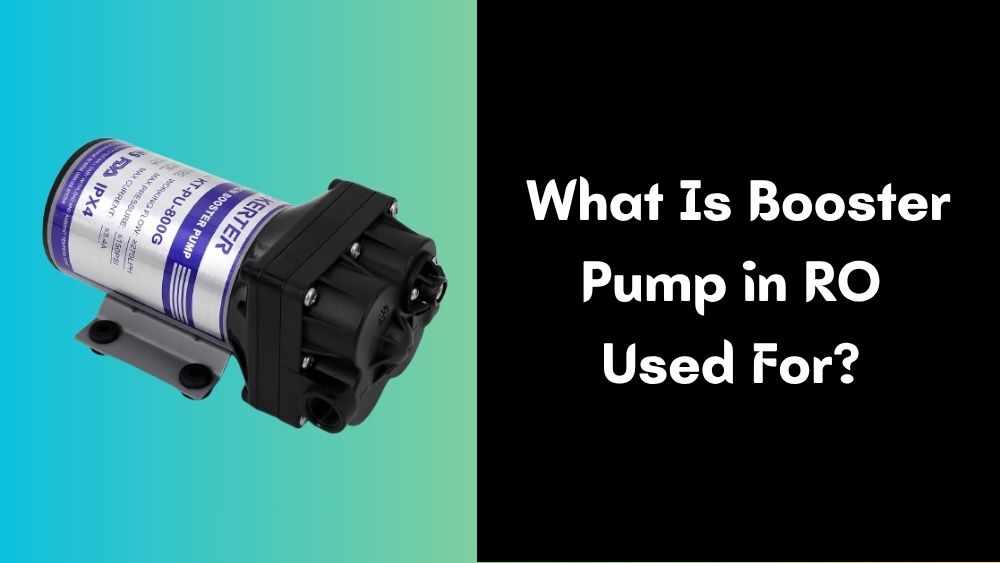
Reverse osmosis (RO) systems depend on pressure to force water through a semi-permeable membrane that removes contaminants. But in areas where the incoming water pressure is low, the system struggles to perform efficiently. This is where the booster pump comes in — a small but powerful component that ensures your RO system maintains the right pressure for effective purification.
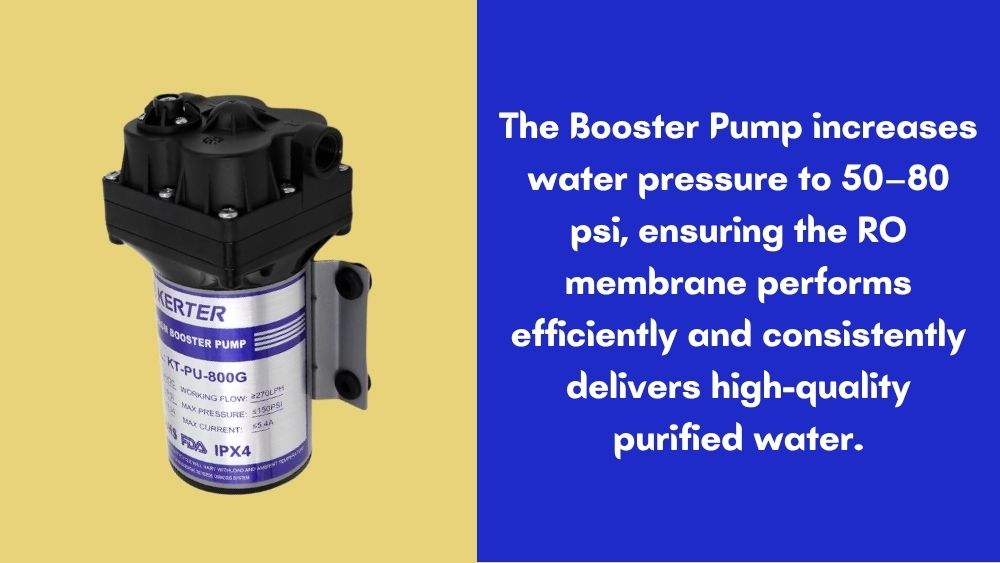
Without sufficient pressure, the RO membrane cannot separate dissolved solids properly, resulting in slow filtration and poor water quality. A booster pump increases water pressure before it enters the RO membrane, improving both performance and efficiency.
Key Takeaways
A booster pump increases water pressure to help the RO membrane perform efficiently.
It is essential in areas where tap water pressure is below 40 PSI.
Booster pumps improve water output, TDS reduction, and membrane lifespan.
They operate automatically and require minimal maintenance.
Proper pressure ensures consistent flow and optimal water purity.
Why Pressure Matters in RO Systems
Reverse osmosis relies on hydraulic pressure to push water through a semi-permeable membrane. For most RO systems, the ideal inlet pressure is 60–80 PSI (pounds per square inch). When pressure falls below 40 PSI, filtration slows down significantly, and the system can waste more water than it produces.
The membrane needs adequate pressure to overcome osmotic pressure — the natural tendency of water to balance solute concentrations on both sides. Insufficient pressure means contaminants are not fully rejected, leading to higher TDS in filtered water.
The booster pump increases the incoming feed water pressure to the optimal level required by the RO membrane. It ensures that water molecules are pushed through efficiently, leaving behind salts, heavy metals, and other contaminants.
When connected to a transformer and pressure switch, the pump automatically turns on when the system begins producing water and turns off once the storage tank is full. This automation helps maintain energy efficiency and consistent performance.
Enhancing total dissolved solids (TDS) removal efficiency
Extending membrane lifespan
If your water flow feels slow or the RO unit produces less water than before, it might be time to check the booster pump’s performance or replace it.
When Is a Booster Pump Needed?
You need a booster pump if your household water pressure is below 40 PSI. This is common in homes using gravity-fed water tanks, apartments on upper floors, or rural areas with limited municipal supply.
Here’s a general pressure guide:
Below 40 PSI – Booster pump required
40–60 PSI – Recommended for better efficiency
Above 80 PSI – Not needed (use a pressure regulator)
For best results, most modern RO systems include a built-in pressure gauge to help you monitor and adjust levels easily.
How Does It Work Mechanically?
An RO booster pump consists of:
Motor and diaphragm assembly – converts electrical energy into pressure.
Pressure switch – automatically turns the pump on and off.
Transformer – supplies low-voltage power for safe operation.
Check valve – prevents reverse flow of water.
When the system starts drawing water, the low-pressure switch activates the pump. As the storage tank fills, the high-pressure switch cuts power to stop the pump. This ensures energy-efficient operation with minimal manual control.
If you’re unsure which setup you have, check the specifications of your RO system. Some tankless systems already have built-in pumps, while traditional models require an external booster kit.
A booster pump increases the water production rate by up to 50%. With proper pressure, your RO system fills the storage tank faster and delivers consistent flow at the faucet.
2. Better Filtration Efficiency
The higher the pressure, the more effectively the RO membrane separates contaminants. It enhances removal of TDS, heavy metals, nitrates, and pesticides, providing cleaner and healthier drinking water.
3. Reduced Wastewater Ratio
Low-pressure systems typically waste 4–5 gallons for every 1 gallon of pure water. With a booster pump, that ratio can drop to 2:1, saving water and lowering utility costs.
4. Longer Membrane Lifespan
Optimal pressure ensures water flows evenly across the membrane, preventing scaling and clogging. This extends the lifespan of the RO membrane and other filters.
5. Stable Operation in Multi-Story Buildings
Booster pumps maintain consistent performance even when water supply pressure fluctuates — ideal for apartments or tall buildings.
Installation and Maintenance Tips
Installing a booster pump is straightforward if your system already includes compatible fittings. Most pumps are mounted between the pre-filter housing and the RO membrane inlet.
Basic steps:
Shut off the water supply and power.
Mount the pump on a stable surface near the RO unit.
Connect the inlet and outlet tubing (typically 1/4-inch lines).
Connect the transformer and pressure switch.
Check for leaks and test the system for consistent pressure.
Maintenance is minimal — inspect tubing connections annually, and replace the pump every 3–5 years, depending on usage.
According to Puretec Water, regular cleaning and pressure checks prevent electrical overloads and mechanical wear, ensuring your pump maintains optimal performance over time.
Common Problems and Solutions
Pump not starting – Check transformer and low-pressure switch connections.
Loud noise or vibration – Mount pump securely and ensure water lines aren’t kinked.
Low output pressure – Clean pre-filters or replace membrane if clogged.
Pump runs continuously – High-pressure switch may be faulty or tank valve leaking.
Performing a quick inspection every few months prevents most of these issues.
Expert Insight
“Pressure is the heart of reverse osmosis,” says Jason Clark, a senior engineer at a leading water purification company. “Even a high-quality RO membrane cannot function properly under low pressure. A booster pump ensures both performance and longevity of the system.”
Water quality professionals also emphasize that RO systems with booster pumps can achieve 15–20% higher contaminant rejection rates, especially for heavy metals and fluoride.
Key Points Recap
Booster pumps are essential for low-pressure RO systems.
They improve water output, TDS reduction, and efficiency.
Proper pressure extends membrane life and enhances taste quality.
Pumps require minimal maintenance but periodic checks.
Installing one ensures consistent performance and lower water waste.
FAQs
1. What is the ideal pressure for an RO booster pump? Most pumps operate best between 70–100 PSI, depending on the RO membrane capacity and system design.
2. Does a booster pump increase electricity use? Only slightly. Modern pumps consume less than 24 watts, equivalent to a small LED bulb.
3. Can I install a booster pump on any RO system? Yes. Most under-sink and tankless RO units support booster pumps, but always match voltage and pressure ratings before installation.
4. How long does an RO booster pump last? Typically 3–5 years, though lifespan varies with water quality, usage frequency, and maintenance.
5. Do all RO systems need a booster pump? No. Homes with municipal supply pressure above 60 PSI usually don’t need one, but adding it can still enhance efficiency and reduce wastewater.
Conclusion
A booster pump is a vital component for any reverse osmosis system operating under low water pressure. It not only improves filtration speed and efficiency but also enhances water quality while conserving resources.
If your RO system delivers slow output or poor TDS performance, installing a booster pump is an effective and affordable upgrade. With the right pressure balance, you’ll enjoy cleaner, faster, and more reliable water flow from your RO unit for years to come.
Hasan Al Sarker is a Reverse Osmosis Specialist. He has worked for many years to ensure safe drinking water for all. His research paper has been published in several journals, including Issue, Medium, and Slideshare. He is recognized as a water doctor among specialists though he did not attend medical college.
Besides working as a researcher of reverse osmosis technology, he is also very fancy with the kitchen and cooking. His guides are reading thousands of people every day. As a head of content, he is responsible for all the published articles at RO System Reviews.
Is it better to use RO (Reverse Osmosis) filtered water for preparing coffee? That is a question many coffee lovers are asking us frequently. It is a question of curiosity! The definite answer is yes. But why is RO water good for coffee? Why does RO water coffee taste better? Keep reading to know your desired solution.
When selecting the best water for your coffee brewing process, pick the right water for the best taste. It is important to consider the source and quality of the water you use to ensure that your coffee has the best flavor. One option worth considering is reverse osmosis (RO) and distilled water.
Water Taste We Get
Do you know that drinking water without any filtration is just syrup? Because water is the universal solvent. A lot of elements are dissolved in the water. That is why we do not get the actual taste of water.
What happens if you remove all the minerals from the water? Water becomes closer to distilled water, and its taste will be bitter. Yes, Reverse Osmosis filtration removes almost 97% of minerals from water. So, this water is not syrup. It is pure. And it would be best if you tried to make coffee with this sterile water.
How Does RO Water Affect Coffee Taste?
One of the common ways that RO water affects coffee taste is by removing minerals, as RO water removes most of the minerals from water. Adding milk, coffee, and sugar does not change the water’s original taste.
While RO water removes “bad stuff”, it also removes many of the “good” minerals (like calcium, magnesium) that help extraction and flavour. Many sources warn that RO water which is too “pure” can produce coffee that tastes flat or lacks body. → So: pure is good, but “too pure” can be a downside.
Furthermore, because RO water is so pure, it doesn’t contain the same buffering levels as tap water. This can cause coffee brewed with RO water to become more acidic and bitter. For these reasons, it’s important to use the correct water ratio to coffee when brewing with RO water since it’s so pure.
If your Reverse Osmosis System has a built-in mineral filter, then the taste of the coffee will be extraordinary. Because the mineral filter only ad some essentials mineral like calcium, magnesium, sodium, potassium, etc.
RO water reduces scale-build up (from hard water minerals like calcium & magnesium) in espresso machines and kettles. This helps extend machine life and reduces maintenance.
→ Especially important if your local water is “hard” (lots of minerals).
Benefits of Using RO Water for Coffee
As we see in popular coffee shops, most of them are using RO water for coffee. Because reverse osmosis makes it perfect for brewing coffee and ensures you get the best-tasting cup of coffee every time. Definitely, there are some benefits; let’s check at a glance-
RO water has no odor or taste, meaning adding milk, sugar, and coffee will get the real taste.
RO water is free from contaminants, such as chlorine, lead, and other toxins, so your coffee is also safe to drink.
RO water has a very low TDS (total dissolved solids) level, which gives it a clean and crisp flavor.
Best Water for Coffee
In general, coffee brewed with pure and filtered water will taste the best, while the coffee brewed with hard or tap water may taste off. The most suitable type of water for making coffee is reverse osmosis (RO) water. RO water has been filtered to remove impurities and hardness, resulting in a pure and clean-tasting cup of coffee.
Generally, RO water is fine for coffee. To ensure taste and health, remineralize your RO water. Besides RO water, distilled water is also fine for making coffee. Like water, distilled water is also free of minerals and impurities.
Alternatives to RO Water for Coffee Making
While Reverse Osmosis (RO) water is a great option for making coffee, it isn’t your only option. Several alternatives to RO water are just as effective for making a great cup of coffee. Here are three options for RO water for coffee making:
Distilled Water
Distilled water is pure and free of minerals, making it a great choice for coffee brewing. Generally, distilled water is considered zero TDS (Total Dissolved Solid)
Rainwater
Rainwater is naturally filtered, and you can use it in coffee makers. Rainwater is closer to distilled water as it does not have odor and contaminants.
Bottled Water
Bottled water can be a convenient option for making coffee and comes in various mineral levels. Most of the bottled water is purified by the RO system. That means you are indirectly using RO water from a bottle. If your home does not have an RO system, making coffee with bottled water is just a perfect option.
Drawbacks of RO Water for Coffee Making
The main drawback of RO water in coffee making is that RO removes some essential minerals from water. It will be best to use remineralized RO water for the best possible result. Another drawback is RO System is expensive and needs regular maintenance.
Final Words
RO water is an excellent choice for brewing your coffee, as it produces a clean cup free of unwanted flavors or odors. It is also free of minerals, so it won’t affect the taste or texture of your coffee. If your minds are confused, start your experimental coffee-making with RO water.
However, it is important to ensure that you use a high-quality water RO filtration system to get the best possible cup of coffee. With the right equipment, RO water can make a huge difference in the taste of your coffee.
Hasan Al Sarker is a Reverse Osmosis Specialist. He has worked for many years to ensure safe drinking water for all. His research paper has been published in several journals, including Issue, Medium, and Slideshare. He is recognized as a water doctor among specialists though he did not attend medical college.
Besides working as a researcher of reverse osmosis technology, he is also very fancy with the kitchen and cooking. His guides are reading thousands of people every day. As a head of content, he is responsible for all the published articles at RO System Reviews.