

Are you worried about the fluoride in your tap water? You might be asking yourself, “Does a water filter really remove fluoride?”
This question is important because not all filters work the same way. Understanding how fluoride affects your health and which filters can actually reduce it can help you make the best choice for your family’s safety. Keep reading to find out what you need to know before picking your next water filter.
Fluoride In Drinking Water
Fluoride is a common element found in many water supplies worldwide. It often appears naturally or through added treatments. Understanding fluoride in drinking water helps people make informed choices about their health and water use.
This section explores where fluoride comes from, why it is added to water, and some health concerns linked to it.
Sources Of Fluoride
Fluoride occurs naturally in rocks, soil, and water. Rain and groundwater can carry fluoride from these sources. Some areas have higher natural fluoride levels than others.
Many cities add fluoride to public water to control tooth decay. This process is called water fluoridation.
Purpose Of Fluoridation
Fluoride strengthens tooth enamel and helps prevent cavities. It is especially useful for children’s dental health. Public health programs add fluoride to water to reduce dental problems.
This method offers protection to people who may not have regular dental care.
Health Concerns
Too much fluoride can cause dental fluorosis, which changes tooth appearance. Some worry about other health effects from fluoride exposure. Research is ongoing to understand fluoride’s full impact.
People may choose filtered water to reduce fluoride intake. Knowing fluoride levels helps people decide what water to drink.

Types Of Water Filters
Water filters come in many types. Each type works differently. Some remove chemicals, others remove particles. Understanding these types helps you choose the best filter for fluoride removal. Below are common water filter types and how they work.
Activated Carbon Filters
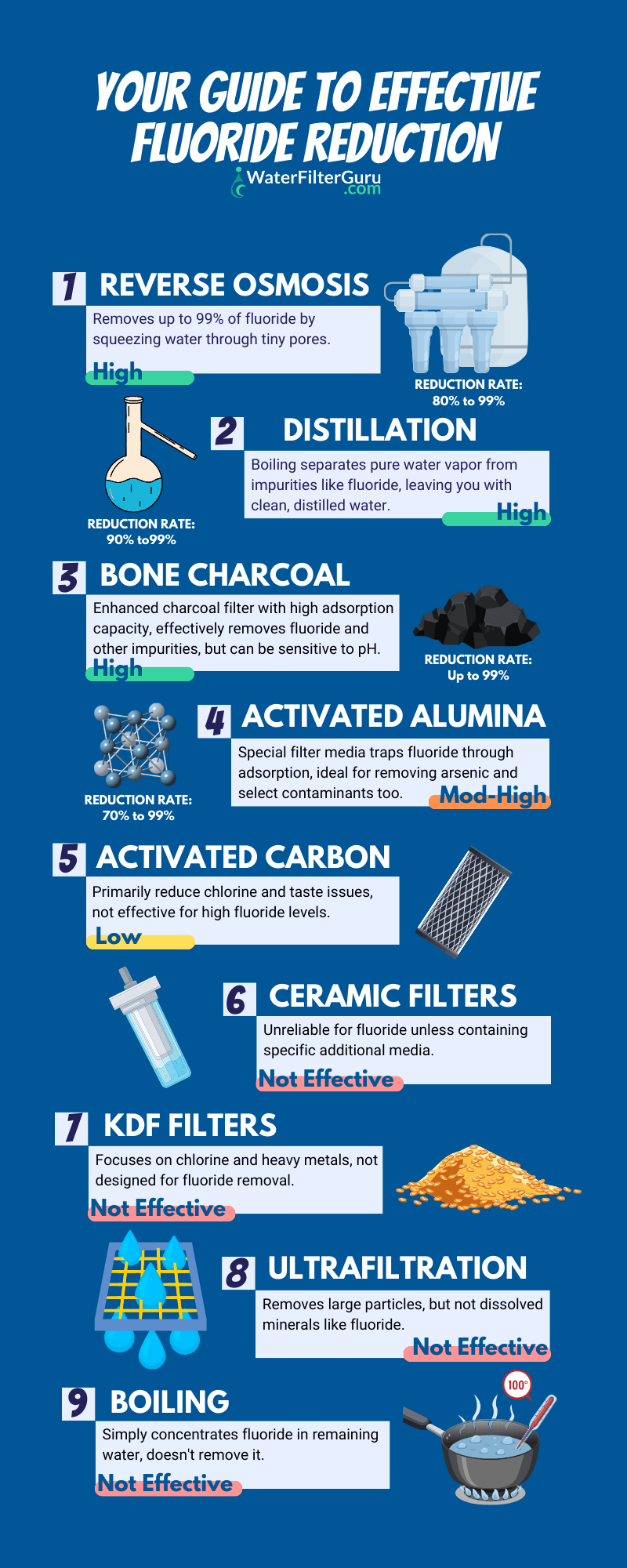
Activated carbon filters use charcoal to clean water. They trap impurities by adsorption. These filters remove chlorine, bad tastes, and odors. They work well for many contaminants. But they do not effectively remove fluoride from water.
Reverse Osmosis Systems
Reverse osmosis systems push water through a special membrane. The membrane blocks many contaminants, including fluoride. This system removes up to 95% of fluoride. It also removes other minerals and chemicals. Reverse osmosis is a strong choice for fluoride removal.
Distillation Units
Distillation heats water until it turns to steam. The steam leaves impurities behind. Then, it cools back to liquid form. Distillation removes fluoride and many other contaminants. It also removes minerals, making water very pure. This method uses more energy than other filters.
Ion Exchange Filters
Ion exchange filters swap harmful ions for safer ones. They work well for softening hard water. Some ion exchange filters reduce fluoride, but not all. Their fluoride removal ability depends on the filter design. Check the product details to confirm fluoride removal.
Effectiveness Of Filters On Fluoride
Fluoride is a common additive in many water supplies. Some people want to remove it from their drinking water. Not all water filters remove fluoride effectively. Understanding which filters work helps in choosing the right option.
Filters That Remove Fluoride
Some filters can reduce fluoride levels well. Reverse osmosis systems are very effective. They push water through a fine membrane, trapping fluoride ions. Activated alumina filters also remove fluoride. They use a special type of aluminum oxide. These filters can lower fluoride by 90% or more.
Filters That Don’t Remove Fluoride
Many common filters do not remove fluoride. Carbon filters, popular for improving taste and odor, usually fail. Pitcher filters and basic faucet filters often miss fluoride. They are designed to remove chlorine and sediment instead. Knowing this prevents wasted money on the wrong filter.
Factors Influencing Removal Rates
Fluoride removal depends on several factors. Water pH affects how well filters work. Higher pH can reduce filter efficiency. Contact time between water and filter matters too. Longer contact improves fluoride removal. Filter quality and maintenance also play roles. Old or clogged filters lose their power.
Testing Fluoride Levels
Testing fluoride levels in your water is important. Knowing the amount helps you decide if you need a water filter. Some filters remove fluoride, but you must first check your water’s fluoride content. There are easy ways to test fluoride at home or with help from experts.
Home Testing Kits
Home testing kits are simple and quick. You collect a small water sample and use test strips or drops. The kit shows fluoride levels by changing color. These kits cost little and give results in minutes. They are good for basic checks but may not be very precise.
Professional Water Testing
Professional water testing offers accurate results. Experts take water samples and use advanced tools to measure fluoride. Labs provide detailed reports on your water quality. This method is best for exact data. It helps choose the right water filter or treatment system.
Choosing The Right Filter
Choosing the right water filter to remove fluoride needs careful thought. Not all filters remove fluoride effectively. Picking the best one depends on several factors like your budget, filter care, and certifications. These help you find a filter that works well and lasts long.
Budget Considerations
Water filters vary in price. Some are cheap but may not remove fluoride well. Others cost more but offer better fluoride removal. Think about how much you can spend now and later. Some filters need parts replaced often, adding to the cost. Choose a filter that fits your budget and needs.
Filter Maintenance
Regular care keeps your filter working well. Some filters need frequent cleaning or part changes. Others last longer with less work. Check how easy it is to maintain the filter. A filter that is hard to care for may stop working well. Easy maintenance saves time and keeps water safe.
Certification And Standards
Look for filters tested by trusted groups. Certifications prove a filter removes fluoride effectively. Common certificates include NSF/ANSI standards. These show the filter meets strict rules for water safety. Choosing a certified filter ensures cleaner, safer water for you and your family.
Health Implications Of Fluoride Removal
Removing fluoride from drinking water has health effects that many people consider. Fluoride is added to water in small amounts to help prevent tooth decay. Some water filters can remove fluoride, which changes the water’s composition. Understanding these health effects helps people decide if fluoride removal is right for them.
Benefits Of Removing Fluoride
Some people want to remove fluoride to avoid possible health problems. High fluoride levels can cause dental fluorosis, which changes the look of teeth. Removing fluoride may protect young children from this condition. It may also reduce the risk of bone problems linked to too much fluoride. People sensitive to fluoride might feel better after removal.
Potential Risks
Fluoride helps reduce cavities by strengthening teeth. Removing it might increase the chance of tooth decay. Communities without fluoride in water often see higher dental problems. Some studies say fluoride supports bone health in small amounts. Removing fluoride without other dental care could harm overall oral health. Balance is key for safe fluoride use.
Alternatives To Home Filtration
Some people prefer not to use home water filters for fluoride removal. Alternatives exist that can provide safer drinking water without installing equipment at home. These options vary in cost, convenience, and fluoride removal effectiveness. Understanding them helps you choose the best solution for your needs.
Bottled Water Options
Bottled water can be a simple way to avoid fluoride. Many brands sell water with no added fluoride. Check the label to confirm fluoride levels. Some bottled water uses natural sources with low fluoride content. Others use reverse osmosis or distillation to reduce fluoride. Bottled water offers convenience but can be expensive long term. Consider storage space and environmental impact too.
Community Water Treatment
Some towns remove fluoride from public water supplies. Community water treatment plants can use special filters or chemicals. This method protects everyone in the area from excess fluoride. It avoids the need for individual filters at home. However, not all communities offer this option. Residents can contact local water authorities to learn more. Community treatment ensures safe water for many people at once.

Frequently Asked Questions
Does A Water Filter Remove Fluoride Completely?
Not all water filters remove fluoride completely. Only specific types, like reverse osmosis and activated alumina filters, effectively reduce fluoride levels.
Which Water Filters Are Best For Fluoride Removal?
Reverse osmosis, activated alumina, and distillation systems are best for removing fluoride from water. Standard carbon filters usually do not remove fluoride.
Can A Carbon Filter Remove Fluoride From Water?
No, standard carbon filters cannot remove fluoride effectively. They mainly remove chlorine, sediment, and organic compounds, but fluoride requires specialized filtration.
Is Fluoride Removal Necessary For Drinking Water?
Fluoride removal depends on personal preference and local water levels. Some prefer to remove fluoride due to health concerns or taste preferences.
Conclusion
Water filters vary in their ability to remove fluoride. Not all filters can reduce fluoride levels effectively. Activated carbon filters usually do not remove fluoride well. Reverse osmosis and some special filters work better. Choosing the right filter matters for fluoride removal.
Testing your water helps know what to use. Clean water supports your health and well-being. Understanding filter options helps you make smart choices. Keep learning about water safety for your family.

Hasan Al Sarker is a Reverse Osmosis Specialist. He has worked for many years to ensure safe drinking water for all. His research paper has been published in several journals, including Issue, Medium, and Slideshare. He is recognized as a water doctor among specialists though he did not attend medical college.
Besides working as a researcher of reverse osmosis technology, he is also very fancy with the kitchen and cooking. His guides are reading thousands of people every day. As a head of content, he is responsible for all the published articles at RO System Reviews.