Understanding Water Quality Indicators: A Deep Dive
Water is essential for life. But all water is not the same. Whether for drinking, cooking, bathing, or industrial use, water quality plays a critical role in health, safety, functionality, and comfort. To know whether water is “good enough” for a particular use, scientists, utilities, and homeowners rely on a set of water quality indicators—physical, chemical, and biological parameters that help quantify how “clean” or “unsafe” water is.
In this article, we’ll explore:
What water quality indicators are and why they matter
How they are measured
Major indicators (with details, thresholds, and significance)
Simple home tests vs. laboratory measurements
Interpreting results
Actions to take when indicators are out of range
Special cases (well water, industrial, RO systems)
Concluding thoughts
Let’s begin.
1. What Are Water Quality Indicators?
A water quality indicator is a measurable characteristic (physical, chemical, or biological) that provides information about the health, chemistry, or pollution status of a water body or supply. In simpler terms, indicators are metrics by which we assess whether water is safe, clean, or problematically contaminated.
These indicators are useful because:
They allow standardized assessment of water across time and space.
They help detect emerging problems (e.g. pollution, contamination).
They provide clues about possible sources of contamination.
They help guide treatment or remediation strategies (e.g. what filter or treatment process is required).
Examples of indicators include pH (acid/base balance), turbidity (cloudiness), total dissolved solids (TDS), dissolved oxygen (for natural waters), microbial counts, specific ions (lead, arsenic, fluoride), and more.
Not all indicators apply equally to all water uses. For instance, dissolved oxygen is critical in rivers and lakes for fish, but less relevant to treated drinking water. On the other hand, microbial contamination and toxic ions are major concerns for drinking water.
2. How Are Water Quality Indicators Measured?
Measuring water quality involves both physical observation and instrumental or laboratory analysis. Here are common methods:
2.1 Visual / Sensory Observations
Color: If water is discolored (yellow, brown, green), it often signals the presence of organic matter, algae, iron, or sediments.
Odor / Smell: A chlorine smell may indicate disinfection byproducts. A sewage or rotten-egg smell may point to microbial decay or hydrogen sulfide.
Taste: Metallic taste may hint at heavy metals; salty or bitter taste suggests high ion concentration.
Turbidity (cloudiness): Visible particles reflect or scatter light; high turbidity indicates suspended solids.
These observations are immediate, low-cost flags but are not precise or definitive.
2.2 Field Instruments & Kits
pH meters / strips: Give a quick reading of how acidic or basic water is.
Conductivity / electrical resistivity meters: Since dissolved salts (ions) conduct electricity, conductivity gives indication of total ion content or salinity.
TDS meters: Often based on conductivity, TDS (Total Dissolved Solids) meters estimate the concentration of dissolved substances (ions, salts) in water (in mg/L or ppm).
Turbidity meters / nephelometers: Measure how much light is scattered by particles in the water.
Colorimeters / test kits: For specific chemicals (e.g. chlorine, nitrate, fluoride) using reagents and color changes.
Dissolved oxygen probes: For assessing oxygen in natural waters (not usually needed in drinking water systems unless for source monitoring).
2.3 Laboratory / Certified Methods
For more precise, sensitive, or trace-level analysis, samples are sent to labs, which use:
Ion chromatography or ICP-MS (Inductively Coupled Plasma – Mass Spectrometry) to detect trace metals like lead, arsenic, cadmium, etc.
Spectrophotometry for chemical species like nitrates, phosphates, fluoride.
Microbial culture or molecular methods (PCR / qPCR) for bacteria, viruses, coliforms.
Gas chromatography / mass spectrometry (GC/MS) for organic contaminants, disinfection byproducts (THMs), volatile organics.
Membrane filtration or plate-counts for microbial enumeration.
Labs can detect concentrations down to parts per billion (ppb) or even parts per trillion in many cases, which field kits typically cannot.
3. Major Water Quality Indicators: Key Metrics & Their Significance
Below is a deeper look into the most commonly monitored water quality indicators, what they tell us, typical safe ranges, and what risks arise when they deviate.
Indicator
What It Measures / Signifies
Typical Acceptable Range*
Health / Operational Concerns if Out of Range
pH
Acidity or basicity
6.5 – 8.5 (for drinking water, e.g. WHO)
If too low (acidic), pipes may corrode and leach metals. If too high (alkaline), scaling / mineral precipitation occurs.
Turbidity / Suspended Solids
How cloudy the water is / amount of suspended particles
< 1 NTU (nephelometric turbidity units) in drinking water (often regulated < 5 NTU)
High turbidity can harbor pathogens, interfere with disinfection, and reduce aesthetic appeal.
Total Dissolved Solids (TDS)
Summed concentration of dissolved salts / ions (not suspended)
< 500 mg/L is often recommended for palatability (varies by region)
High TDS = salty / mineral taste, scaling, corrosion, and possible health impacts for certain dissolved ions.
Conductivity / Resistivity
Ability of water to conduct electricity (related to ionic content)
Region-specific; correlates with TDS
Useful proxy for ion content. Sudden jumps may indicate contamination.
Hardness (Ca²⁺, Mg²⁺)
Concentration of calcium and magnesium ions
< 120 mg/L (as CaCO₃) often desirable; > 180 mg/L is “very hard”
Scaling in pipes, boilers, reduced soap efficiency, clogged fixtures.
Dissolved Oxygen (DO)
In natural waters, how much oxygen is available for aquatic life
5 – 14 mg/L (for rivers/lakes)
Low DO = stress to fish, may indicate pollution. In drinking water, DO is less critical unless source uses.
Specific Contaminants (e.g. Heavy Metals, Fluoride, Nitrates, Arsenic, Microbes, PFAS, etc.)
Concentrations of harmful ions or pathogens
Varies by contaminant and standards (e.g. Pb < 0.01 mg/L, As < 0.01 mg/L in many jurisdictions)
Health risks (cancers, neurological damages, etc.), regulatory noncompliance.
Microbial Indicators (Total coliforms, E. coli, etc.)
Presence or enumeration of indicator organisms
Zero detectable coliforms in 100 mL sample (for drinking water)
Presence indicates fecal contamination or risk of pathogens.
≤ 80 µg/L for total trihalomethanes (TTHMs) (U.S. EPA)
Carcinogenic risk if chronic exposure.
(* Acceptable ranges depend on national or regional standards, local guidelines, and intended water use)
3.1 pH – The Acid/Base Balance
Why it matters: pH affects nearly every chemical reaction in water. Many treatment processes (e.g. coagulation, disinfection, chlorination) are pH-sensitive. Also, low pH can corrode metals (lead, copper, iron) from pipes; high pH may lead to scale formation (calcium carbonate precipitation) or make water taste “slippery”.
Typical range & implications:
Below ~6.5: acidic; can leach metals, damage plumbing, floral damage.
Above ~8.5: basic / alkaline; scaling in pipes and heater systems, and may reduce effectiveness of disinfection (chlorine tends to be less effective in higher pH).
Control methods:
Add lime (calcium hydroxide) or soda ash (sodium carbonate) to increase pH.
Use acid injection (e.g. sulfuric acid) to lower pH.
Use pH-neutralizing media (calcite, magnesium oxide).
3.2 Turbidity & Suspended Solids
Why it matters: Turbidity is a visual indicator of how “cloudy” water is. It is caused by suspended particles—sediment, clay, organic materials, microorganisms, and colloidal matter. High turbidity can:
Shield harmful microbes from disinfection (they “hide” behind particles).
Impart unpleasant appearance and mouthfeel.
Indicate erosion or upstream disturbance.
Measurement & thresholds:
Measured in NTU (nephelometric turbidity units).
Drinking water often regulated to < 1 NTU or up to 5 NTU depending on region.
In rivers, values can be tens or hundreds of NTU during storms.
What they are: TDS represents all the dissolved ionic components (salts, minerals, metals) in water. Conductivity or electrical conductance is a proxy measurement—because dissolved ions allow current to pass, higher conductivity implies higher dissolved substances.
Significance:
High TDS can cause salty or mineral taste and affect aesthetic quality.
Some dissolved ions (e.g., sodium, chloride, sulfates) may have health implications if concentrations are high.
For certain industrial uses, low TDS is needed (e.g. semiconductor, boilers).
Sudden changes in TDS may indicate contamination.
Typical ranges & guidelines:
For drinking water, many guidelines suggest TDS < 500 mg/L (though many places go up to 1000 mg/L).
Water with TDS 500–1,000 mg/L is considered “moderately mineralized,” >1,000 mg/L is “heavily mineralized.”
Conductivity may correlate (for fresh water) with 0.5–0.7 × (TDS in mg/L) depending on ion composition.
Control / removal:
Ion exchange systems
Reverse osmosis (RO)
Distillation
Electro-dialysis
3.4 Hardness (Calcium and Magnesium)
What it is: Hardness is primarily due to Ca²⁺ (calcium) and Mg²⁺ (magnesium) ions dissolved in water, typically expressed in terms of equivalent CaCO₃ (calcium carbonate) in mg/L.
Impacts:
Scale deposits in pipes, boilers, water heaters, and fixtures.
Soap and detergents are less effective; more soap is needed.
Ranges:
Soft water: 0 – 60 mg/L as CaCO₃
Moderately hard: 61 – 120
Hard: 121 – 180
Very hard: > 180
Control:
Water softeners (cation exchange – exchanging calcium/magnesium for sodium or potassium).
Lime softening (chemical precipitation).
RO systems can also reduce hardness (especially for spot or drinking-water quality).
3.5 Specific Contaminants & Trace Substances
These are chemical or biological species that may exist in low concentrations but can pose serious health or operational risks. Some key ones:
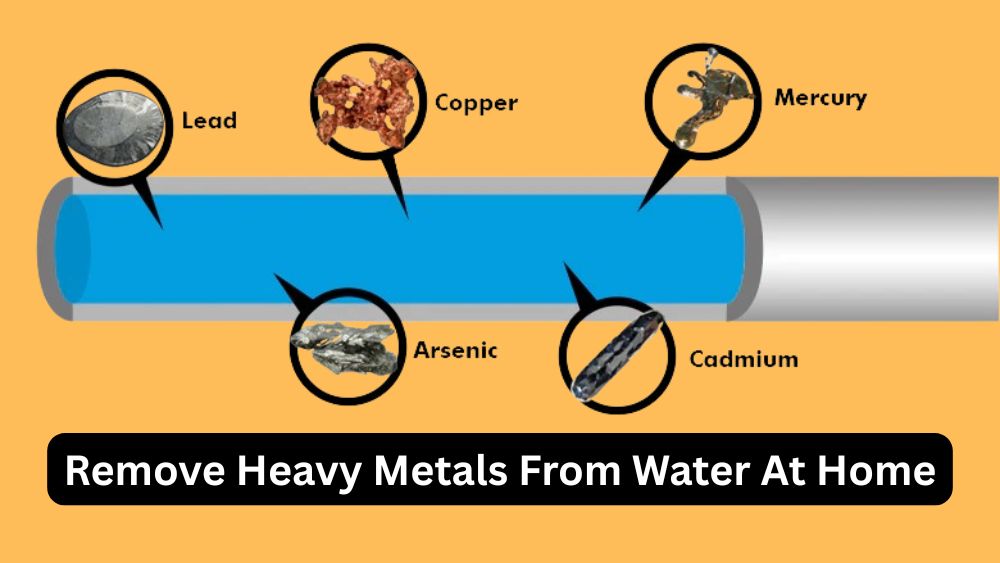
Lead, Arsenic, Mercury, Cadmium, Copper
Lead: Neurotoxin, especially harmful to children. Sources: old pipes, solder, plumbing fixtures.
Arsenic: Can occur naturally in groundwater; associated with cancers over long-term exposure.
Mercury, Cadmium: Industrial pollutants, toxic even at low concentrations.
Copper: Essential mineral, but in excess can cause gastrointestinal upset and liver/kidney effects.
Regulations & thresholds (examples vary by region):
Lead: often < 0.01 mg/L (10 µg/L)
Arsenic: often < 0.01 mg/L (10 µg/L)
Mercury: very low limits (µg/L or lower)
Fluoride
Fluoride is intentionally added in some municipal systems (for dental health) but in excess can cause fluorosis (teeth, bones). Safe concentration ranges often lie between 0.7 to 1.5 mg/L (depending on climate, intake).
Nitrates / Nitrites
Often from agricultural runoff or fertilizers.
Nitrate (NO₃⁻): In infants, can cause “blue baby syndrome” (methemoglobinemia). Limits often ~50 mg/L (as NO₃⁻) or ~10 mg/L (as nitrogen).
Nitrite (NO₂⁻): More toxic; often regulated at ~1 mg/L (as NO₂⁻).
Microbes / Microbial Indicators
Total coliforms / fecal coliforms / E. coli: Indicators of fecal contamination.
When chlorine or chloramine disinfectants react with natural organic matter, they produce byproducts like TTHMs (total trihalomethanes), haloacetic acids (HAAs), etc. These are regulated due to potential carcinogenicity over long-term exposure.
Example limit: TTHMs often regulated to ≤ 80 µg/L (in U.S. systems).
PFAS (Per- and polyfluoroalkyl substances): “Forever chemicals” used in many industrial and consumer applications. They resist degradation and accumulate in water sources.
Microplastics: Tiny plastic particles that enter water from breakdown of larger plastics or via runoff. Their health effects are under active research.
Pharmaceuticals / personal care products (PPCPs): Trace amounts of medicines, hormones, cosmetics that slip through wastewater treatment into aquifers.
These are harder to regulate (many places have no official thresholds yet), but awareness and monitoring are growing.
4. Home Testing vs. Professional Laboratory Testing
4.1 When Home Testing Is Useful
Home tests are good for:
Preliminary screening: e.g. TDS, pH, turbidity.
Routine checks: To detect changes over time.
Certifying gross issues: E.g. a sudden spike in turbidity or color.
Typical home kits include pH strips, TDS meters, colorimetric reagents for nitrate, chlorine, hardness, etc. They provide approximate results (often ±10–20% accuracy) and are useful for monitoring, but not necessarily for formal compliance or regulatory decisions.
4.2 When to Use Laboratory Testing
Use labs when:
You detect suspicious results from home tests.
You need legally or medically valid data (e.g. for public supply compliance or health diagnosis).
You want trace-level detection (e.g. parts per billion) for heavy metals, PFAS, pesticides, etc.
You need microbial pathogen identification.
Labs use calibrated instruments and standardized protocols, producing credible, documented reports.
5. Interpreting Results: What to Watch For
When you receive test data for water quality indicators, here’s how to interpret:
Compare to standards/regulations: Each region has its own acceptable limits (e.g. WHO, EPA, EU, your national guidelines).
Check trends: Compare past results to detect changes or deterioration.
Look for correlated anomalies:
High turbidity + high microbial counts = likely contamination.
Elevated lead + low pH = possible corrosion of pipes.
Sudden jump in TDS / conductivity = possible intrusion of contamination or mixing of water sources.
Clean / sanitize systems as needed (especially for microbial safety).
Check for system integrity (leaks, bypasses, Fails).
6.4 Alternative Options
Use bottled water (short term).
Blend water sources to dilute contaminants (if safe).
Use point-of-use devices (e.g. under-sink RO) rather than whole-house in some cases.
7. Special Considerations & Use Cases
7.1 Well Water vs. Municipal Water
Municipal (city) water: Treated centrally, often with disinfection and control of major contaminants; you usually get periodic reports (e.g. Consumer Confidence Reports in U.S.).
Well / private water: Untreated water, more susceptible to local contamination (nitrates, heavy metals, microbes). Must test regularly, especially after heavy rainfall, floods, or nearby land use changes.
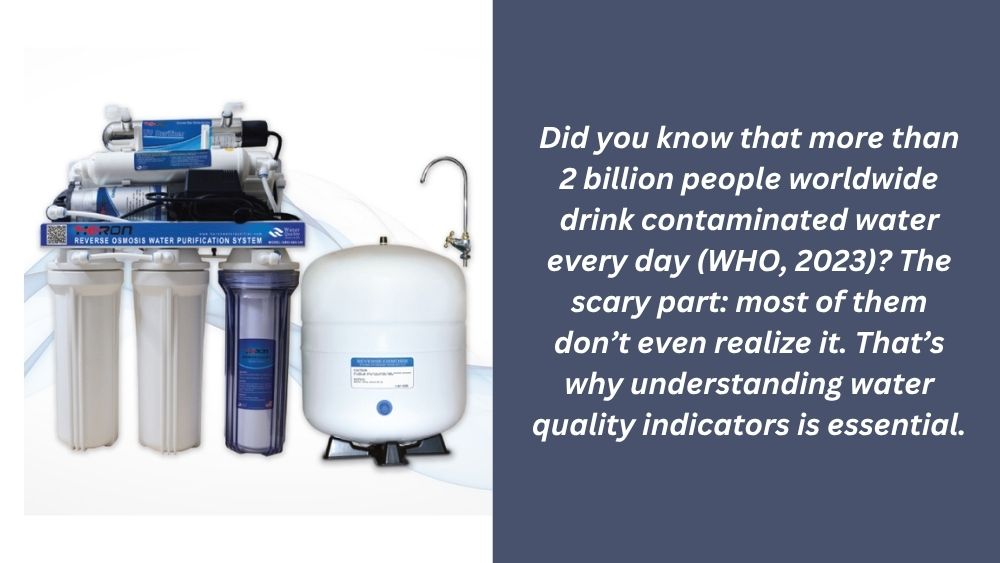
7.2 Reverse Osmosis (RO) Systems & Their Role
RO is one of the most powerful point-of-use or point-of-entry water purification technologies. Key characteristics:
Mechanism: Applies pressure to force water through a semipermeable membrane, rejecting dissolved ions, molecules, and many contaminants.
What it removes / reduces strongly: TDS, hardness, many heavy metals (lead, arsenic, mercury), fluoride, nitrates, many PFAS, salts, many dissolved substances.
What it doesn’t remove well / needs pre/post treatment: Some volatile organic compounds, dissolved gases (if uncharged), chlorine (which can degrade membranes — usually removed via pre-carbon), some microbial or biologicals (though membranes are effective barriers in many cases).
Trade-offs:
Produces “waste water” (reject stream).
Needs pre-filtering to protect membranes (sediment, chlorine removal).
Because RO systems handle many of the key water quality indicators (TDS, hardness, heavy metals, nitrates), they are frequently recommended when multiple indicators fail or for households with uncertain input water quality.
7.3 Emerging Contaminants & Future Directions
As awareness grows, newer indicators are gaining attention:
PFAS (Per- and polyfluoroalkyl substances): Persistent, bioaccumulative substances used in many industries (non-stick coatings, firefighting foam). Their removal often requires advanced filtration or adsorption methods.
Microplastics: Very fine particles; often requires ultrafiltration or membrane technologies to remove.
Endocrine disruptors, pharmaceuticals: Present in trace amounts; advanced oxidation, adsorption, and membrane treatments are being studied.
Algal toxins / cyanotoxins: In water bodies subject to algal blooms, specific toxin monitoring is needed.
As treatment technologies evolve, indicators to monitor these emerging threats will become more central.
8. Sample Structure for a 2,500-Word Article (Enhanced Version)
Below is a suggested structure and expanded content you can use if you want to produce a polished, long-form article:
Introduction / Why Water Quality Matters
Human health, ecosystem, economic costs
Purpose of indicators
The Science of Indicators
Definition, categories (physical / chemical / biological)
How they relate to water chemistry
Major Water Quality Indicators (with sub-sections)
pH
Turbidity & suspended solids
TDS & conductivity
Hardness
Dissolved Oxygen (for natural waters)
Specific pollutants (heavy metals, nitrates, fluoride, PFAS, etc.)
Microbial indicators
Disinfection byproducts
Measurement Techniques
Sensory / field kits
Probes and instruments
Laboratory methods
Interpreting & Acting on Results
Understanding thresholds & standards
Diagnosing causes
Matching treatment / remediation
Case studies or examples (e.g. “if turbidity up, check sediment prefilter”)
Special Cases & Strategies
RO systems: how they tackle multiple indicators
Well water vs municipal water
Emerging contaminants & future trends
Practical Advice for Homeowners / Operators
Frequency of testing
Which tests to prioritize
Maintenance of treatment systems
Budget strategies
Conclusion & Call to Action
You can expand each section with examples, local context (e.g. Bangladesh or your region), case studies, diagrams, and photos to make it richer.
Hasan Al Sarker is a Reverse Osmosis Specialist. He has worked for many years to ensure safe drinking water for all. His research paper has been published in several journals, including Issue, Medium, and Slideshare. He is recognized as a water doctor among specialists though he did not attend medical college.
Besides working as a researcher of reverse osmosis technology, he is also very fancy with the kitchen and cooking. His guides are reading thousands of people every day. As a head of content, he is responsible for all the published articles at RO System Reviews.
Have you ever wondered if distilled water is safe to drink? You might have heard different opinions and felt confused about whether it’s good or bad for your health.
Drinking water is something you do every day, so it’s important to know exactly what you’re putting into your body. This article will clear up the mystery around distilled water and help you decide if it’s the right choice for you.
Keep reading to discover the facts that could change how you think about the water you drink.
What Is Distilled Water
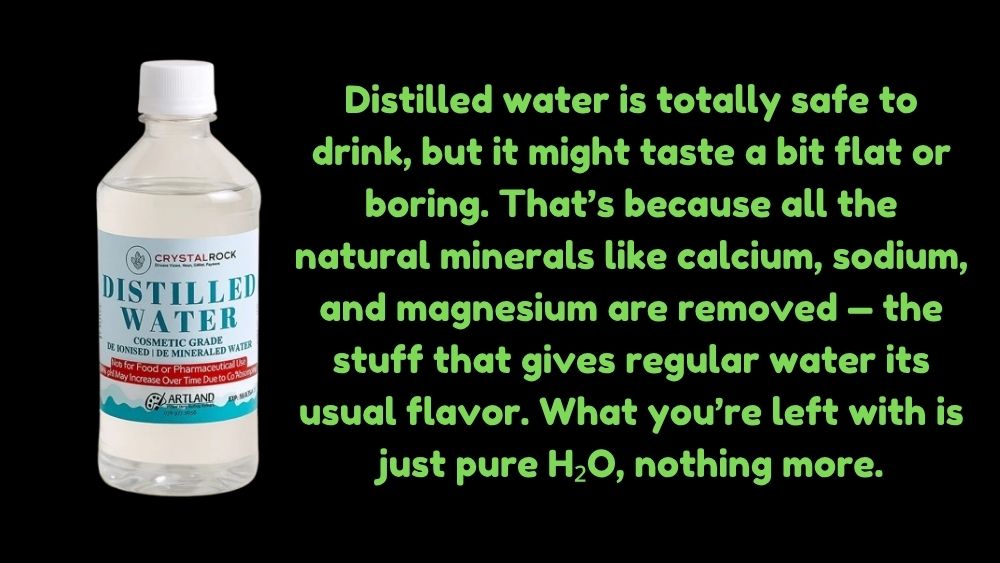
Distilled water is a type of purified water. It goes through a special process that removes almost everything in it. This makes it very clean and pure. Many people wonder what exactly distilled water is and how it is made.
Understanding what distilled water is helps to know if it is safe to drink. It is different from tap water or bottled water. The process it goes through changes its contents.
What Does Distilled Water Contain?
Distilled water contains only water molecules. It has no minerals, salts, or other chemicals. The distillation process removes impurities. This means no bacteria, viruses, or metals remain.
How Is Distilled Water Made?
Distilled water is made by boiling water. The steam rises and leaves impurities behind. The steam cools down and turns back into water. This water is collected as distilled water.
Why Choose Distilled Water?
People choose distilled water for its purity. It is free from contaminants found in other water types. It is often used in medical and laboratory settings. Some also prefer it for cooking or drinking.
How Distillation Works
Understanding how distillation works helps explain why distilled water is pure. Distillation removes impurities and many chemicals from water. This process uses evaporation and condensation. It mimics the natural water cycle but on a small scale.
Heating The Water
The first step is heating the water until it boils. Boiling turns water into steam. Most impurities, like salts and minerals, do not boil with water. They stay behind as solid residue.
Collecting The Steam
The steam rises and leaves impurities behind. This steam is pure water vapor. It moves to a cooler part of the distillation setup. This keeps the process clean and efficient.
Cooling And Condensing
The steam cools down in a condenser. Cooling changes the steam back into liquid water. This liquid is called distilled water. It has very few impurities or minerals left.
Storing The Distilled Water
After condensation, the pure water collects in a clean container. This container keeps the water safe and fresh. Distilled water is free from most contaminants.
Health Effects Of Drinking Distilled Water
Drinking distilled water affects your health in different ways. This water is pure and free from minerals and impurities. People wonder if it is safe to drink every day. Understanding its health effects helps you decide if it fits your needs.
Potential Benefits
Distilled water is very clean and free from bacteria. It helps avoid harmful chemicals found in some tap water. People with weak immune systems may benefit from its purity. It can support detox by flushing out toxins from the body. Distilled water also prevents mineral build-up in machines like coffee makers.
Possible Risks
Distilled water lacks minerals like calcium and magnesium. Drinking only distilled water may reduce your mineral intake. This could lead to mineral deficiencies over time. Some people find its taste flat or bland. It may also cause body fluids to lose minerals through urine. People with certain health issues should talk to a doctor first.
Distilled Water Compared To Other Types
Distilled water is one of many types of water people drink daily. Each type has unique qualities and uses. Understanding how distilled water compares to others helps you choose the right water for your needs.
Tap Water
Tap water comes from local sources and is treated for safety. It contains minerals like calcium and magnesium. Some people worry about chemicals and contaminants in tap water. It is usually safe but can vary by location. Tap water tastes different depending on where you live.
Filtered Water
Filtered water is tap water cleaned with a filter. Filters remove chlorine, sediments, and some impurities. This water keeps natural minerals that help taste. It is cleaner and often better tasting than tap water. Many use filters at home for daily drinking water.
Spring Water
Spring water comes from natural underground sources. It usually contains minerals that make it taste fresh. This water is bottled directly from springs. People like it for its natural origin and flavor. Spring water quality depends on the source location.
Common Myths About Distilled Water
Distilled water often faces many myths and misunderstandings. These myths can confuse people about its safety and use. Clearing up these myths helps make better choices about drinking water.
People hear different things about distilled water that are not true. Let’s look at some common myths and the facts behind them.
Myth 1: Distilled Water Lacks Essential Minerals
Many believe distilled water has no minerals at all. Distillation removes minerals, but this does not make the water harmful. Our main mineral intake comes from food, not water. Drinking distilled water does not cause mineral deficiency.
Myth 2: Distilled Water Is Bad For Your Health
Some say distilled water can harm your body. This is false. Distilled water is pure and free from contaminants. It is safe to drink and often used in medical settings for this reason.
Myth 3: Distilled Water Tastes Flat And Unpleasant
People think distilled water tastes bad. The taste is different because it lacks minerals. Some prefer it for its clean, neutral flavor. Taste varies from person to person.
Myth 4: Distilled Water Can Remove Minerals From Your Body
There is a myth that distilled water pulls minerals from your body. Water does not extract minerals from your tissues. It simply hydrates you like other water types.
Situations Where Distilled Water Is Recommended
Distilled water is pure and free from most minerals and impurities. This makes it useful in certain situations. Its clean nature helps avoid problems caused by minerals in water. Some tasks and conditions need this level of purity.
Here are some common situations where distilled water is a good choice.
Distilled water helps keep appliances like steam irons and humidifiers clean. It stops mineral build-up that can damage these devices. This extends the life of the appliances.
For Baby Formula Preparation
Some parents use distilled water to mix baby formula. It removes harmful substances and germs. This provides extra safety for infants.
Car Battery Maintenance
Distilled water is ideal for topping up car batteries. It avoids minerals that can harm the battery. This keeps the battery working well for longer.
In Cosmetic And Skincare Products
Distilled water is often used in making cosmetics. It prevents skin irritation from minerals or chemicals. This helps keep skin safe and healthy.
How To Safely Incorporate Distilled Water
Distilled water is pure but lacks minerals found in regular water. Using it safely means balancing its benefits with your body’s needs. This section guides how to add distilled water into your daily life without risks.
Simple steps help you use distilled water wisely. They protect your health and keep hydration effective.
Understand When To Use Distilled Water
Distilled water is best for short-term use. It suits people needing pure water without contaminants. Ideal for mixing with supplements or for medical devices like CPAP machines. Not meant to replace all drinking water daily.
Mix Distilled Water With Mineral Sources
Drinking only distilled water can lower your mineral intake. Balance it by eating foods rich in calcium and magnesium. Consider adding mineral drops to your water. This keeps your body strong and hydrated.
Monitor Your Body’s Response
Notice how your body feels after drinking distilled water. Watch for signs like tiredness or muscle cramps. These may signal low minerals. Adjust your water source or diet to fix this quickly.
Use Clean Storage Containers
Store distilled water in clean, sealed bottles. Avoid containers that can leach chemicals. Glass or BPA-free plastic works well. Proper storage keeps water pure and safe to drink.
Consult A Healthcare Professional
Ask a doctor about using distilled water, especially for health issues. They can advise based on your condition. Safe use depends on personal health and diet needs.
Frequently Asked Questions
Is Distilled Water Safe For Everyday Drinking?
Yes, distilled water is safe for daily drinking. It is free from impurities and contaminants but lacks minerals. Drinking it occasionally is fine, but long-term use may require mineral supplementation for balanced nutrition.
Does Distilled Water Remove Harmful Chemicals?
Distilled water removes most chemicals and impurities through boiling and condensation. It effectively eliminates bacteria, viruses, heavy metals, and minerals. This makes it one of the purest forms of water available.
Can Distilled Water Cause Mineral Deficiency?
Drinking only distilled water may lead to mineral deficiency. It lacks essential minerals like calcium and magnesium, usually obtained from regular water and food. Balanced diet or mineral supplements can prevent deficiencies.
How Does Distilled Water Taste Compared To Regular Water?
Distilled water tastes flat or bland due to the absence of minerals. Minerals in regular water add flavor and mouthfeel. Some people prefer its neutral taste, while others find it less enjoyable.
Conclusion
Distilled water is safe to drink for most people. It does not have minerals found in regular water. This means it may taste flat or bland. Drinking it won’t cause harm but lacks some nutrients. For daily use, mixing with mineral water can help.
Always choose clean, safe water for your health. Stay informed and pick what fits your needs best. Simple steps lead to better hydration and wellness.
Hasan Al Sarker is a Reverse Osmosis Specialist. He has worked for many years to ensure safe drinking water for all. His research paper has been published in several journals, including Issue, Medium, and Slideshare. He is recognized as a water doctor among specialists though he did not attend medical college.
Besides working as a researcher of reverse osmosis technology, he is also very fancy with the kitchen and cooking. His guides are reading thousands of people every day. As a head of content, he is responsible for all the published articles at RO System Reviews.
You might not see them, but microplastics are everywhere—in the water you drink, the food you eat, and even the air you breathe. These tiny plastic particles can harm your health and the environment.
So, how can you protect yourself and your family? This article will show you simple and effective ways to remove microplastics from your water. By understanding these methods, you’ll take control of your water quality and make safer choices every day.
Keep reading to discover how easy it can be to reduce microplastics in your life.
Sources Of Microplastics
Microplastics are tiny plastic pieces less than 5mm long. They come from many sources and enter water bodies easily. Understanding where microplastics come from helps us find ways to remove them.
Primary Vs Secondary Microplastics
Primary microplastics are made small on purpose. Examples include microbeads in cosmetics and plastic pellets used in factories. These tiny plastics enter water directly.
Secondary microplastics form when bigger plastic items break down. Plastic bags, bottles, and fishing nets break into smaller pieces over time. These fragments pollute water and harm animals.
Common Origins In Water Systems
Wastewater from homes and industries carries microplastics. Washing clothes releases microfibers into water. These fibers come from synthetic fabrics like polyester.
Stormwater runoff also transports plastics from streets and landfills. Plastic litter on roads washes into rivers and lakes. This adds to the microplastic problem in water.
Health And Environmental Impact
Microplastics in water cause serious problems for health and the environment. These tiny plastic particles come from many sources. They do not break down easily. They spread through oceans, rivers, and lakes. This pollution affects animals, plants, and people. Understanding the impact helps us see why removing microplastics matters.
Effects On Marine Life
Marine animals often mistake microplastics for food. Fish, turtles, and birds eat these tiny plastics by accident. The plastics can block their stomachs or cause injuries. Harm to animals can lead to fewer fish and weaker ecosystems. Microplastics also carry harmful chemicals. These chemicals build up in the food chain. This harms not only sea creatures but whole ocean life.
Potential Risks To Human Health
Humans can consume microplastics through seafood and water. These plastics may carry toxic chemicals and bacteria. Long-term exposure might cause health problems. Scientists worry about effects on the gut, lungs, and immune system. Research is ongoing, but risks are clear enough to act. Clean water is vital to protect our health.
Filtration Techniques
Filtration techniques remove microplastics from water by trapping tiny particles. These methods are simple and effective. They do not need complex tools or chemicals. Filtration can work at home or in large systems. Understanding different filters helps choose the right one for clean water.
Mechanical Filters
Mechanical filters use screens or meshes to catch microplastics. The water passes through small holes that block plastic pieces. These filters vary in size. Some catch larger plastics, while others trap very small particles. They are easy to clean and reuse. Mechanical filters are a good first step in water cleaning.
Membrane Filtration
Membrane filtration uses thin layers that let water pass but block microplastics. These membranes have tiny pores smaller than plastic particles. This method removes even the smallest microplastics. It works well in water treatment plants and homes. Membrane filters need regular care to keep them working well.
Activated Carbon Filters
Activated carbon filters absorb microplastics and other impurities. They have a large surface area that attracts tiny particles. These filters also improve water taste and remove bad odors. They work best after mechanical or membrane filtration. Activated carbon filters are a popular choice for clean drinking water.
Advanced Removal Methods
Advanced removal methods offer effective ways to clean water from microplastics. These techniques go beyond simple filtering. They target tiny plastic particles that standard methods often miss. Scientists and engineers develop these methods to protect health and the environment.
Each method uses a different approach. Some use electricity, others use natural processes or tiny particles. These solutions can be used in water treatment plants or in small-scale systems. Understanding these methods helps to choose the best option for clean water.
Electrocoagulation
Electrocoagulation uses electric currents to remove microplastics. The current causes small particles to stick together. These bigger clumps are easier to remove from water. This method works fast and does not need chemicals. It can remove other pollutants too, not just plastics.
Biological Treatments
Biological treatments use bacteria and other microbes to break down microplastics. Some microbes can eat plastic particles as food. This process turns plastics into harmless substances. It takes time but is eco-friendly and safe. Scientists study which microbes work best for different plastics.
Nanotechnology Applications
Nanotechnology applies tiny particles to capture microplastics. These particles attract plastic pieces and hold them. Nanomaterials can filter water at a very small scale. They improve the removal efficiency greatly. This method is still new but shows strong potential for clean water.
Diy Solutions For Home Use
Removing microplastics from water at home is possible with simple methods. These DIY solutions help improve water quality without expensive tools. They use basic materials you can find easily. This section explains easy ways to filter water and reduce microplastics.
Simple Filtration Systems
Build a basic filter using sand, gravel, and charcoal. Layer these materials in a clean container. Pour water slowly through the layers. The filter traps tiny plastic particles and other dirt. Replace the charcoal and sand regularly for better results. This method cleans water enough for washing or gardening.
Using Natural Materials
Certain natural materials catch microplastics well. Cotton cloth or coffee filters can block small particles. Place a cloth over a jar and pour water through it. The fabric stops many microplastic pieces from passing. Another option is using activated charcoal from burned wood. It absorbs harmful substances and plastics. These materials are cheap and easy to use at home.
Preventing Microplastic Pollution
Preventing microplastic pollution is key to keeping water clean and safe. Stopping microplastics from entering water sources saves effort in removing them later. Simple actions by individuals and communities can reduce microplastic pollution greatly.
Reducing Plastic Usage
Using less plastic helps stop microplastics at the source. Choose reusable bags, bottles, and containers. Avoid single-use plastics like straws and cutlery. Buying products with less plastic packaging also helps. Small changes in daily habits cut plastic waste significantly.
Waste Management Improvements
Better waste management stops plastics from reaching water. Proper trash collection and recycling reduce plastic pollution. Communities should build more recycling centers and improve sorting. Fixing leaks in waste systems keeps plastics out of rivers and oceans. Stronger laws and public education support cleaner waste handling.
Frequently Asked Questions
What Are Microplastics In Water?
Microplastics are tiny plastic particles under 5mm in water. They come from plastic waste breakdown and synthetic fibers. These particles pollute water and pose health risks to humans and aquatic life.
How Can Microplastics Be Removed From Drinking Water?
Microplastics can be removed using advanced filtration methods like activated carbon filters, reverse osmosis, and ultrafiltration. These technologies effectively trap small plastic particles, improving water safety and quality for consumption.
Are Home Water Filters Effective Against Microplastics?
Some home water filters, especially those with reverse osmosis or carbon blocks, reduce microplastics. However, effectiveness varies by filter type. It’s best to choose filters tested for microplastic removal to ensure clean drinking water.
Can Natural Methods Help Remove Microplastics From Water?
Natural methods like phytoremediation use plants to absorb pollutants but are limited for microplastics. While helpful in some cases, advanced filtration remains the most reliable method for microplastic removal.
Conclusion
Removing microplastics from water protects health and nature. Small filters and natural methods help clear water effectively. Regular cleaning and better waste habits reduce pollution sources. Everyone can join efforts to keep water clean and safe. Clean water means a healthier life for all living things.
Simple steps today create a big difference tomorrow. Stay informed and act to protect our water resources. Together, we can make water free from harmful microplastics.
Hasan Al Sarker is a Reverse Osmosis Specialist. He has worked for many years to ensure safe drinking water for all. His research paper has been published in several journals, including Issue, Medium, and Slideshare. He is recognized as a water doctor among specialists though he did not attend medical college.
Besides working as a researcher of reverse osmosis technology, he is also very fancy with the kitchen and cooking. His guides are reading thousands of people every day. As a head of content, he is responsible for all the published articles at RO System Reviews.
If you rely on well water, you know how important it is to keep it clean and safe. But how do you choose the right micron filter size for your well water?
Picking the wrong size could mean missing harmful particles or clogging your system too quickly. You’ll discover exactly what micron filter size works best for your well water needs. By the end, you’ll feel confident about protecting your water and your family’s health.
Keep reading to find the simple answers you’ve been looking for.
Importance Of Micron Filters
Micron filters play a key role in well water systems. They help keep water clean and safe for daily use. Choosing the right micron filter size affects how well it works. Understanding their importance helps protect your home and health.
Protecting Plumbing And Appliances
Micron filters stop small particles from entering pipes. Dirt and sand can cause damage and blockages. Filters prevent costly repairs and extend appliance life. Clean water means fewer breakdowns and better performance.
Improving Water Quality
Filters remove sediments that make water cloudy or dirty. Clear water looks better and tastes fresher. Using a micron filter improves water for drinking and cooking. It also helps reduce odors and bad taste.
Common Contaminants In Well Water
Well water often contains sand, silt, and rust particles. These can harm plumbing and affect water clarity. Some wells have bacteria or organic matter. Micron filters catch many of these contaminants, making water safer.
Micron Sizes Explained
Understanding micron sizes helps choose the right filter for well water. Micron size shows how small a particle the filter can catch. Smaller micron filters remove finer dirt and impurities.
Choosing the correct micron size protects your plumbing and improves water quality. Knowing the basics of micron sizes makes selection easier and clearer.
What Does Micron Mean?
A micron is a unit that measures particles. It equals one-millionth of a meter. This size is too small to see with the naked eye. Filters use micron ratings to show what particles they block.
For example, a 5-micron filter stops particles larger than 5 microns. Smaller particles pass through it. The smaller the micron number, the cleaner the water.
Typical Micron Ratings For Filters
Filters come in many micron sizes. Common sizes are 1, 5, 10, and 20 microns. A 20-micron filter blocks large particles like sand and rust. A 5-micron filter removes smaller dirt and silt.
One-micron filters catch even finer particles like bacteria. These are used when water needs extra cleaning. Choose a filter based on your water’s dirt level and use.
Choosing The Right Micron Size
Choosing the right micron size for a well water filter is key to clean, safe water. The micron size decides how small particles the filter can catch. A smaller micron size means finer filtration but can slow water flow. A bigger size lets water flow faster but may miss tiny particles.
Assessing Well Water Conditions
Start by testing your well water. Check for sand, dirt, rust, and other sediments. Also, look for bacteria or chemicals if possible. Different wells have different problems. Knowing what is in your water helps pick the best micron filter size.
Balancing Filtration And Flow Rate
Small micron filters block tiny particles but can reduce water flow. Larger micron filters allow faster flow but catch fewer particles. Find a balance between clean water and good flow. Choose a filter that fits your water use needs and pump capacity.
Common Micron Sizes For Well Water
Filters between 5 and 20 microns work well for most well water. A 20-micron filter stops larger debris like sand. A 5-micron filter catches smaller particles like rust and silt. For very clear water, a 1-micron filter can remove very fine particles.
Types Of Micron Filters
Choosing the right micron filter for well water means understanding the types available. Each filter type targets different contaminants. This helps protect your water and your plumbing system. Knowing the types makes it easier to pick the best option for your needs.
Sediment Filters
Sediment filters remove dirt, sand, and rust from water. They use small pores to trap particles. Common sizes range from 1 to 50 microns. Smaller micron sizes catch finer particles. These filters protect pumps and pipes from clogging. They are often the first stage in water filtration.
Carbon Filters
Carbon filters reduce bad taste, odors, and chemicals. They absorb chlorine, pesticides, and organic compounds. These filters improve water quality and smell. Carbon blocks have tiny pores for filtering particles. They do not remove sediments well. Usually, carbon filters work after sediment filters.
Ceramic Filters
Ceramic filters trap bacteria, sediments, and some viruses. They have very small pores, often 0.5 microns or less. These filters can clean water without chemicals. They last long and are easy to clean. Ceramic filters help make water safer to drink. They work well in rural well water systems.
Filter Maintenance And Replacement
Proper filter maintenance and timely replacement keep your well water clean and safe. Filters trap dirt, sand, and other particles from the water. Over time, these particles build up and reduce the filter’s effectiveness. Regular care ensures water flows smoothly and stays free from contaminants.
Signs Of Clogged Filters
Water pressure drops suddenly. The flow slows down noticeably. Water may look cloudy or have a strange taste. These signs often mean the filter is clogged. Dirt and debris block water from passing through easily. Check the filter if you notice any of these issues.
Recommended Replacement Intervals
Replace filters every 3 to 6 months for best results. This depends on the water quality and usage. Heavy sediment in water may require more frequent changes. Follow the manufacturer’s guidelines for your specific filter model. Regular replacement keeps your well water clean and your system running well.
Additional Water Treatment Options
Choosing the right micron filter for well water helps remove dirt and particles. Sometimes, more treatment is needed to improve water quality. Several options work well with micron filters. These treatments target different problems like germs, hardness, and chemicals. Understanding these options can help you get cleaner, safer water.
Uv Purification
UV purification uses ultraviolet light to kill bacteria and viruses. It does not add chemicals to the water. This method works well after the water passes through a micron filter. The filter removes particles, so UV light can reach germs easily. UV systems need electricity to run. They are effective for well water with biological contamination.
Water Softeners
Water softeners remove minerals like calcium and magnesium. These minerals cause hard water problems such as scale buildup. Softening water helps protect pipes and appliances. Softeners use salt or potassium to exchange minerals in the water. They work well if the well water has high hardness levels. Softened water feels better for washing and drinking.
Chemical Treatments
Chemical treatments add substances to water to remove or neutralize contaminants. Chlorine is a common chemical used to kill bacteria. Other chemicals reduce iron, manganese, or sulfur odors. These treatments may require careful handling and dosing. They work best with proper filtration to remove particles. Chemical treatments improve taste, smell, and safety of well water.
Frequently Asked Questions
What Micron Filter Size Is Best For Well Water?
A 5-micron filter is ideal for most well water systems. It effectively removes sediments, dirt, and rust particles. This size balances filtration efficiency and water flow, ensuring clean water without clogging the filter quickly.
How To Choose The Right Micron Filter For Well Water?
Assess your well water’s turbidity and sediment levels first. Choose smaller micron sizes for finer particles and larger sizes for heavy sediment. Testing your water helps select a filter that matches your specific contamination needs.
Does A Smaller Micron Filter Improve Well Water Quality?
Yes, smaller micron filters remove finer particles and contaminants. However, they may clog faster and reduce water pressure. Balance filtration needs with maintenance frequency for optimal well water quality.
Can A Micron Filter Remove Bacteria From Well Water?
Micron filters primarily remove physical particles, not bacteria. For bacterial removal, use UV sterilizers or chemical treatments alongside micron filters. Combining methods ensures safer, cleaner well water.
Conclusion
Choosing the right micron filter size protects your well water quality. Smaller micron filters block tiny particles and improve water clarity. Larger filters catch bigger debris but may miss fine contaminants. Test your water to know what size fits best.
Change filters regularly to keep your system working well. Clean water means safer drinking and better home use. Simple steps make a big difference in water safety. Keep your well water clean with the right filter size.
Hasan Al Sarker is a Reverse Osmosis Specialist. He has worked for many years to ensure safe drinking water for all. His research paper has been published in several journals, including Issue, Medium, and Slideshare. He is recognized as a water doctor among specialists though he did not attend medical college.
Besides working as a researcher of reverse osmosis technology, he is also very fancy with the kitchen and cooking. His guides are reading thousands of people every day. As a head of content, he is responsible for all the published articles at RO System Reviews.
Are you worried about the quality of your tap water? Heavy metals like lead, mercury, and arsenic can sneak into your water supply and harm your health without you even realizing it.
The good news is, you don’t need expensive equipment or complicated methods to make your water safe. You’ll discover simple and effective ways to remove heavy metals from your water right at home. Keep reading to protect your family and enjoy clean, healthy water every day.
Sources Of Heavy Metals In Water
Heavy metals in water come from many sources. These metals enter water supplies through natural and human activities. Understanding these sources helps to reduce exposure and keep water safe.
Some metals occur naturally in soil and rocks. Rain can wash these metals into rivers and lakes. Human actions add more heavy metals to water through pollution. Industrial waste, mining, and old pipes often release metals into water systems.
Common Heavy Metals Found
Lead is a common heavy metal in drinking water. It often comes from old plumbing pipes and fixtures. Mercury enters water from industrial waste and coal burning. Arsenic is found in groundwater near mining sites. Cadmium appears due to battery disposal and industrial pollution. These metals can contaminate water even at low levels.
Health Risks Associated
Heavy metals harm the human body over time. Lead can cause brain damage and learning problems in children. Mercury affects the nervous system and can cause memory loss. Arsenic exposure may lead to skin problems and cancer. Cadmium harms kidneys and weakens bones. Drinking water with heavy metals poses serious health risks.
Testing Water For Heavy Metals
Testing water for heavy metals is the first step to keep your home safe. Heavy metals like lead, mercury, and arsenic can harm health. Knowing what is in your water helps you decide the best way to remove them. Testing shows if heavy metals are present and their levels.
There are two main ways to test water at home. One is using home testing kits. The other is sending samples to professional labs. Each method has its own benefits and limits.
Home Testing Kits
Home testing kits are easy to use and give quick results. These kits come with simple tools and color charts. You dip a test strip in water and watch the color change. The color shows the amount of heavy metals.
These kits are affordable and do not need special skills. You can test water any time. But, they may not be very accurate for low metal levels. Use them for a basic check or regular monitoring.
Lab testing costs more and takes longer. The results come with clear reports and advice. Choose lab testing if you need exact information or if home kits show a problem.
Filtration Methods
Filtration methods are effective ways to remove heavy metals from water at home. These methods use different materials and technologies to clean your water. Choosing the right filtration system helps keep your drinking water safe and healthy.
Activated Carbon Filters
Activated carbon filters trap heavy metals by adsorption. The carbon has many tiny pores that catch contaminants. These filters remove lead, mercury, and other harmful metals. They also improve water taste and smell. Activated carbon filters are easy to use and affordable. Regular replacement of the filter keeps the system working well.
Reverse Osmosis Systems
Reverse osmosis systems push water through a thin membrane. This membrane blocks heavy metals and other impurities. It removes up to 99% of contaminants, including arsenic and cadmium. These systems need water pressure to work properly. They often include multiple filters for better purification. Reverse osmosis provides very clean water but wastes some water during the process.
Distillation Units
Distillation units boil water and collect the steam. The steam leaves heavy metals and other solids behind. The collected steam turns back into clean water. This method removes most heavy metals and bacteria. Distillation units need electricity to operate. They produce pure water but can be slow and use more energy than other filters.
Chemical Treatment Options
Chemical treatment methods help remove heavy metals from water at home. These methods change the metals into forms that are easier to separate from water. They are practical for small-scale water cleaning. Home users can apply these methods with simple tools and safe chemicals.
Chemical treatments often work by binding metals or exchanging metal ions. This makes the metals less harmful and easier to filter out. Below are two common chemical treatment options.
Using Chelating Agents
Chelating agents are chemicals that bind tightly to heavy metals. They form stable compounds called chelates. These compounds keep metals dissolved and stop them from causing harm.
Many chelating agents are safe for home use. They help remove metals like lead, mercury, and cadmium. After adding a chelating agent, metals can be filtered or settled out.
Common chelating agents include EDTA and citric acid. These agents work by grabbing metal ions and holding them. This method is effective and easy to apply.
Ion Exchange Techniques
Ion exchange uses special resins to swap harmful metal ions with safer ones. These resins attract heavy metals and hold them. At the same time, they release harmless ions into the water.
This method removes metals like arsenic, copper, and zinc. Ion exchange filters are available for home water systems. They need occasional cleaning or replacement to stay effective.
The process is quick and does not change water taste. Ion exchange is a reliable way to reduce heavy metals at home.
Natural And Diy Solutions
Removing heavy metals from water at home can be safe and natural. Many DIY methods use simple materials. These solutions help clean water without chemicals. They are easy to try and cost-effective. Natural ways also protect the environment and your health.
Using Clay And Charcoal
Bentonite clay and activated charcoal can trap heavy metals. Clay absorbs metals like lead and mercury. Charcoal has tiny pores that catch impurities. Combine clay and charcoal in a filter or jar. Pour water slowly through this mixture. The heavy metals stick to the particles and stay behind. This method improves water taste and clarity too.
Plant-based Filtration
Certain plants can help remove metals from water. Water hyacinth, duckweed, and cattails absorb toxins through their roots. Place these plants in water containers or ponds. They pull metals out naturally as they grow. Use a mesh or net to keep plants from floating away. Change the plants regularly to keep water clean. This method works well for small-scale water treatment at home.
Maintaining And Monitoring Water Quality
Keeping your water free from heavy metals needs constant care. Maintaining and monitoring water quality helps keep your family safe. It ensures your water stays clean and healthy over time.
Regular checks help catch problems early. Small issues can turn into big ones without proper care. Good habits make a big difference in water safety.
Regular Filter Replacement
Filters trap heavy metals and other harmful particles. Over time, filters get full and lose their power. Changing filters on time keeps water pure and fresh. Follow the filter maker’s instructions for best results. Using old filters can let metals pass through. Keep a schedule to replace filters regularly. This small step keeps your water safe every day.
Routine Water Testing
Testing water shows if heavy metals are still present. Simple test kits are available for home use. Testing often helps find problems before they grow. Send samples to labs for accurate results. Record test results to track water quality changes. Regular testing is the best way to stay sure. Clean water is key for good health at home.
Frequently Asked Questions
How Can I Test For Heavy Metals In My Water?
You can use home testing kits or send samples to labs. Kits detect metals like lead, arsenic, and mercury quickly. Lab tests offer detailed, accurate results but take longer. Testing helps identify contamination levels and select proper removal methods.
What Are The Best Home Methods To Remove Heavy Metals?
Activated carbon filters, reverse osmosis, and distillation effectively remove heavy metals. These methods reduce toxins like lead and mercury. Choose a system certified for heavy metal removal. Regular maintenance ensures consistent water safety.
Is Boiling Water Effective For Heavy Metal Removal?
No, boiling water does not remove heavy metals. Boiling only kills bacteria and viruses. Heavy metals remain dissolved and can even concentrate as water evaporates. Use filtration or specialized treatment for heavy metal removal.
Can Plants Help Remove Heavy Metals From Drinking Water?
Certain aquatic plants can absorb heavy metals, but they are not practical for home water treatment. They work better for wastewater or environmental cleanup. For drinking water, rely on certified filters and purification systems.
Conclusion
Removing heavy metals from water at home is possible with simple steps. Use filters like activated carbon or reverse osmosis. Boiling water does not remove metals effectively. Regular testing helps know your water quality. Clean water protects your health every day.
Start with small changes for big results. Safe water leads to a safer home. Keep learning and stay aware of water sources. Clean water should be a part of your daily life.
Hasan Al Sarker is a Reverse Osmosis Specialist. He has worked for many years to ensure safe drinking water for all. His research paper has been published in several journals, including Issue, Medium, and Slideshare. He is recognized as a water doctor among specialists though he did not attend medical college.
Besides working as a researcher of reverse osmosis technology, he is also very fancy with the kitchen and cooking. His guides are reading thousands of people every day. As a head of content, he is responsible for all the published articles at RO System Reviews.