Lead contamination in drinking water is one of the most dangerous yet invisible threats to health. Unlike iron or chlorine, you can’t smell, taste, or see it. Even tiny amounts of lead exposure over time can cause neurological issues, developmental delays in children, kidney damage, and cardiovascular problems.
So the big question for many homeowners is: Does a reverse osmosis (RO) system remove lead? The answer is yes—RO is one of the most effective methods for removing lead from water. Let’s explore how it works, why it matters, and what you should know to keep your water safe.
Key Takeaways
Reverse osmosis (RO) can remove up to 95–99% of lead from drinking water【EPA, 2022】.
Lead enters water from corroded pipes, plumbing fixtures, and old solder joints.
RO membranes filter out dissolved lead ions thanks to ultra-fine pores of 0.0001 microns.
Pre-filters, membranes, and post-filters work together for comprehensive lead removal.
Regular testing and maintenance ensure consistent protection.
Adults: Kidney damage, heart disease, and reproductive issues.
Pregnant women: Increased risk of miscarriage and harm to fetal brain development.
Stat Insight: The U.S. CDC states that no safe blood lead level exists for children【CDC, 2021】.
2. Common Sources of Lead
Old lead pipes in water distribution systems.
Plumbing fixtures and faucets with lead solder.
Contaminated well water near industrial sites.
How Does Reverse Osmosis Work?
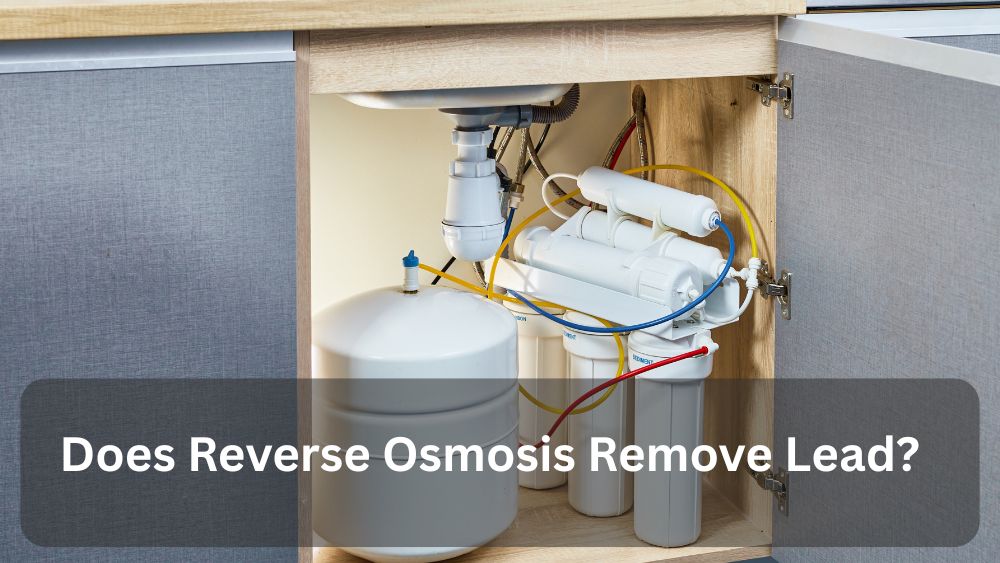
RO purification involves pushing water through a semi-permeable membrane under pressure.
Water molecules pass through.
Contaminants like lead, arsenic, nitrates, and bacteria are rejected.
Purified water is stored in a tank, while waste water (reject stream) is drained away.
How Does Reverse Osmosis Remove Lead?
1. Filtration Through Microscopic Pores
The RO membrane has pores of 0.0001 microns, small enough to block dissolved lead ions.
2. Multi-Stage Purification
Sediment filter: Removes dirt and rust, protecting the membrane.
Carbon filter: Removes chlorine and organics.
RO membrane: Blocks dissolved salts and metals like lead.
Post-carbon filter: Polishes taste before water reaches the faucet.
3. Ion Rejection
Lead typically exists as positively charged ions (Pb²⁺). The membrane rejects these ions due to their size and charge.
How Effective Is RO in Removing Lead?
EPA studies show RO systems remove 95–99% of lead【EPA, 2022】.
NSF/ANSI Standard 58 certifies RO units for lead reduction.
Example:
Raw water lead concentration: 100 parts per billion (ppb).
RO-treated water: <5 ppb (well within EPA safe limit of 15 ppb).
RO vs Other Lead Removal Methods
Method
Effectiveness
Limitations
Reverse Osmosis
95–99%
Needs electricity, wastes some water
Activated Carbon
50–90%
Less effective for dissolved lead
Distillation
99%
Slow, energy-intensive
Ion Exchange
90–95%
Requires resin replacement
Faucet Filters
50–70%
Good for short-term, less reliable
RO stands out as a cost-effective, long-term solution for households.
Does RO Remove Lead from All Sources?
Yes, whether lead comes from pipes, plumbing fixtures, or well water, an RO system can reduce it to safe levels. However:
If the contamination source is active plumbing (old lead pipes), pipe replacement is also recommended.
RO handles dissolved lead but doesn’t fix the root cause in your plumbing.
How to Test Water for Lead Before Installing RO?
Lab Testing: Most accurate method, especially for homes built before 1986.
EPA-approved Test Kits: Affordable for homeowners.
Regular Monitoring: Especially important in areas with aging infrastructure.
How to Ensure Your RO System Continues Removing Lead
1. Replace Filters on Time
Sediment and carbon filters: every 6–12 months.
RO membrane: every 2–3 years.
2. Maintain Proper Water Pressure
RO needs 40–60 PSI for optimal performance.
3. Sanitize the System Annually
Prevents bacterial growth that can interfere with filtration.
4. Check for NSF Certification
Choose systems certified to NSF/ANSI Standard 58 for lead reduction.
Costs of Removing Lead with RO
Component
Cost (USD)
Household RO System
$150–$500
Replacement Filters (annual)
$40–$80
RO Membrane (every 2–3 yrs)
$30–$70
Professional Installation
$100–$200
Electricity cost: Minimal (~$1–$3/month).
Limitations of RO for Lead Removal
Rejects 2–3 liters of water for every 1 liter purified.
Removes beneficial minerals along with lead. (Solution: use remineralization cartridges.)
Requires regular maintenance.
Frequently Asked Questions
Does boiling water remove lead?
No. Boiling actually increases lead concentration as water evaporates.
Are pitcher filters effective against lead?
Some NSF-certified pitcher filters reduce lead, but they’re less reliable than RO.
Is RO enough to make water completely safe from lead?
Yes, for drinking purposes. But fixing old lead pipes is also necessary for long-term safety.
Conclusion
So, does reverse osmosis remove lead? The answer is a resounding yes. RO systems can eliminate up to 99% of lead, providing safe drinking water for your family.
Here’s the bottom line:
Lead is highly toxic, even in tiny amounts.
RO membranes effectively block dissolved lead ions.
Regular maintenance and certification checks ensure consistent performance.
If you live in an area with aging pipes or high risk of contamination, investing in an RO purifier isn’t just about taste—it’s about safeguarding your health.
Hasan Al Sarker is a Reverse Osmosis Specialist. He has worked for many years to ensure safe drinking water for all. His research paper has been published in several journals, including Issue, Medium, and Slideshare. He is recognized as a water doctor among specialists though he did not attend medical college.
Besides working as a researcher of reverse osmosis technology, he is also very fancy with the kitchen and cooking. His guides are reading thousands of people every day. As a head of content, he is responsible for all the published articles at RO System Reviews.
Arsenic is one of the most dangerous contaminants in drinking water. Unlike chlorine or iron, you can’t smell or taste it. Yet, long-term exposure can cause skin lesions, cancer, heart disease, and developmental issues in children.
Millions of people worldwide, especially in South Asia and parts of the U.S., face this hidden threat. The question is: How do you make your drinking water safe? One proven solution is a reverse osmosis (RO) system. But how exactly does it remove arsenic? Let’s break it down.
Key Takeaways
Arsenic is a toxic element found in groundwater, often undetectable without testing.
RO systems remove arsenic by forcing water through a semi-permeable membrane that blocks dissolved contaminants.
RO is capable of reducing arsenic levels by up to 95–99%, making water safe for consumption【WHO, 2022】.
Pre-filters, membranes, and post-filters all play roles in arsenic removal.
Regular maintenance ensures continued protection.
What Is Arsenic and Why Is It Dangerous?
Arsenic is a naturally occurring element found in rocks, soil, and groundwater. Industrial pollution can also add arsenic to water supplies.
Health Risks of Arsenic Exposure
Skin disorders and pigmentation changes.
Increased risk of cancers (skin, bladder, lung).
Cardiovascular diseases.
Developmental issues in children.
Weakness and neurological effects.
Stat Insight: The WHO guideline for arsenic in drinking water is 10 micrograms per liter (10 µg/L)【WHO, 2022】. In some regions, levels exceed 200 µg/L.
How Does Reverse Osmosis Work in General?
An RO system pushes water through a semi-permeable membrane with pore size around 0.0001 microns.
Water molecules pass through.
Dissolved salts, metals, and toxins like arsenic are rejected.
Clean water (permeate) is stored, while contaminated water (concentrate) is drained.
How Do RO Systems Remove Arsenic Specifically?
1. Pre-Filtration
Sediment and carbon filters remove dirt, chlorine, and organic chemicals. This protects the membrane from clogging or chemical attack.
2. RO Membrane Action
The RO membrane is where arsenic removal happens.
Arsenic exists in two forms:
Arsenic (III) – Arsenite: harder to remove, neutral charge.
Arsenic (V) – Arsenate: easier to remove, negatively charged.
RO membranes are more effective at rejecting arsenate (As V).
Pre-treatment or oxidation (chlorination/ozonation) can convert As III to As V for higher removal efficiency.
Practical Tips for Homeowners in Arsenic-Prone Areas
Test water annually for arsenic.
Choose an RO system certified for arsenic removal (look for NSF/ANSI 58 certification).
Install a pre-treatment oxidation unit if your supply contains As III.
Monitor TDS but don’t rely on it alone—arsenic testing is essential.
Conclusion
Arsenic in drinking water is a silent but serious threat. Fortunately, reverse osmosis systems provide one of the most effective defenses, reducing arsenic by up to 99% when maintained properly.
Here’s the bottom line:
RO systems block arsenic through ultra-fine membranes.
Arsenic (V) is easier to remove than arsenic (III).
Pre-treatment, regular maintenance, and water testing are essential for safety.
By investing in a quality RO purifier and servicing it on time, you can protect your family from the dangers of arsenic and enjoy safe, clean water every day.
Hasan Al Sarker is a Reverse Osmosis Specialist. He has worked for many years to ensure safe drinking water for all. His research paper has been published in several journals, including Issue, Medium, and Slideshare. He is recognized as a water doctor among specialists though he did not attend medical college.
Besides working as a researcher of reverse osmosis technology, he is also very fancy with the kitchen and cooking. His guides are reading thousands of people every day. As a head of content, he is responsible for all the published articles at RO System Reviews.
When most people buy a reverse osmosis (RO) system, they focus on the upfront price. But here’s the truth: the real cost of owning an RO system comes from operating expenses—filter replacements, electricity, water wastage, and servicing.
For homes, this might feel like a recurring budget drain. For businesses or industries running large RO plants, operating costs can skyrocket if not managed well. The good news is that you can significantly cut costs by applying smart maintenance and optimization strategies.
This article will show you practical ways to reduce the operating cost of RO systems without compromising water quality.
Key Takeaways
Operating costs in RO systems come from filters, membranes, water wastage, electricity, and servicing.
Optimizing water pressure and TDS improves efficiency.
Industrial plants can save thousands annually by using energy recovery devices and reducing reject water.
Even households can cut costs by reusing reject water and replacing filters on time.
What Contributes to the Operating Cost of an RO System?
1. Filter and Membrane Replacement
Sediment and carbon filters: replaced every 6–12 months.
RO membrane: replaced every 2–3 years.
Post-carbon filter: replaced annually.
2. Electricity Usage
Booster pumps and UV lamps add to monthly bills.
3. Water Wastage
Traditional RO rejects 2–3 liters for every liter purified.
4. Annual Servicing
Professional servicing costs $80–$150 for households and much more for industries.
5. System Downtime
In industries, downtime due to poor maintenance can cause huge financial losses.
How Much Do RO Systems Really Cost to Operate?
Expense Type
Household RO (Yearly)
Industrial RO (Yearly)
Filter replacement
$40–$80
$500–$5,000
Membrane replacement
$30–$70
$1,000–$10,000
Electricity
$10–$30
$5,000–$20,000
Service & maintenance
$80–$150
$10,000+
Water wastage
Small but notable
High (huge volume loss)
Clearly, optimizing operation saves both money and resources.
How Can You Reduce Operating Costs in Domestic RO Systems?
1. Replace Filters on Time
Delayed replacements clog membranes, forcing expensive early replacement.
On-time filter changes extend membrane life by up to 40%【WQA, 2022】.
2. Reuse Reject Water
Use for mopping, gardening, or car washing.
Saves water bills while reducing waste.
3. Maintain Proper Pressure
Install a booster pump if pressure is <40 PSI.
Prevents pump overwork and reduces electricity use.
4. Clean and Sanitize Annually
Prevents bacteria buildup that could require costly repairs.
5. Monitor with a TDS Meter
Helps identify early signs of inefficiency.
Avoids premature replacements.
How Can You Reduce Operating Costs in Industrial RO Systems?
1. Optimize Pre-Treatment
Use sand filters, carbon filters, and softeners before RO.
Reduces fouling and scaling on membranes.
2. Install Energy Recovery Devices (ERDs)
Captures energy from reject water and reuses it.
Can reduce power consumption by up to 50%【International Desalination Association, 2023】.
3. Minimize Downtime with Predictive Maintenance
Use sensors and IoT monitoring to detect issues early.
Prevents costly breakdowns.
4. Reduce Reject Water Ratio
Traditional ratio: 3:1 (waste to purified).
Advanced membranes and pressure systems can reduce it to 1.5:1.
5. Optimize System Design
Oversized RO plants waste energy.
Matching plant size to actual demand saves both energy and water.
What Role Does Water Quality Play in Operating Costs?
High TDS water shortens membrane life.
Hard water increases scaling, requiring frequent chemical cleaning.
Pre-treatment lowers these risks and extends component lifespan.
Tip: Test source water regularly and install pre-treatment tailored to your supply.
How Does Regular Maintenance Reduce Costs?
Skipping maintenance seems like a saving but ends up more expensive.
Without Maintenance
With Regular Maintenance
Early membrane damage
Extended membrane life
Frequent breakdowns
Fewer repairs
High water wastage
Optimized reject ratio
Poor taste & unsafe water
Consistent quality
Rising electricity use
Efficient pump operation
Can Technology Reduce RO Operating Costs?
Yes. Modern RO systems include:
Smart sensors to track TDS and pressure.
Automatic flush valves to extend membrane life.
AI monitoring for predictive maintenance in industrial plants.
While these upgrades may cost more upfront, they reduce long-term operating costs.
How to Calculate Your Own RO Operating Cost?
Track filter replacements and costs.
Measure electricity usage (watts × hours).
Record water bills and estimate reject water loss.
Add annual service charges.
This gives you a realistic view of total yearly cost.
Common Mistakes That Increase RO Costs
Ignoring filter replacement schedules.
Using non-certified cheap filters that damage the system.
Running the system on very low pressure without a booster pump.
Allowing leaks and continuous drain flow.
Oversizing systems for actual needs.
Actionable Tips for Cost Reduction
Households:
Replace pre-filters on time.
Reuse reject water.
Keep system pressure within the recommended range.
Industries:
Use pre-treatment for scaling prevention.
Install energy recovery devices.
Invest in IoT-based monitoring for predictive maintenance.
Conclusion
The purchase price of an RO system is only the beginning. Operating costs—from filters and electricity to wasted water—add up over time. But with the right strategies, you can reduce costs by 20–40% without sacrificing water quality.
Here’s the bottom line:
Service on time to prevent expensive damage.
Reuse reject water wherever possible.
Invest in pre-treatment and efficiency upgrades for long-term savings.
Whether you’re running a household unit or an industrial RO plant, cost efficiency comes down to smart maintenance and optimization. By following these steps, your RO system will stay reliable, efficient, and cost-effective for years to come.
Hasan Al Sarker is a Reverse Osmosis Specialist. He has worked for many years to ensure safe drinking water for all. His research paper has been published in several journals, including Issue, Medium, and Slideshare. He is recognized as a water doctor among specialists though he did not attend medical college.
Besides working as a researcher of reverse osmosis technology, he is also very fancy with the kitchen and cooking. His guides are reading thousands of people every day. As a head of content, he is responsible for all the published articles at RO System Reviews.
Reverse osmosis (RO) purifiers are praised for delivering clean, safe water. But many homeowners wonder: Does running an RO system significantly increase electricity costs?
The answer isn’t as simple as yes or no. While RO purifiers do consume electricity, their energy demand is far lower compared to appliances like refrigerators or air conditioners. Still, depending on your water quality, pump type, and daily usage, the impact on your electricity bill can vary.
Let’s break down how much electricity an RO purifier uses, whether it affects your monthly bill, and what you can do to keep costs low.
Key Takeaways
RO purifiers need electricity mainly for the booster pump and UV sterilizer.
On average, they consume 25–60 watts per hour during operation.
Daily household usage usually adds $1–$3 per month to the bill.
High water TDS or low-pressure areas may increase consumption slightly.
Regular maintenance improves efficiency and reduces unnecessary energy use.
Do All RO Purifiers Consume Electricity?
Not all.
Basic RO units (without UV or pump): Some rely only on water pressure and don’t need electricity. However, in most homes with low water pressure, electricity is necessary.
RO with Booster Pump: Consumes electricity to maintain pressure (40–60 PSI).
RO + UV Purifiers: Need electricity for both pumping and UV sterilization.
RO + UF Purifiers: May not require power if no UV is included.
Fact: In urban households, nearly 80% of RO units include booster pumps because municipal water pressure is insufficient【WQA, 2022】.
How Much Power Does an RO Purifier Use?
Typical consumption depends on the purifier design:
Component
Power Consumption
Booster Pump
25–40 watts
UV Lamp (if present)
5–11 watts
Solenoid Valve
2–3 watts
Total (average use)
25–60 watts
How Does This Compare With Other Appliances?
Appliance
Average Consumption
RO Purifier
25–60 watts
Refrigerator
150–250 watts
Washing Machine
350–500 watts
Microwave Oven
800–1200 watts
Air Conditioner
1000–2000 watts
Clearly, RO purifiers fall into the low-power consumption category.
How Does RO Electricity Consumption Affect Your Bill?
The actual cost depends on usage:
Example Calculation
RO system: 30 watts
Daily usage: 2 hours
Monthly usage: 30W × 2 hrs × 30 days = 1.8 kWh
Electricity rate: $0.12 per kWh
Monthly cost = $0.22 (~$2–$3 per year)
Even if your purifier has a UV lamp and pump running 3–4 hours daily, the monthly cost rarely exceeds $2–$3.
Why Do Some People Notice Higher Bills?
1. High Water TDS
If raw water TDS is above 1000 ppm, the pump runs longer, increasing energy use.
2. Low Water Pressure
Households with low line pressure rely more on booster pumps.
3. Old or Faulty Pumps
Worn-out pumps consume more power while delivering less efficiency.
4. Continuous Leaks or Faulty Valves
If water keeps draining, the pump may cycle unnecessarily, increasing usage.
Does Standby Mode Consume Power?
Most RO systems do not consume electricity when idle. Power use occurs only when:
The tank is refilling.
UV sterilizer is on.
Water is actively being dispensed.
How to Reduce Electricity Use in RO Purifiers
1. Maintain Proper Water Pressure
Use a booster pump only if needed.
Fix leaks and clogged filters that cause the pump to overwork.
2. Replace Filters on Time
Clogged filters slow purification, forcing the pump to run longer.
3. Use Energy-Efficient UV Lamps
Newer LED-based UV sterilizers consume less power.
4. Choose the Right Size Purifier
A household of two people doesn’t need a 15-liter-per-hour industrial-grade purifier. Oversized units waste energy.
5. Turn Off the Power if Not in Use
If leaving home for weeks, turn off the power and drain the system to save electricity and prevent bacterial growth.
Electricity Cost vs Other Costs in RO Systems
Electricity isn’t the biggest expense.
Cost Component
Average Yearly Cost (USD)
Electricity
$10–$30
Filter Replacement
$40–$80
Membrane Replacement (every 2–3 years)
$30–$70
Annual Service
$80–$150
Clearly, filters and maintenance impact your budget more than electricity.
Does an RO Purifier Waste Energy in Other Ways?
While electricity costs are low, water wastage is often higher.
For every 1 liter of purified water, 2–3 liters may be rejected.
This waste does not add to your electricity bill but can raise water costs.
Solution: Collect reject water for cleaning, gardening, or washing.
Myths About RO Purifiers and Electricity
Myth 1: RO purifiers consume as much electricity as refrigerators. Truth: They use 10× less power.
Myth 2: Keeping the purifier on standby wastes power. Truth: Most RO systems draw power only when filtering.
Myth 3: More advanced RO models always consume more electricity. Truth: Efficiency depends on design, not features.
Frequently Asked Questions
Does an RO system work without electricity?
Yes, if you have high water pressure and no UV stage. But in most households, electricity is needed for pumps and sterilizers.
Can solar power run an RO purifier?
Yes. Since RO purifiers consume very little energy, small solar systems can easily support them.
Do commercial RO plants consume more electricity?
Yes. Industrial RO plants with large pumps and multiple membranes consume kilowatts of power daily. But household units remain very low in consumption.
Conclusion
So, does an RO purifier increase your electricity bill? Yes, but only slightly. Household RO systems consume 25–60 watts per hour, adding just a few dollars per year to your electricity costs.
Here’s the bottom line:
Electricity consumption is minimal compared to other appliances.
The real expenses are filter replacements and annual servicing, not power use.
Regular maintenance ensures efficient performance without unnecessary energy consumption.
If you’re choosing an RO purifier, don’t let electricity costs scare you. The health benefits of safe drinking water far outweigh the tiny bump in your power bill.
Hasan Al Sarker is a Reverse Osmosis Specialist. He has worked for many years to ensure safe drinking water for all. His research paper has been published in several journals, including Issue, Medium, and Slideshare. He is recognized as a water doctor among specialists though he did not attend medical college.
Besides working as a researcher of reverse osmosis technology, he is also very fancy with the kitchen and cooking. His guides are reading thousands of people every day. As a head of content, he is responsible for all the published articles at RO System Reviews.
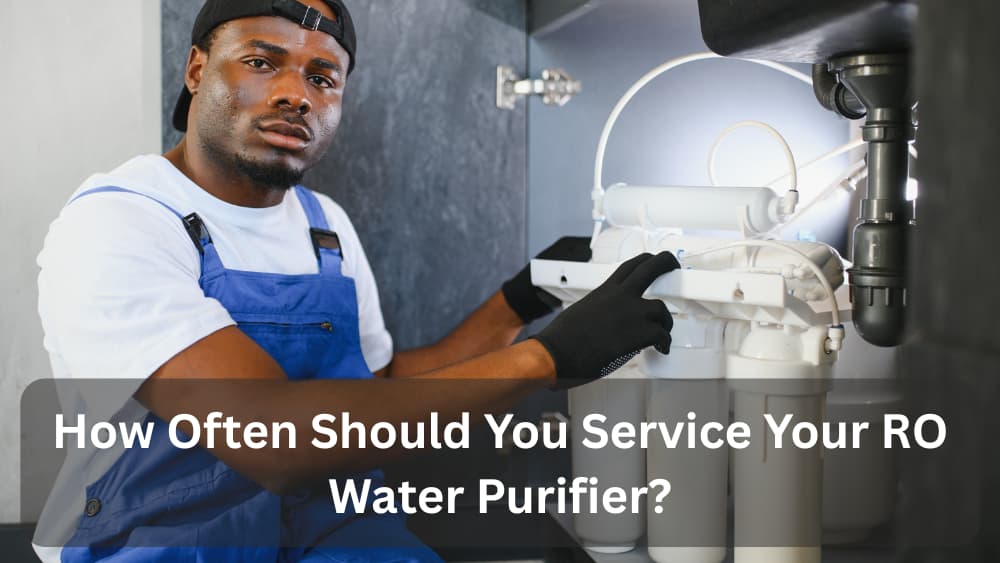
Your reverse osmosis (RO) purifier silently works every day, removing salts, heavy metals, and bacteria from your drinking water. But like any machine, it needs regular care. Many people assume that once installed, an RO purifier runs forever without maintenance. The truth is, ignoring servicing can reduce efficiency, cause breakdowns, and even make the water unsafe to drink.
So, how often should you service your RO water purifier? The answer depends on usage, water quality, and system design. This article breaks down everything you need to know about RO servicing—so you can keep your purifier healthy and your family safe.
Key Takeaways
Service your RO purifier at least once every 6 months, or as per the manufacturer’s recommendation.
Filters need replacing every 6–12 months, while the RO membrane lasts 2–3 years.
Annual servicing should include cleaning, sanitization, and tank inspection.
Neglecting service can reduce water flow, increase TDS, and allow bacterial growth.
Professional service is recommended yearly, even if you handle minor maintenance yourself.
Why Does an RO Purifier Need Regular Servicing?
1. To Maintain Water Quality
RO membranes and filters clog over time. Without servicing, impurities pass through.
2. To Prevent Bacterial Growth
The storage tank can harbor bacteria if not cleaned regularly. According to the CDC, stagnant water in filters can promote microbial growth【CDC, 2021】.
3. To Improve System Efficiency
Clogged filters force the pump to work harder, leading to higher electricity use and shorter lifespan.
4. To Save Money in the Long Run
Small filter replacements cost less than repairing or replacing an entire unit.
How Often Should You Service Your RO Water Purifier?
In most cases, every 6 months to 1 year is recommended. However, this varies depending on:
Water quality (TDS and hardness).
Daily usage (liters per day).
Local conditions (dust, industrial pollution).
What Are the Different Service Intervals for RO Components?
Component
Service/Replacement Cycle
Reason
Sediment Filter
6–12 months
Prevents dirt and particles clogging the system
Carbon Pre-Filter
6–12 months
Protects membrane from chlorine
RO Membrane
2–3 years
Removes dissolved salts and heavy metals
Post-Carbon Filter
12 months
Improves taste and odor
Storage Tank Sanitization
Annually
Prevents bacterial growth
Pump & Valves Check
Annually
Ensures correct pressure and flow
How Do You Know Your RO Needs Servicing Sooner?
1. Is the Water Flow Slow?
A clogged membrane or low tank pressure often causes weak water flow.
2. Does the Water Taste or Smell Odd?
Bad taste or odor signals that carbon filters are exhausted or the tank needs cleaning.
3. Is the TDS Higher Than Normal?
If your TDS meter shows higher readings, the membrane may not be rejecting salts effectively.
4. Is the System Noisy or Leaking?
Unusual sounds, vibrations, or leaks are clear signs that servicing is overdue.
What Happens During a Professional RO Service?
A typical service visit includes:
Inspection of all filters and membrane.
Replacement of sediment and carbon filters if due.
TDS Testing before and after servicing.
Sanitization of the storage tank and tubing.
Pump and Valve Check for proper pressure.
Leak Test to ensure no water loss.
Can You Service an RO Purifier Yourself?
Yes, you can handle basic maintenance like:
Replacing sediment and carbon filters.
Cleaning filter housings.
Checking water pressure with a gauge.
Sanitizing the faucet and tank with food-grade sanitizer.
But for:
Membrane replacement,
Electrical issues, or
Major leaks,
…it’s better to call a professional.
How Much Does RO Servicing Cost?
Service Type
Cost (USD)
Basic filter replacement
$20–$40
Full filter set + sanitization
$50–$80
Membrane replacement
$30–$70
Professional annual service
$80–$150
What If You Don’t Service Your RO Purifier on Time?
Neglecting servicing can lead to:
Higher TDS in purified water.
Growth of bacteria in the storage tank.
Weak water flow due to clogged filters.
Damage to the pump or membrane.
Health Risk: WHO notes that unsafe water contributes to over 500,000 diarrheal deaths annually【WHO, 2022】. A neglected RO can turn into a source of unsafe water instead of protection.
Preventive Tips to Reduce Service Frequency
Replace filters on time.
Use a TDS meter monthly to track water quality.
Sanitize the tank annually.
Avoid using contaminated feed water sources.
Keep the system in a dry, dust-free location.
DIY Maintenance Checklist Between Services
Task
Frequency
Check TDS with a meter
Monthly
Inspect for leaks
Monthly
Clean faucet nozzle
Monthly
Flush RO membrane (if system has flush valve)
Monthly
Replace sediment and carbon filters
6–12 months
Sanitize tank and housings
Annually
Professional vs DIY Servicing
DIY
Professional
Lower cost
More expensive
Suitable for small filter replacements
Full system inspection
Requires tools and time
Done quickly by expert
May miss hidden issues
Detects leaks, pressure faults
Conclusion
So, how often should you service your RO water purifier? Ideally, every 6 months for filters and annually for full servicing. The RO membrane lasts longer—up to 3 years—but only if pre-filters are replaced on time.
Here’s the bottom line:
Watch for warning signs like slow flow, odd taste, or higher TDS.
Do minor DIY tasks but schedule at least one professional service per year.
Think of servicing as insurance: it protects your purifier, your wallet, and most importantly—your health.
By staying consistent with servicing, your RO water purifier will continue delivering clean, safe water for years to come.
Hasan Al Sarker is a Reverse Osmosis Specialist. He has worked for many years to ensure safe drinking water for all. His research paper has been published in several journals, including Issue, Medium, and Slideshare. He is recognized as a water doctor among specialists though he did not attend medical college.
Besides working as a researcher of reverse osmosis technology, he is also very fancy with the kitchen and cooking. His guides are reading thousands of people every day. As a head of content, he is responsible for all the published articles at RO System Reviews.