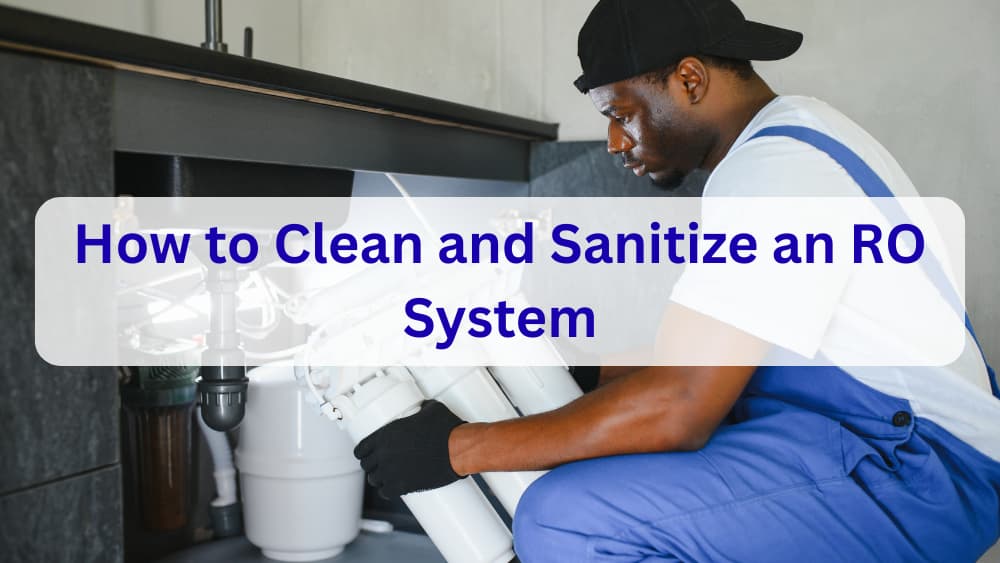
Your reverse osmosis (RO) system is designed to give you safe, clean water every day. But what happens if the system itself becomes dirty? Over time, bacteria, biofilm, and mineral deposits can build up inside filters, tanks, and tubing. If ignored, this not only reduces performance but can also compromise your health.
The good news: cleaning and sanitizing an RO system is simple if you follow the right steps. In this guide, you’ll learn why sanitation matters, what supplies you need, and a step-by-step method to clean your RO system safely.
Key Takeaways
RO systems should be sanitized at least once a year.
Cleaning prevents bacteria growth, bad taste, and reduced flow.
Always use food-grade sanitizers like unscented household bleach or specialized RO sanitizers.
Pre-filters, post-filters, and membranes should be replaced on schedule during cleaning.
Sanitizing involves flushing the system, disinfecting the storage tank, and reassembling properly.
Why Should You Clean and Sanitize an RO System?
1. Prevent Bacterial Growth
The RO storage tank and tubing can harbor bacteria if not sanitized. According to the CDC, poorly maintained filters can become breeding grounds for microbes【CDC, 2021】.
2. Maintain Water Taste and Odor
If your purified water starts tasting bad or smelling unusual, dirt or bacteria inside the system may be the cause.
3. Protect Membrane and Filters
Sediment, scale, and biofilm reduce filter efficiency. Cleaning extends system lifespan.
4. Safeguard Health
Contaminated RO systems can reintroduce bacteria into drinking water, defeating their purpose.
How Often Should You Clean and Sanitize an RO System?
Annually: General cleaning and sanitization.
Every filter change: Light cleaning of housings.
After contamination: If water quality drops or you detect odor/taste issues.
Pro Tip: If your area has high TDS or hard water, clean twice a year.
What Supplies Do You Need?
Food-grade sanitizer (unscented household bleach or RO sanitizing solution).
Bucket or basin.
TDS meter.
Clean cloth or sponge.
Wrench for filter housings.
New filters (sediment, carbon, post-carbon).
Optional: latex gloves for safety.
Step-by-Step: How to Clean and Sanitize an RO System
Step 1: Turn Off Water and Power
Shut off the feed water valve.
Turn off the storage tank valve.
Disconnect power supply if your RO has a booster pump or UV light.
Step 2: Drain the System
Open the RO faucet and let all water drain from the storage tank.
Wait until the flow stops completely.
Step 3: Remove Pre-Filters and Post-Filters
Unscrew filter housings with a wrench.
Remove sediment and carbon filters.
Discard old filters if replacement is due.
Note: Do not remove the RO membrane during sanitation.
Step 4: Add Sanitizing Solution
Place 2–3 tablespoons of unscented bleach (or RO sanitizer) into the pre-filter housing.
Screw the housing back on without the filter inside.
Reconnect all parts.
Step 5: Refill and Circulate Sanitizer
Open the feed water valve.
Let the storage tank fill with the sanitizer solution.
Once filled, let it sit for 30 minutes.
Turn on the RO faucet and allow the system to flush out completely.
Tip: Flush at least twice to ensure no chlorine taste remains.
Step 6: Clean the Storage Tank
With the tank drained, press the valve to release any remaining water.
Wipe the top and valve area with a sanitized cloth.
Let the sanitizing solution circulate through the tank as part of Step 5.
Step 7: Rinse Thoroughly
Run the system until the bleach odor disappears.
This may take 2–3 full tank flushes.
Step 8: Install New Filters
Insert new sediment and carbon filters.
Replace post-carbon filter if due.
Reconnect housings securely.
Step 9: Restart the System
Open the tank valve.
Power on the booster pump or UV if present.
Let the tank fill completely.
Test water with a TDS meter before drinking.
How Do You Know If Your RO System Needs Sanitization Immediately?
Sign
Possible Issue
Bad taste or odor
Bacterial growth in tank or tubing
Slimy residue in housings
Biofilm formation
Cloudy water
Contaminated filters
Frequent illnesses
Unsafe water due to contamination
System older than 1 year without cleaning
Overdue for sanitization
Safety Tips During Cleaning
Always use food-grade sanitizer. Avoid scented bleach.
Wear gloves when handling bleach.
Never drink water from the first full flush after cleaning.
Replace filters on schedule—cleaning cannot restore worn-out filters.
How Much Does It Cost to Clean and Sanitize an RO System?
Item
Cost (USD)
Sanitizer / Unscented Bleach
$2–$10
Replacement Filter Set
$20–$50
RO Membrane (if needed)
$30–$70
Professional Service
$80–$150
DIY cleaning is budget-friendly if you’re comfortable with basic maintenance.
Special RO sanitizing tablets – Designed for this purpose.
These are less harsh but often more expensive.
Preventive Maintenance to Reduce Cleaning Frequency
Replace pre-filters every 6–12 months.
Flush the system monthly if it has a flush valve.
Sanitize the faucet regularly.
Keep the unit in a clean, dry location to avoid mold and dust.
Common Mistakes to Avoid While Cleaning an RO System
Forgetting to flush thoroughly after sanitization.
Using scented bleach, which leaves harmful residues.
Skipping filter replacements during cleaning.
Leaving water inside the system during long shutdowns.
DIY vs Professional Sanitation
DIY Cleaning
Professional Service
Low cost
Higher cost ($80–$150)
Flexible schedule
Done quickly by experts
Requires tools & time
Includes full inspection
Good for routine cleaning
Best for major contamination
Conclusion
Cleaning and sanitizing your reverse osmosis system isn’t just about keeping it running—it’s about protecting your family’s health. A simple once-a-year cleaning removes bacteria, prevents bad taste, and keeps your water fresh.
Here’s the bottom line:
Drain, sanitize, flush, and replace filters during cleaning.
Use food-grade solutions and rinse thoroughly.
Stay on schedule with filter replacements to protect the RO membrane.
With regular care, your RO system will continue to deliver safe, high-quality water for years.
Hasan Al Sarker is a Reverse Osmosis Specialist. He has worked for many years to ensure safe drinking water for all. His research paper has been published in several journals, including Issue, Medium, and Slideshare. He is recognized as a water doctor among specialists though he did not attend medical college.
Besides working as a researcher of reverse osmosis technology, he is also very fancy with the kitchen and cooking. His guides are reading thousands of people every day. As a head of content, he is responsible for all the published articles at RO System Reviews.
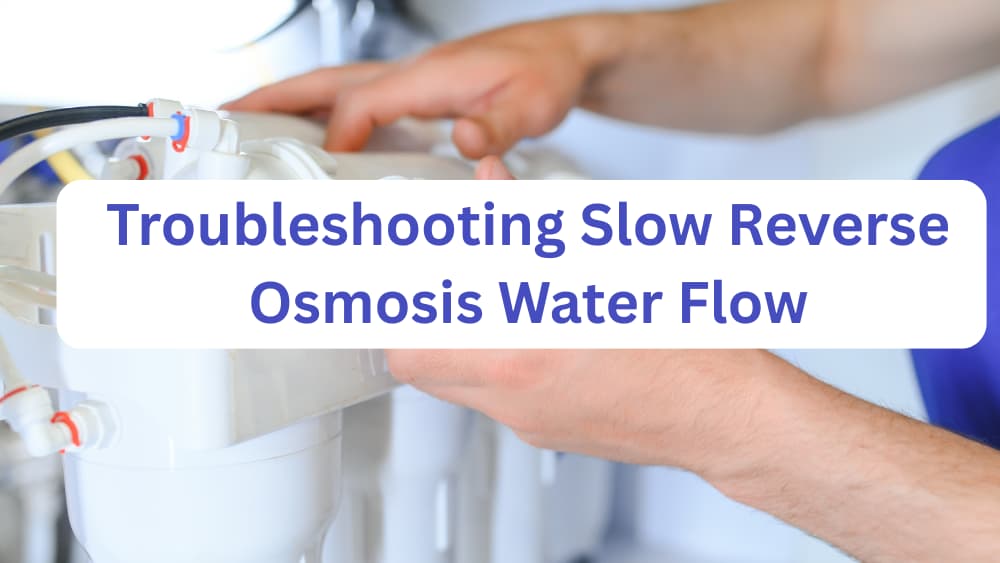
Imagine turning on your RO faucet expecting a steady stream of purified water, only to see a slow trickle. Frustrating, right? Slow water flow is one of the most common complaints with reverse osmosis (RO) systems. While it feels like a major issue, the truth is that in most cases, it comes down to a few simple causes.
The good news: you can often fix slow RO water flow without replacing the entire system. This guide will walk you through common reasons for weak flow, step-by-step troubleshooting methods, and preventive tips.
Key Takeaways
Slow RO water flow usually happens because of clogged filters, low pressure, or tank problems.
Pre-filters should be replaced every 6–12 months to protect the RO membrane.
RO tanks lose pressure over time and need to be re-pressurized.
Testing with a TDS meter and pressure gauge helps pinpoint the cause.
Preventive maintenance is the best way to ensure strong water flow.
Why Does Reverse Osmosis Water Flow Slow Down?
An RO system delivers purified water at a steady rate when all parts are functioning. Over time, flow slows down due to:
Clogged filters restricting water passage.
Low pressure preventing proper filtration.
Worn-out membrane reducing purification capacity.
Tank issues like low air pressure or bladder failure.
How Does Water Flow in an RO System?
Understanding the flow helps with troubleshooting.
Pre-filters (sediment + carbon) remove dirt and chlorine.
Booster pump (if present) increases water pressure.
RO membrane removes dissolved salts and impurities.
Storage tank holds purified water.
Post-carbon filter polishes water before it reaches the faucet.
A slowdown at any stage affects the final flow.
What Are the Main Causes of Slow RO Water Flow?
Cause
Why It Happens
Solution
Clogged sediment or carbon filter
Traps dirt/chlorine but restricts water
Replace filters
Clogged or worn RO membrane
High TDS water clogs pores
Replace membrane
Low feed water pressure
Below 40 PSI
Install/replace booster pump
Tank pressure issues
Bladder loses air
Re-pressurize tank
Faulty valves
Check valve or auto shut-off failure
Replace valves
Kinked tubing
Blocks water flow
Straighten or replace tubing
Cold water temperature
Slows filtration
Normalizes with room temp
How Do You Troubleshoot Slow RO Water Flow?
Step 1: Check Filter Condition
When were the pre-filters last replaced?
If it’s been more than 12 months, replace them.
Tip: Dirty filters force the membrane to work harder, reducing flow.
Step 2: Test Water Pressure
Use a pressure gauge at the feed water line.
RO systems need 40–60 PSI.
Below 40 PSI → flow slows drastically.
Fix: Install a booster pump for low-pressure areas.
Step 3: Inspect the RO Membrane
Membrane lifespan: 2–3 years.
If water TDS is higher than normal, the membrane is clogged or worn.
Fix: Replace the RO membrane if rejection rate falls below 80%.
Step 4: Check the Storage Tank Pressure
Empty the tank completely.
Measure air pressure with a tire gauge.
Ideal: 7–8 PSI when empty.
Fix: Re-pressurize with a hand pump if low. Replace tank if bladder is damaged.
Step 5: Inspect Valves and Tubing
Ensure tank valve is fully open.
Check for leaks, kinks, or loose fittings.
Faulty auto shut-off or check valve can block flow.
Fix: Replace faulty parts or straighten tubing.
How Do You Know If the Membrane Is the Problem?
The easiest way: test with a TDS meter.
Raw water TDS: 500 ppm
Purified water TDS: 50 ppm → 90% rejection (good).
If purified water rises to 200 ppm → low rejection (replace membrane).
How Can Cold Weather Affect RO Flow?
Water viscosity increases in winter. Cold water slows the filtration process by 20–30%.
If flow is slow only in winter, this may be the cause.
No repair needed—flow normalizes as water warms.
How Often Should You Replace Filters to Prevent Slow Flow?
Filter
Replacement Cycle
Sediment Filter
6–12 months
Carbon Pre-Filter
6–12 months
RO Membrane
2–3 years
Post-Carbon Filter
12 months
Stat Insight: According to the CDC, failing to replace filters on time can reduce system efficiency by up to 40%【CDC, 2021】.
What Tools Help in Troubleshooting?
TDS Meter → Checks water quality.
Pressure Gauge → Measures feed and tank pressure.
Hand Pump → Adjusts tank air pressure.
Wrench → For filter housing removal.
DIY vs Professional Troubleshooting
DIY Fixes
Professional Help Needed
Replacing pre-filters
Membrane replacement (first time)
Checking tank pressure
Electrical pump repairs
Tightening fittings
Complex leaks
Straightening tubing
Persistent low flow despite fixes
How Much Does Fixing Slow Flow Cost?
Pre-filter set: $20–$40
RO membrane: $30–$70
Booster pump: $60–$120
Storage tank: $50–$100
In many cases, replacing filters and re-pressurizing the tank solves the issue at low cost.
Preventive Maintenance Tips to Avoid Slow Flow
Replace pre-filters every 6–12 months.
Sanitize the tank annually.
Check system pressure regularly.
Use a softener if water is very hard.
Flush the system monthly to clear salt deposits.
Quick Troubleshooting Reference
Problem
Likely Cause
Solution
Slow flow after filter change
Air trapped in system
Flush for 5–10 mins
Weak flow, old filters
Clogged pre-filters
Replace filters
Low flow, high TDS
Membrane failure
Replace membrane
Tank feels heavy but flow weak
Bladder issue
Re-pressurize or replace tank
Low flow in winter
Cold water
Normal, no fix needed
Conclusion
Slow reverse osmosis water flow is annoying, but it usually has a simple cause. Whether it’s clogged filters, low pressure, or a worn-out membrane, troubleshooting step by step helps you fix the problem quickly.
Here’s the bottom line:
Replace pre-filters regularly to protect your membrane.
Maintain 40–60 PSI for proper flow.
Re-pressurize the tank if water slows despite full capacity.
Use a TDS meter and pressure gauge to confirm issues.
With regular maintenance and quick troubleshooting, your RO system will keep delivering clean, safe water at the right flow rate for years.
Hasan Al Sarker is a Reverse Osmosis Specialist. He has worked for many years to ensure safe drinking water for all. His research paper has been published in several journals, including Issue, Medium, and Slideshare. He is recognized as a water doctor among specialists though he did not attend medical college.
Besides working as a researcher of reverse osmosis technology, he is also very fancy with the kitchen and cooking. His guides are reading thousands of people every day. As a head of content, he is responsible for all the published articles at RO System Reviews.
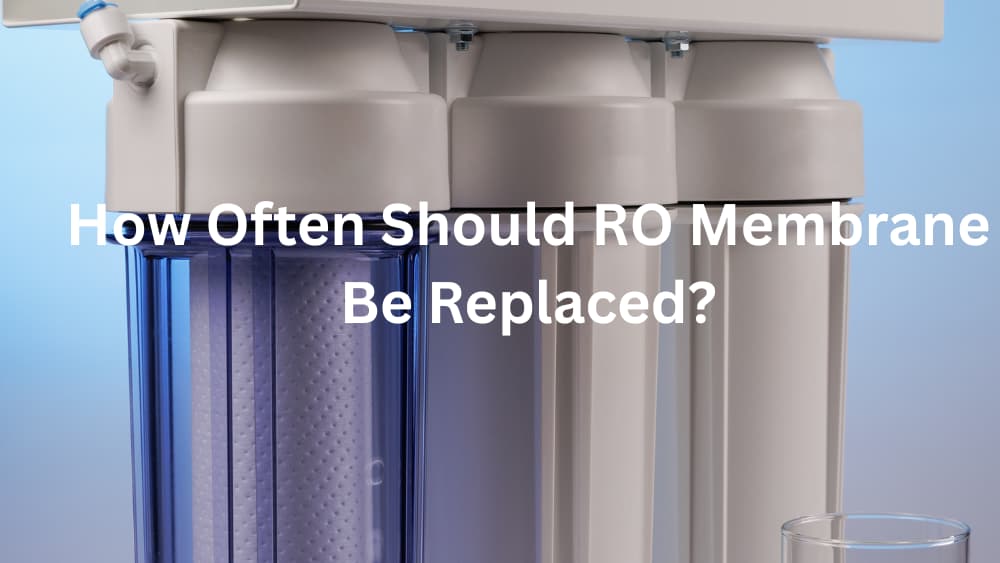
Your reverse osmosis (RO) system works like magic—giving you clean, safe drinking water every day. But behind the scenes, one component does most of the heavy lifting: the RO membrane. It’s the heart of the system, removing salts, heavy metals, pesticides, and even viruses.
Like every filter, though, the membrane has a lifespan. If you don’t replace it on time, your system won’t work properly, and worse, you could end up drinking unsafe water. The big question is: how often should an RO membrane be replaced? Let’s dive into the details.
Key Takeaways
The average RO membrane lasts 2 to 3 years, depending on water quality and usage.
High TDS or hard water can shorten the lifespan.
Regular filter replacements protect the membrane from clogging.
Signs like low water flow, bad taste, or high TDS mean the membrane may need replacement.
Proper maintenance can extend membrane life and save costs.
What Does the RO Membrane Do?
The RO membrane is a semi-permeable sheet with pores as small as 0.0001 microns. That’s tiny enough to block:
Dissolved salts and hardness (calcium, magnesium).
Heavy metals (arsenic, lead, mercury).
Nitrates, fluoride, and pesticides.
Microorganisms (bacteria and viruses).
It allows only water molecules to pass, giving you purified water while rejecting impurities into the drain stream.
How Long Does an RO Membrane Typically Last?
Most RO membranes last 2–3 years in a home purifier. However, this isn’t a one-size-fits-all number. The actual lifespan depends on:
Water quality (TDS level).
Daily water usage.
Pre-filter maintenance.
Stat Insight: A study by the Water Quality Association found that membranes in areas with high TDS often last only 18 months, while those in low TDS areas can last up to 5 years【WQA, 2022】.
What Factors Affect RO Membrane Life?
1. Water Quality (TDS and Hardness)
If your water has TDS above 800 ppm, the membrane works harder.
Hard water with calcium and magnesium causes scaling.
2. Pre-Filter Maintenance
Sediment and carbon filters protect the membrane.
If not replaced regularly, chlorine or dirt damages the membrane.
3. Water Usage
A family of four may need replacement every 2 years.
Heavy users (10+ liters per day) may need replacement sooner.
4. System Pressure
RO systems need 40–60 PSI.
Low pressure stresses the membrane, while high pressure can tear it.
How Can You Tell If the RO Membrane Needs Replacement?
Here are the most common warning signs:
Sign
What It Means
Low water flow
Membrane clogged with salts or dirt
Bad taste or odor
Membrane not rejecting contaminants
Higher TDS reading
Impurities passing through
Cloudy water
Poor filtration
Membrane over 3 years old
End of lifespan
How to Test RO Membrane Performance
1. Use a TDS Meter
Measure TDS in raw water and purified water.
Example: If raw water = 500 ppm, purified = 50 ppm → Rejection rate = 90%.
If rejection drops below 80%, replace the membrane.
2. Check Water Flow
Slow water output even with a full tank means the membrane is clogged.
3. Taste Test
If water tastes salty or metallic, the membrane isn’t working.
What Happens If You Don’t Replace the RO Membrane?
Ignoring membrane replacement can lead to:
Unsafe drinking water (arsenic, lead, and nitrates passing through).
Damage to the storage tank and other components.
Increased maintenance costs later.
Health Risk: The WHO warns that high nitrates in water can cause methemoglobinemia (blue baby syndrome) in infants【WHO, 2021】.
How Often Should the RO Membrane Be Replaced?
Here’s a quick guide:
Water Quality (TDS)
Membrane Lifespan
Below 300 ppm
3–4 years
300–600 ppm
2–3 years
600–1000 ppm
1.5–2 years
Above 1000 ppm
1–1.5 years
So, while the average is 2–3 years, always check your local water quality.
How to Extend the Life of an RO Membrane?
1. Replace Pre-Filters on Time
Sediment filter: every 6–12 months.
Carbon filter: every 6–12 months. This prevents clogging and chlorine damage.
2. Use a Water Softener (if needed)
Hard water causes scaling. A softener reduces calcium and magnesium before the RO stage.
3. Regular System Flushing
Most RO units have a flush valve. Use it monthly to wash out salts.
4. Sanitize the Storage Tank
At least once a year to prevent bacterial growth.
5. Maintain Proper Pressure
Install a booster pump if pressure is below 40 PSI.
How Much Does RO Membrane Replacement Cost?
Domestic RO membranes: $25–$70 (USD) depending on brand.
Industrial membranes: $200–$500 (USD).
Though it’s the most expensive component, replacing the membrane ensures safe water and prevents damage to the entire system.
When Should You Replace Other RO Filters?
Filter
Replacement Cycle
Sediment Filter
Every 6–12 months
Carbon Pre-Filter
Every 6–12 months
RO Membrane
Every 2–3 years
Post-Carbon Filter
Every 12 months
Tip: Think of it like car maintenance. Small filter changes protect the “engine”—your RO membrane.
DIY vs Professional Replacement: Which Is Better?
DIY: If you’re handy, you can replace it by following the manual.
Professional: Recommended for first-time replacement or complex RO units.
Common Myths About RO Membrane Replacement
Myth 1: Membranes last forever. Truth: They wear out due to scaling and chemical damage.
Myth 2: You only replace the membrane if water stops flowing. Truth: Bad taste or high TDS may appear long before flow stops.
Myth 3: Flushing alone can restore old membranes. Truth: Flushing helps but cannot fix chemical damage.
Conclusion
So, how often should the RO membrane be replaced? On average, every 2–3 years—but water quality, usage, and maintenance make a big difference.
Here’s the summary:
If TDS rejection drops below 80%, it’s time to replace.
Replace sediment and carbon filters on schedule to protect the membrane.
Use a TDS meter regularly to monitor performance.
By keeping an eye on your RO membrane, you’ll not only ensure safe, great-tasting water but also extend the life of your entire system.
Hasan Al Sarker is a Reverse Osmosis Specialist. He has worked for many years to ensure safe drinking water for all. His research paper has been published in several journals, including Issue, Medium, and Slideshare. He is recognized as a water doctor among specialists though he did not attend medical college.
Besides working as a researcher of reverse osmosis technology, he is also very fancy with the kitchen and cooking. His guides are reading thousands of people every day. As a head of content, he is responsible for all the published articles at RO System Reviews.
Your reverse osmosis (RO) system is supposed to give you clean, safe drinking water every day. But what happens when it suddenly stops working, starts leaking, or produces water that tastes off? Many homeowners immediately think of calling a technician.
The truth is, most RO problems can be solved with basic troubleshooting steps. By learning how to identify and fix common issues, you can save time, money, and avoid unnecessary stress. In this guide, we’ll walk you through practical ways to troubleshoot your RO system like a pro.
Key Takeaways
RO systems face common issues like low water flow, bad taste, leaks, or no water output.
Many problems come from clogged filters, faulty valves, or low pressure.
A step-by-step troubleshooting approach helps you fix issues quickly.
Preventive maintenance reduces breakdowns and extends the system’s life.
Some complex issues still require professional help.
Check if the storage tank valve is fully open. Sometimes it’s accidentally turned off during maintenance.
2. Are the Filters Clogged?
Sediment or carbon filters may be clogged with dirt. Replace if they’ve been in use for over 12 months.
3. Is There Air in the System?
Air trapped after filter replacement can stop water flow. Flushing the system usually solves it.
Quick Fix: Open the tank valve, check pre-filters, and run the system for 5–10 minutes to clear air.
Why Is My RO System Producing Low Water Flow?
1. Is the Tank Empty or Bladder Faulty?
RO tanks have an internal bladder. If it fails, water pressure drops.
Check by lifting the tank. If it feels heavy but water flow is weak, the bladder may be faulty.
2. Is the RO Membrane Clogged?
After 2–3 years, the RO membrane gets clogged with salts. This reduces flow.
3. Is the Booster Pump Working?
RO needs 40–60 PSI. If your pump is faulty, water flow will be weak.
Quick Fix: Test the water pressure. If it’s below 40 PSI, consider replacing the pump or membrane.
Why Does My RO Water Taste Bad or Smell Strange?
1. Is the Carbon Filter Exhausted?
Carbon filters remove chlorine and odors. If they’re overused, taste issues appear.
2. Is the Storage Tank Contaminated?
If the tank isn’t sanitized regularly, bacteria may grow, causing odor.
3. Is the Membrane Damaged?
A damaged membrane lets salts and chemicals through, affecting taste.
Quick Fix: Replace the carbon filter annually, sanitize the tank, and check the membrane’s rejection rate.
Why Is My RO System Draining Continuously?
1. Is the Auto Shut-Off Valve Faulty?
The auto shut-off valve (ASO) stops water flow once the tank is full. If faulty, water keeps draining.
2. Is the Check Valve Broken?
The check valve prevents backflow. If damaged, water continuously flows to the drain.
Quick Fix: Inspect and replace faulty ASO or check valves.
Why Is My RO System Leaking?
1. Are the Fittings Loose?
Check all tube connections and fittings. Even a small gap can cause leakage.
2. Are the O-Rings Damaged?
O-rings inside filter housings can wear out. Replace them if water seeps from housings.
3. Is the Tank Over-Pressurized?
If air pressure inside the tank exceeds 7–8 PSI when empty, leaks may occur.
Quick Fix: Tighten fittings, replace worn-out O-rings, and check tank pressure.
Why Is My RO System Making Noise?
1. Is the Air Gap Clogged?
The air gap in the faucet can create gurgling sounds if blocked.
2. Is the Tubing Vibrating?
Loose tubing can vibrate against walls, creating noise.
3. Is the Pump Faulty?
A failing booster pump may produce unusual noise.
Quick Fix: Clean the air gap, secure tubing, and check the pump.
How to Troubleshoot with TDS Testing?
A TDS meter is your best tool.
TDS Reading
What It Means
Action
<50 ppm
Too low (missing minerals)
Use mineral cartridge
50–150 ppm
Excellent
Safe to drink
150–300 ppm
Acceptable
Still safe
>300 ppm
RO not working properly
Replace membrane or check system
How Do You Reset an RO System?
Sometimes resetting helps:
Close the tank valve.
Turn off the feed water valve.
Remove and reattach tubing connections.
Open valves again.
Flush the system for 5 minutes.
This clears trapped air and resets flow.
Preventive Maintenance Tips
How Often Should Filters Be Replaced?
Sediment Filter: Every 6–12 months.
Carbon Filter: Every 6–12 months.
RO Membrane: Every 2–3 years.
Post Carbon Filter: Every 12 months.
Why Should You Sanitize the Tank?
Storage tanks should be sanitized at least once a year to prevent bacterial growth.
Should You Check Water Pressure?
Yes. Always maintain 40–60 PSI. Install a booster pump if pressure is low.
Troubleshooting Quick Reference Table
Problem
Likely Cause
Fix
No water output
Closed valve, clogged filter
Open valve, replace filters
Low pressure
Faulty pump, clogged membrane
Replace pump or membrane
Bad taste
Exhausted carbon filter
Replace filter, sanitize tank
Continuous drain
Faulty ASO or check valve
Replace valve
Leakages
Loose fittings, damaged O-rings
Tighten or replace
Noise
Air gap or pump issues
Clean air gap, check pump
When Should You Call a Professional?
While many issues can be fixed at home, call a technician if:
Membrane replacement seems complex.
Tank bladder is damaged.
Electrical faults occur in the pump or UV filter.
You notice persistent contamination despite filter changes.
Conclusion
Troubleshooting your reverse osmosis system doesn’t have to be intimidating. Most issues—like low flow, bad taste, or leaks—are caused by clogged filters, pressure problems, or faulty valves. With the right steps, you can solve many of these problems yourself.
Here’s the bottom line:
Always start by checking the basics—valves, filters, and pressure.
Use a TDS meter to monitor performance.
Replace filters on schedule to avoid breakdowns.
Don’t hesitate to call a professional for complex repairs.
By understanding how to troubleshoot, you can keep your RO system running smoothly, save money on repairs, and ensure your family always has access to clean, safe water.
Hasan Al Sarker is a Reverse Osmosis Specialist. He has worked for many years to ensure safe drinking water for all. His research paper has been published in several journals, including Issue, Medium, and Slideshare. He is recognized as a water doctor among specialists though he did not attend medical college.
Besides working as a researcher of reverse osmosis technology, he is also very fancy with the kitchen and cooking. His guides are reading thousands of people every day. As a head of content, he is responsible for all the published articles at RO System Reviews.
Buying or maintaining a reverse osmosis (RO) system can feel overwhelming. You’ll hear words like TDS, pre-filter, membrane, or flow restrictor and wonder what they actually mean. The truth is, understanding these terms is not just for technicians—it’s for anyone who wants safe drinking water at home or in the workplace.
This guide explains the most common RO terms you should know, breaking them into simple explanations. By the end, you’ll be able to understand your purifier’s manual, communicate with service providers, and even troubleshoot basic issues on your own.
Key Takeaways
RO systems have their own terminology, covering filters, membranes, pumps, and water quality terms.
Knowing these terms helps you maintain your system properly.
Some terms like TDS, PSI, and micron rating determine how efficient your RO purifier is.
The glossary covers components, process stages, and water quality measures.
A post-carbon filter (also called polishing filter) is the last stage.
Improves taste and odor.
Ensures water is pleasant to drink.
Extra Terms You Might Hear
20. What Is a TDS Controller?
A TDS controller mixes some raw water with RO water.
Restores essential minerals.
Improves taste.
21. What Is a Mineral Cartridge?
A mineral cartridge re-adds calcium, magnesium, and other healthy minerals after RO purification.
22. What Is PSI?
PSI (Pounds per Square Inch) measures water pressure.
RO systems typically need 40–100 PSI.
23. What Is Crossflow Filtration?
In RO, water flows across the membrane rather than straight through.
Prevents clogging.
Ensures continuous filtration.
24. What Is Salt Rejection?
Similar to rejection rate, salt rejection measures how well an RO membrane removes dissolved salts.
Expressed as a percentage.
A 98% salt rejection membrane allows only 2% of salts through.
How These Terms Work Together
When you combine these terms, you understand the entire flow of an RO purifier:
Pre-filters (sediment & carbon) → protect the system.
Booster pump → provides pressure.
RO membrane → filters salts and microbes.
Flow restrictor, check valve, and flush valve → manage water flow.
Storage tank → holds permeate.
Post-filter → improves taste.
TDS controller or mineral cartridge → adds minerals back.
Why Learning RO Terms Helps You
Better maintenance: You’ll know when to replace which part.
Smarter buying decisions: You’ll understand which features you need.
Cost savings: Avoid unnecessary service charges by knowing the basics.
Health protection: Ensures you’re drinking safe water.
Conclusion
Understanding common RO terms isn’t about becoming a technician—it’s about taking control of your health and your home. From TDS and micron ratings to RO membranes and booster pumps, every term reflects a function that keeps your water clean and safe.
The next time you read your purifier’s manual or talk to a service technician, you won’t feel lost. You’ll be informed, confident, and able to make the best decisions for your family’s drinking water.
Hasan Al Sarker is a Reverse Osmosis Specialist. He has worked for many years to ensure safe drinking water for all. His research paper has been published in several journals, including Issue, Medium, and Slideshare. He is recognized as a water doctor among specialists though he did not attend medical college.
Besides working as a researcher of reverse osmosis technology, he is also very fancy with the kitchen and cooking. His guides are reading thousands of people every day. As a head of content, he is responsible for all the published articles at RO System Reviews.