When it comes to water purification, size does matter—but not in the way you think. We’re not talking about the size of the purifier or the storage tank. Instead, we’re talking about micron ratings, a measure of how small a particle a filter can block.
If you’ve ever wondered why some filters are labeled “5-micron” or “0.5-micron,” this article is for you. Understanding micron ratings is the key to choosing the right RO filter, maintaining your purifier, and ensuring safe drinking water.
Key Takeaways
Micron rating measures the size of particles a filter can remove.
1 micron = one-millionth of a meter (invisible to the naked eye).
Filters with smaller micron ratings capture finer particles.
RO membranes typically filter at 0.0001 microns, removing salts and heavy metals.
The right micron rating depends on your water quality and purifier type.
What Does “Micron” Mean in RO Filters?
A micron (µm) is a unit of measurement equal to one-millionth of a meter. For perspective:
A human hair is about 70 microns wide.
Bacteria range from 0.2–2 microns.
Viruses can be as small as 0.02 microns.
Micron ratings in filters tell you the smallest particle size that can be trapped.
Why Do Micron Ratings Matter in RO Filters?
Micron ratings matter because they directly affect:
What contaminants are removed (sand, silt, bacteria, salts).
Filter lifespan (smaller pores may clog faster).
Flow rate (finer filters slow down water flow).
In RO systems, micron ratings decide which filter works at which stage—from pre-filters to the final membrane.
Types of Micron Ratings in RO Filters
1. Sediment Filters (1–20 microns)
Capture sand, dirt, rust, and visible particles.
Common ratings: 5-micron or 10-micron.
Protects the RO membrane from clogging.
2. Carbon Filters (0.5–10 microns)
Trap chlorine, pesticides, and organic chemicals.
Fine carbon filters (0.5 microns) can also capture cysts (like Giardia, Cryptosporidium).
3. RO Membranes (0.0001 microns)
The tightest filter in the system.
Removes dissolved salts, heavy metals, nitrates, fluoride, and even viruses.
Nominal vs Absolute Micron Rating: What’s the Difference?
Type
Meaning
Efficiency
Nominal Micron Rating
Can trap most particles of that size, but not all. Example: 5-micron nominal filter captures ~85% of 5-micron particles.
70–90% effective
Absolute Micron Rating
Guaranteed to block all particles of that size or larger. Example: 1-micron absolute filter captures 99.9% of 1-micron particles.
95–99.9% effective
Tip: For drinking water safety, absolute-rated filters are preferred.
What Are Common Micron Sizes in RO Filters?
Filter Type
Micron Rating
Function
Sediment Pre-Filter
5–20 microns
Removes dust, sand, rust
Carbon Pre-Filter
0.5–10 microns
Removes chlorine, odor, pesticides
UF Membrane
0.01 microns
Blocks bacteria, cysts
RO Membrane
0.0001 microns
Removes salts, metals, viruses
Post-Carbon Filter
~1 micron
Improves taste, polishes water
How Do Micron Ratings Relate to Water Contaminants?
Here’s a quick guide comparing contaminants and filter ratings:
Contaminant
Size (Microns)
Filter Needed
Sand, Rust
5–50
Sediment Filter
Bacteria
0.2–2
UF or RO
Giardia, Cryptosporidium (Cysts)
1–5
Carbon Block (1 micron absolute)
Viruses
0.02–0.1
RO Membrane
Dissolved Salts & Metals
<0.001
RO Membrane
Why Do RO Membranes Have the Smallest Micron Rating?
The RO membrane’s 0.0001-micron pores are the reason reverse osmosis is so effective.
Removes fluoride, arsenic, nitrates, and lead.
Blocks viruses and microscopic impurities.
Provides up to 99% purification efficiency【CDC, 2021】.
This makes it the “heart” of the RO system.
Does a Smaller Micron Rating Always Mean Better?
Not necessarily. While smaller pores block more contaminants, they also:
Reduce flow rate.
Clog faster.
Require higher pressure.
That’s why RO systems use a multi-stage design—starting with larger micron pre-filters and ending with ultra-fine membranes.
How Do You Choose the Right Micron Rating for Your Water?
The right filter depends on:
TDS level – If above 300 ppm, you need RO membranes.
Contamination type – If microbial, UV + UF + carbon filters help.
Water source – Borewell vs municipal supply.
Example:
Municipal tap water → 5-micron sediment + 1-micron carbon filter may be enough.
Borewell or salty water → Needs full RO with 0.0001-micron membrane.
Can Micron Ratings Affect Taste of Water?
Yes.
Higher micron filters (5–10) allow more particles through, sometimes causing cloudy water.
Ultra-fine filters (0.5 micron or RO membrane) remove impurities but may also strip natural minerals, leading to flat taste.
That’s why many RO systems include a mineral cartridge to balance taste.
How Often Should You Replace Filters Based on Micron Rating?
Filter Type
Micron Rating
Replacement Cycle
Sediment Filter
5–20 microns
6–12 months
Carbon Filter
0.5–10 microns
6–12 months
UF Membrane
0.01 microns
12 months
RO Membrane
0.0001 microns
2–3 years
Post-Carbon Filter
~1 micron
12 months
Fact: A clogged 5-micron sediment filter can reduce RO membrane life by up to 40%【WHO, 2022】.
What’s the Role of Micron Ratings in Multi-Stage RO Systems?
RO systems are built in stages with different micron ratings:
Sediment filter (5 micron) → removes dirt.
Carbon filter (1 micron) → removes chlorine.
RO membrane (0.0001 micron) → removes salts and microbes.
Post-carbon filter (1 micron) → improves taste.
This layered design balances flow, protection, and purity.
Common Mistakes People Make About Micron Ratings
Assuming one filter is enough. In reality, multiple filters with different micron ratings are needed.
Ignoring nominal vs absolute ratings. Nominal filters may miss dangerous microbes.
Thinking smaller is always better. Ultra-fine filters need more pressure and frequent replacements.
Conclusion
Micron ratings in RO filters may sound technical, but they’re the secret to why your purifier works so well. From large sediment filters to ultra-fine RO membranes, each stage plays a role in ensuring safe, pure water.
Here’s the bottom line:
Sediment filters protect your purifier.
Carbon filters improve safety and taste.
RO membranes deliver the highest level of purification.
By understanding micron ratings, you can choose the right filters, maintain them properly, and ensure your family always has safe drinking water.
Hasan Al Sarker is a Reverse Osmosis Specialist. He has worked for many years to ensure safe drinking water for all. His research paper has been published in several journals, including Issue, Medium, and Slideshare. He is recognized as a water doctor among specialists though he did not attend medical college.
Besides working as a researcher of reverse osmosis technology, he is also very fancy with the kitchen and cooking. His guides are reading thousands of people every day. As a head of content, he is responsible for all the published articles at RO System Reviews.
If you’ve ever looked at a reverse osmosis (RO) plant, it might seem like a maze of pipes, pumps, and tanks. Without a guide, it’s easy to get lost in the details. The good news is that once you break it down step by step, the entire process becomes simple to understand.
That’s where a visual diagram of an RO plant comes in handy. Instead of just reading about filters and membranes, you can see how water flows from intake to output. In this article, we’ll explain the key parts of a reverse osmosis plant, how they connect, and why each stage is important.
Key Takeaways
A reverse osmosis plant uses multiple stages of filtration to turn contaminated water into safe, pure water.
The process includes pre-treatment, high-pressure pumping, membrane filtration, post-treatment, and storage.
A plant diagram helps you visualize the flow of water from raw input to purified output.
Industrial RO plants can produce thousands of liters of clean water per hour.
Understanding the design helps in maintenance, troubleshooting, and selecting the right system.
What Is a Reverse Osmosis Plant?
A reverse osmosis plant is a large-scale water purification system. Unlike a small home purifier, an RO plant is designed for industries, municipalities, or communities that require high volumes of purified water.
It works on the same principle as a household RO: water is pushed through a semi-permeable membrane that removes dissolved salts, heavy metals, and contaminants. The difference lies in scale—RO plants handle thousands of liters per day.
Why Do We Need RO Plants?
RO plants are essential for:
Desalination: Converting seawater into drinking water.
Industries: Supplying pure water for pharmaceuticals, food, and electronics.
Municipalities: Providing clean water in water-scarce regions.
Hospitals: Ensuring medical-grade purified water.
Stat Insight: According to the International Desalination Association, over 60% of the world’s desalination plants use reverse osmosis technology【IDA, 2023】.
What Does a Reverse Osmosis Plant Diagram Show?
A plant diagram visually explains:
How raw water enters the system.
The sequence of filtration stages.
The role of pumps, membranes, and tanks.
The flow of wastewater (reject water).
How purified water is stored and distributed.
It’s basically a roadmap of how dirty water becomes clean.
What Are the Main Stages in an RO Plant?
1. Raw Water Intake
The process begins when raw water (from borewell, river, or seawater) enters the plant. Large particles like leaves and debris are removed at this stage using coarse filters.
2. Pre-Treatment
Before reaching the RO membrane, water needs pre-treatment to protect the system. This stage usually includes:
Sand Filter: Removes dirt and suspended particles.
Activated Carbon Filter: Eliminates chlorine and organics.
Micron Cartridge Filter: Blocks fine particles up to 5 microns.
Reason: RO membranes are delicate. Pre-treatment ensures they don’t get clogged or damaged.
3. High-Pressure Pump
An RO system cannot work without pressure. The high-pressure pump forces water into the RO membranes at 10–15 bar (for freshwater) or up to 60–80 bar (for seawater).
4. RO Membrane Assembly
This is the heart of the plant.
Semi-permeable membranes allow only water molecules to pass.
Dissolved salts, heavy metals, and impurities are rejected.
Water splits into two streams:
Permeate (pure water)
Reject (concentrated waste water)
Fact: RO membranes can remove up to 99% of dissolved salts and contaminants【WHO, 2022】.
5. Post-Treatment
After membrane filtration, post-treatment ensures water quality meets standards. It may include:
UV Sterilization: Kills bacteria and viruses.
pH Adjustment: Balances acidic or alkaline water.
Remineralization: Adds back essential minerals for taste and health.
6. Storage and Distribution
Finally, purified water is stored in large tanks. From there, it is supplied to homes, factories, or municipal pipelines.
How Does the Flow Work in a Diagram?
Here’s a simplified flow table:
Stage
What Happens
Raw Water Intake
Source water enters plant
Pre-Treatment
Dirt, chlorine, and particles removed
High-Pressure Pump
Water pressurized for membranes
RO Membrane
Salts and contaminants removed
Post-Treatment
UV, pH adjustment, mineralization
Storage
Purified water stored in tanks
Distribution
Water sent to end users
What Are the Key Components in an RO Plant?
A typical RO plant includes:
Raw Water Pump
Pressure Sand Filter
Activated Carbon Filter
Micron Cartridge Filter
High-Pressure Pump
RO Membrane Housing
Pressure Gauges and Valves
Reject Water Outlet
Pure Water Storage Tank
UV Sterilizer / Ozonator
Mineral Cartridge (optional)
How Does an Industrial RO Plant Differ From a Domestic Purifier?
Feature
Domestic RO
Industrial RO Plant
Capacity
10–15 liters/day
1,000–1,000,000 liters/day
Size
Compact
Large plant with multiple tanks
Purpose
Household drinking
Industry, municipality, community
Components
Few filters + 1 membrane
Multiple pumps, membranes, tanks
Cost
Affordable
Expensive investment
Advantages of an RO Plant
Removes up to 99% of contaminants.
Suitable for both brackish and seawater.
Scalable for small to large needs.
Provides consistent, safe water.
Limitations of an RO Plant
High energy requirement (especially seawater desalination).
Wastage of water in reject stream.
Expensive maintenance.
Mineral removal (requires re-mineralization).
Future of RO Plant Technology
RO plants are evolving with:
Zero Liquid Discharge (ZLD): Reusing reject water.
Energy Recovery Devices: Cutting energy use by up to 50%.
AI & IoT Monitoring: Smart sensors for efficiency.
Hybrid Membranes: More efficient salt rejection.
Conclusion
A reverse osmosis plant diagram is more than just a drawing—it’s a map that helps you understand how raw water turns into clean, safe drinking water.
From intake to storage, every stage plays a role: pre-filters protect the system, pumps provide pressure, membranes do the heavy lifting, and post-treatment ensures final safety.
Whether you’re a student, a plant manager, or simply curious, knowing the visual layout of an RO plant makes you appreciate the technology that brings safe water to millions of people worldwide.
Hasan Al Sarker is a Reverse Osmosis Specialist. He has worked for many years to ensure safe drinking water for all. His research paper has been published in several journals, including Issue, Medium, and Slideshare. He is recognized as a water doctor among specialists though he did not attend medical college.
Besides working as a researcher of reverse osmosis technology, he is also very fancy with the kitchen and cooking. His guides are reading thousands of people every day. As a head of content, he is responsible for all the published articles at RO System Reviews.
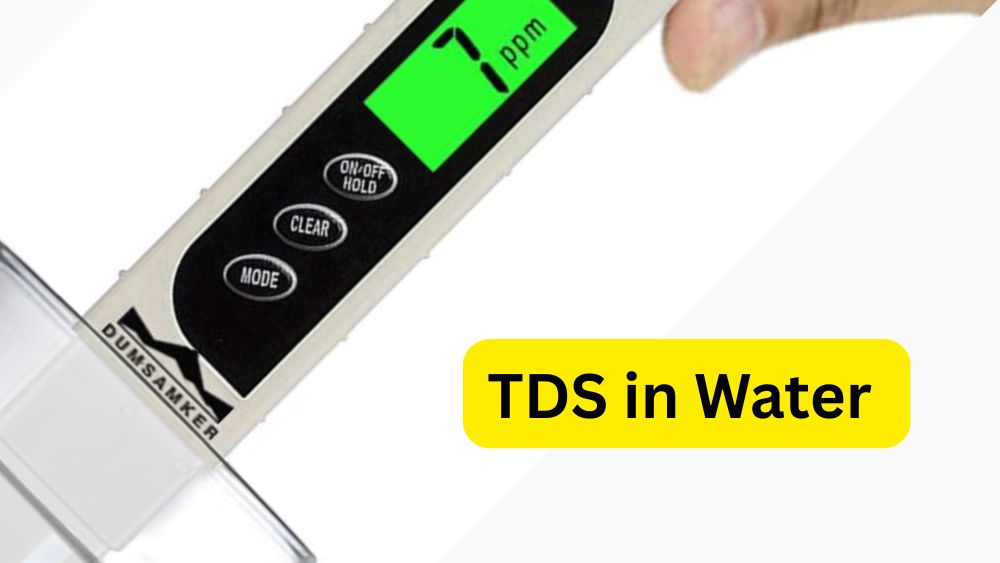
Have you ever noticed that water from different places tastes different? Sometimes it’s sweet, sometimes salty, and sometimes it even has a metallic aftertaste. This difference often comes down to TDS—Total Dissolved Solids in the water.
Most people drink water every day without knowing whether their water has too much or too little TDS. The reality is that TDS affects not only taste but also your health and household appliances. Measuring it helps you decide whether you need purification and what kind of purifier works best.
Key Takeaways
TDS (Total Dissolved Solids) measures all minerals, salts, and impurities dissolved in water.
WHO suggests safe TDS levels for drinking water should ideally be below 300 ppm.
Low TDS water may taste flat and lack essential minerals.
High TDS water may taste salty, bitter, or metallic and could harm health over time.
Measures all dissolved solids (minerals, salts, metals)
Measures only calcium and magnesium salts
Expressed in ppm (mg/L)
Expressed in ppm or degrees of hardness
Includes beneficial & harmful substances
Only indicates hardness of water
High TDS ≠ always hard water
High hardness = part of TDS
Which Water Purifier Should You Use Based on TDS?
TDS Level (ppm)
Recommended Purifier
Below 200
UV or UF
200–500
RO + UV
500–1000
RO + UV + UF
Above 1000
Advanced RO with TDS controller
Tip: If TDS is too high (>1000 ppm), RO is the only reliable method to bring it to safe levels.
Can TDS Alone Tell You If Water Is Safe?
No. TDS only measures quantity of dissolved solids, not their type. For example:
High TDS with calcium may be safe.
Low TDS with arsenic or lead is unsafe.
That’s why water testing should combine TDS measurement + lab analysis for accurate results.
Common Myths About TDS
Myth 1: Lower TDS is always better. Truth: Very low TDS water can harm health.
Myth 2: TDS tells you everything about water quality. Truth: TDS doesn’t identify individual contaminants.
Myth 3: All high TDS water is harmful. Truth: High TDS with natural minerals (like spring water) may still be safe.
How to Reduce TDS in Drinking Water?
Reverse Osmosis (RO): Best method for high TDS water.
Distillation: Effective but energy-intensive.
Deionization: Removes dissolved salts but usually combined with other methods.
Conclusion
TDS in water is not just a number—it’s the measure of what you and your family consume every day. Too high, and you risk salty taste, scaling, and possible health hazards. Too low, and you miss out on essential minerals.
The ideal TDS for drinking water is between 150–300 ppm, where safety, taste, and nutrition meet. By measuring TDS regularly and choosing the right purifier, you can ensure safe and healthy water for your family.
So the next time someone asks, “Why does my water taste funny?”—you’ll know the answer lies in TDS.
Hasan Al Sarker is a Reverse Osmosis Specialist. He has worked for many years to ensure safe drinking water for all. His research paper has been published in several journals, including Issue, Medium, and Slideshare. He is recognized as a water doctor among specialists though he did not attend medical college.
Besides working as a researcher of reverse osmosis technology, he is also very fancy with the kitchen and cooking. His guides are reading thousands of people every day. As a head of content, he is responsible for all the published articles at RO System Reviews.
Most people buy an RO water purifier and forget about it—until it stops working. At that point, you call a technician, hear names like “sediment filter” or “booster pump,” and wonder what they actually do.
Here’s the truth: an RO purifier is not just a box. It’s a carefully designed system with multiple parts, each performing a unique job. If you understand these components, you’ll know exactly how your purifier works, how to maintain it, and when to replace parts.
In this article, we’ll break down the 14 key components of an RO water purifier system, explaining their role in delivering safe, clean water.
Key Takeaways
An RO purifier has 14 main parts, from pre-filters to post-filters and pumps.
Each part plays a critical role in removing dirt, microbes, or dissolved salts.
The RO membrane is the heart of the system, while filters handle taste and odor.
Regular maintenance of these parts ensures long-lasting performance.
Knowing each component helps you troubleshoot problems faster.
What Are the 14 Components of an RO Purifier?
Here’s a quick overview before we dive deeper:
Part
Function
1. Sediment Filter
Removes dust, dirt, and sand
2. Carbon Filter (Pre)
Eliminates chlorine and chemicals
3. Booster Pump
Provides pressure for RO membrane
4. RO Membrane
Removes dissolved salts and heavy metals
5. Flow Restrictor
Maintains pressure for filtration
6. Solenoid Valve
Controls water flow
7. Check Valve
Prevents backflow of water
8. Auto Shut-Off Valve
Stops water when the tank is full
9. Storage Tank
Stores purified water
10. Post-Carbon Filter (Polishing Filter)
Improves taste and odor
11. Mineral Cartridge / TDS Controller
Adds back essential minerals
12. UV Filter (optional)
Kills bacteria and viruses
13. UF Filter (optional)
Removes suspended particles
14. Faucet / Tap
Dispenses purified water
1. What Does the Sediment Filter Do?
The sediment filter is the first line of defense. It traps dirt, sand, rust, and large particles. Without this filter, other parts (especially the RO membrane) would clog quickly.
Replacement cycle: Every 6–12 months.
2. Why Is the Carbon Pre-Filter Important?
The carbon pre-filter removes chlorine, pesticides, and harmful organic chemicals. Chlorine can damage the RO membrane, so this filter acts as a protective shield.
Replacement cycle: Every 6–12 months.
3. What Is the Role of the Booster Pump?
RO membranes need high pressure to work. The booster pump provides this pressure, especially in areas with low water supply force.
Fact: According to WHO, many Asian households have low-pressure water lines, making booster pumps essential【WHO, 2022】.
4. Why Is the RO Membrane Called the Heart of the System?
The RO membrane is the most critical part. With pores of just 0.0001 microns, it blocks dissolved salts, heavy metals, and microorganisms.
Removes fluoride, arsenic, lead, nitrates, and microplastics.
Can reject up to 95–99% of total dissolved solids (TDS).
Replacement cycle: Every 2–3 years (depending on water quality).
5. What Does the Flow Restrictor Do?
The flow restrictor controls the rate of water passing through the RO membrane. This maintains pressure and ensures proper purification.
Without it, the membrane wouldn’t function effectively.
6. What Is a Solenoid Valve in RO Systems?
The solenoid valve is an electronic switch that controls water entry. It opens when the purifier is working and closes when it stops.
This prevents continuous water flow and protects the system from damage.
7. Why Do You Need a Check Valve?
A check valve prevents purified water from flowing back into the RO membrane. Backflow can damage the membrane and reduce efficiency.
8. What Is the Role of the Auto Shut-Off Valve?
The auto shut-off valve (ASO) automatically stops water production once the storage tank is full.
This reduces water wastage and prevents overloading the system.
9. Why Is the Storage Tank Needed?
Since RO purification is a slow process, purified water is stored in a pressurized storage tank.
Typical capacity: 5–10 liters for households.
Ensures you get purified water instantly when you open the tap.
10. What Does the Post-Carbon Filter Do?
Also called a polishing filter, it removes any leftover odors and enhances taste.
Example: If RO water tastes flat, the post-carbon filter restores freshness.
Replacement cycle: Every 12 months.
11. What Is a Mineral Cartridge or TDS Controller?
Since RO removes both harmful and healthy minerals, many purifiers add a mineral cartridge or TDS controller.
Reintroduces calcium and magnesium.
Balances the taste of water.
Prevents mineral deficiency concerns.
12. What Is the UV Filter’s Function?
Some advanced RO purifiers include a UV (Ultraviolet) filter.
Uses UV light to kill bacteria and viruses.
Adds an extra layer of protection in case microbes bypass the membrane.
13. What Is the UF Filter’s Role?
A UF (Ultrafiltration) filter is sometimes added to improve water quality.
Removes bacteria, cysts, and suspended solids.
Works without electricity.
It’s especially useful for areas with muddy or turbid water.
14. Why Is the Faucet More Important Than You Think?
The faucet or tap may seem like a minor part, but it controls how you access purified water. High-quality faucets prevent leaks and ensure hygiene.
How Do These Components Work Together?
Think of an RO system like a team. Each part plays its role in sequence:
Pre-filters (sediment + carbon) clean the raw water.
Booster pump pushes water into the RO membrane.
RO membrane removes dissolved impurities.
Valves and flow restrictor manage water pressure and flow.
Purified water is stored in the tank.
Post-carbon filter improves taste.
Optional UV/UF layers add final safety.
Faucet dispenses clean water.
Why Regular Maintenance of Parts Is Essential
Without maintenance, parts clog or fail, reducing efficiency.
Sediment and carbon filters → protect the RO membrane.
RO membrane → protects your health.
Valves and pumps → protect the entire system.
Stat Insight: Studies show that unmaintained RO systems can lose 40% efficiency within 18 months【CDC, 2021】.
Pros and Cons of Each RO Component
Part
Pros
Cons
Sediment Filter
Protects membrane
Needs frequent replacement
Carbon Filter
Removes chlorine
Short lifespan
Booster Pump
Enables proper RO
Requires electricity
RO Membrane
Removes most impurities
Expensive to replace
Storage Tank
Ensures availability
Can get contaminated if not cleaned
Post-Carbon Filter
Improves taste
Needs yearly replacement
Mineral Cartridge
Restores minerals
May increase cost
Conclusion
An RO purifier isn’t just a single machine—it’s a system of 14 interdependent parts. From the humble sediment filter to the high-tech RO membrane, each component ensures that the water you drink is safe and pure.
By understanding these parts, you can:
Maintain your system better.
Save money by replacing parts on time.
Troubleshoot problems before calling a technician.
Remember, the health of your RO purifier directly affects your health. Knowing its components is the first step toward safe, clean water for your family.
Hasan Al Sarker is a Reverse Osmosis Specialist. He has worked for many years to ensure safe drinking water for all. His research paper has been published in several journals, including Issue, Medium, and Slideshare. He is recognized as a water doctor among specialists though he did not attend medical college.
Besides working as a researcher of reverse osmosis technology, he is also very fancy with the kitchen and cooking. His guides are reading thousands of people every day. As a head of content, he is responsible for all the published articles at RO System Reviews.
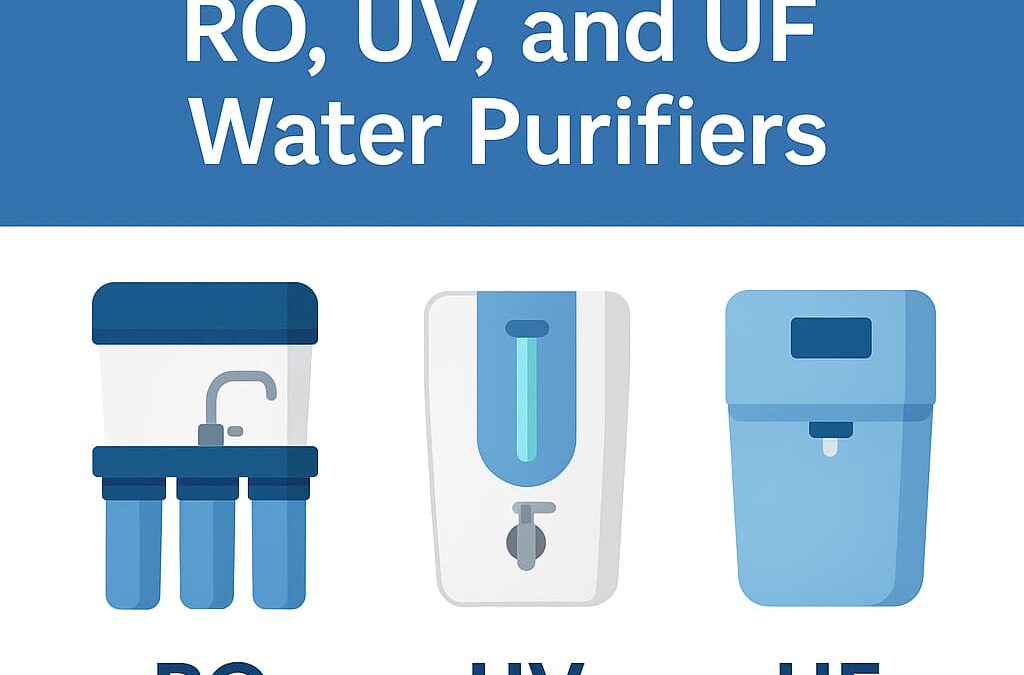
Walk into any appliance store or browse online, and you’ll see dozens of water purifiers with terms like RO, UV, and UF plastered on their labels. If you feel confused, you’re not alone. Most people don’t know which one to pick, yet water is something you and your family consume daily.
The truth is, the right purifier depends on your water source, level of contamination, and budget. To make the right choice, you need to understand the differences between RO, UV, and UF purifiers—what they do, how they work, and where they fit best.
Key Takeaways
RO (Reverse Osmosis) removes dissolved salts, heavy metals, and microbes. Best for hard or salty water.
UV (Ultraviolet) kills bacteria and viruses but does not remove salts or chemicals. Best for municipal tap water.
UF (Ultrafiltration) removes bacteria, cysts, and dirt but not dissolved salts. Best for low TDS water.
Combination purifiers (RO+UV+UF) offer the most comprehensive protection.
The right choice depends on your TDS level (measured in ppm) and source contamination.
What Is an RO Purifier?
RO (Reverse Osmosis) is a water purification method that uses a semi-permeable membrane with microscopic pores (0.0001 microns). When pressure is applied, only water molecules pass through, while dissolved salts, heavy metals, and microbes are removed.
Best for: Borewell water, hard water, or salty water with high TDS (above 300 ppm).
Key Benefits of RO
Removes 95–99% of dissolved salts and metals (like arsenic, lead, fluoride).
Makes water safe even in industrial or polluted areas.
Improves taste by reducing salinity.
Drawbacks of RO
Wastes water (2–3 liters for every 1 liter purified).
Removes essential minerals along with impurities.
Needs electricity and regular maintenance.
What Is a UV Purifier?
UV (Ultraviolet) water purifiers use high-intensity UV light to kill bacteria, viruses, and other microbes. The process does not remove particles, dirt, or dissolved salts—it only sterilizes pathogens.
Best for: Municipal tap water or water sources with low TDS but high microbial risk.
Key Benefits of UV
Kills 99.9% of harmful microorganisms.
Preserves natural taste and minerals in water.
Eco-friendly: no water is wasted.
Drawbacks of UV
Cannot remove dissolved salts, chemicals, or heavy metals.
Requires clear water (turbid or dirty water reduces effectiveness).
Needs electricity to run.
What Is a UF Purifier?
UF (Ultrafiltration) water purifiers use a membrane with larger pores (0.01 microns) compared to RO. It blocks bacteria, cysts, and dirt but cannot remove dissolved salts or chemicals.
Best for: Low TDS water (under 300 ppm) from municipal supply.
Key Benefits of UF
Works without electricity.
Removes bacteria and large particles effectively.
Maintenance is simpler than RO.
Drawbacks of UF
Cannot handle hard water or high TDS.
Does not remove dissolved chemicals or salts.
Less effective than RO for industrial contaminants.
How Do RO, UV, and UF Compare?
Here’s a quick comparison table:
Feature
RO (Reverse Osmosis)
UV (Ultraviolet)
UF (Ultrafiltration)
Removes dissolved salts & metals
✅ Yes
❌ No
❌ No
Kills bacteria & viruses
✅ Yes
✅ Yes
✅ Yes
Removes chemicals (fluoride, arsenic, lead)
✅ Yes
❌ No
❌ No
Removes dirt & turbidity
✅ Yes
❌ No
✅ Yes
Works without electricity
❌ No
❌ No
✅ Yes
Wastes water
❌ Yes (2–3 liters wasted per liter purified)
✅ No
✅ No
Best suited for
High TDS (salty or borewell water)
Low TDS tap water with microbes
Low TDS municipal supply
When Should You Choose an RO Purifier?
Choose RO if:
Your water tastes salty or bitter.
You rely on borewell water.
TDS levels are above 300 ppm.
You live in industrial areas with chemical contamination.
Stat Insight: According to a WHO study, 20% of the world’s population relies on groundwater with unsafe TDS levels【WHO, 2022】. RO is the most effective solution here.
When Should You Choose a UV Purifier?
Choose UV if:
You get treated municipal water.
TDS levels are low (below 200 ppm).
The only concern is bacteria, viruses, or microorganisms.
Real Example: In many urban Indian cities, municipal water supply meets TDS standards but still carries microbial risks. UV purifiers are recommended.
When Should You Choose a UF Purifier?
Choose UF if:
You have low TDS water (like municipal supply).
You want a purifier that works without electricity.
You live in areas with frequent power cuts.
Stat Insight: In rural areas of Bangladesh, NGOs distribute low-cost UF purifiers because they don’t need electricity and can reduce bacterial risks effectively【UNICEF, 2021】.
Do You Need a Combination Purifier?
Modern purifiers often combine RO + UV + UF.
RO removes dissolved salts.
UV kills microbes.
UF removes dirt and turbidity.
Best for: Families who want comprehensive protection regardless of water source.
Example: Kent, Aquaguard, and Pureit now sell combination systems because most consumers want “all-in-one” safety.
Pros and Cons at a Glance
Type
Pros
Cons
RO
Removes salts, chemicals, microbes
Wastes water, removes minerals
UV
Kills microbes, eco-friendly, preserves taste
Doesn’t remove salts, needs clear water
UF
Works without electricity, removes dirt & microbes
Doesn’t remove salts, not effective for hard water
Which Purifier Is Best for You?
Here’s a simple guide based on TDS level:
TDS Level (ppm)
Recommended Purifier
Below 200 ppm
UV or UF
200–500 ppm
RO + UV
500–1000 ppm
RO + UV + UF
Above 1000 ppm
Advanced RO with TDS controller
Tip: Always test your water’s TDS before buying a purifier. You can use a simple TDS meter available online.
Conclusion
The difference between RO, UV, and UF water purifiers lies in what each one removes:
RO is best for salty, hard, or chemically contaminated water.
UV is ideal for low TDS municipal water with microbial risks.
UF is suitable for low TDS areas without electricity.
If you’re still unsure, a combination purifier (RO+UV+UF) gives all-around protection. At the end of the day, the right choice depends on your local water quality and your family’s health needs.
By understanding these differences, you can make a smart decision and ensure safe, clean water every day.
Hasan Al Sarker is a Reverse Osmosis Specialist. He has worked for many years to ensure safe drinking water for all. His research paper has been published in several journals, including Issue, Medium, and Slideshare. He is recognized as a water doctor among specialists though he did not attend medical college.
Besides working as a researcher of reverse osmosis technology, he is also very fancy with the kitchen and cooking. His guides are reading thousands of people every day. As a head of content, he is responsible for all the published articles at RO System Reviews.