
The sulfur smell in water is a common issue that can affect homes, businesses, and even public water supplies. If you have ever noticed a rotten egg odor when running your tap, you are not alone. This smell can make water unpleasant to drink, bathe with, or use for cooking. The problem often signals something deeper about your water source, plumbing, or treatment system. Understanding the causes, signs, and solutions is key to restoring clean, odor-free water.
Understanding Sulfur Smell In Water
The main cause of the sulfur smell is hydrogen sulfide gas. When this gas dissolves in water, it produces a distinct odor similar to rotten eggs. Hydrogen sulfide can be naturally present in groundwater or produced by bacteria. The smell can be strong or weak, depending on the concentration.
Hydrogen sulfide levels are measured in milligrams per liter (mg/L). Even as little as 0. 05 mg/L can create a noticeable odor. Most public water systems aim to keep levels below 0. 1 mg/L. According to the U. S. Geological Survey, some private wells in rural areas may have levels as high as 1–5 mg/L.
How Sulfur Smell Develops
Hydrogen sulfide forms in several ways:
- Bacterial activity: Certain bacteria, called sulfur bacteria, thrive in low-oxygen environments. They convert natural sulfur compounds into hydrogen sulfide gas.
- Organic matter decay: Decomposing leaves, plants, or other organic materials in wells or pipes can release hydrogen sulfide.
- Chemical reactions: Water with high levels of sulfate can react with plumbing metals, especially iron, to produce hydrogen sulfide.
- Groundwater geology: Some rocks and soils naturally contain sulfur. When water moves through these layers, it picks up hydrogen sulfide.
Credit: culliganlaoc.com
Why Sulfur Smell Matters
The sulfur smell is more than just an inconvenience. It can signal problems with water quality and affect health, plumbing, and daily life.
- Health risks: While low levels are not usually dangerous, high concentrations can cause nausea, headaches, or worsen asthma. Levels above 2 mg/L may irritate eyes and respiratory tract.
- Plumbing damage: Hydrogen sulfide can corrode pipes, especially copper and iron. This leads to leaks and costly repairs.
- Staining: Water with sulfur can leave black stains on sinks, tubs, and laundry.
- Taste and odor: The smell and taste make water unpleasant, reducing its use for drinking and cooking.
Practical Examples And Real-life Cases
Let’s look at real situations:
- Rural wells: In states like Florida and Texas, over 12% of private wells report sulfur odor due to natural geology and bacteria.
- Municipal systems: In 2022, a city in Ohio received 500+ complaints about sulfur smell after a flood contaminated local wells.
- Homes with water heaters: Many calls to plumbers come from homes where the odor appears only in hot water. This is often due to bacteria in the water heater.
- Seasonal changes: After heavy rains, organic material may enter wells, raising hydrogen sulfide levels by up to 0.5 mg/L.
Credit: www.cleanwaterstore.com
Signs And Indicators Of Sulfur Smell
Recognizing the problem is the first step. Here are some clear indicators:
- Rotten egg odor: Most noticeable when running taps or showers.
- Black stains: Found on bathroom fixtures or laundry.
- Metallic taste: Some water may taste odd due to hydrogen sulfide.
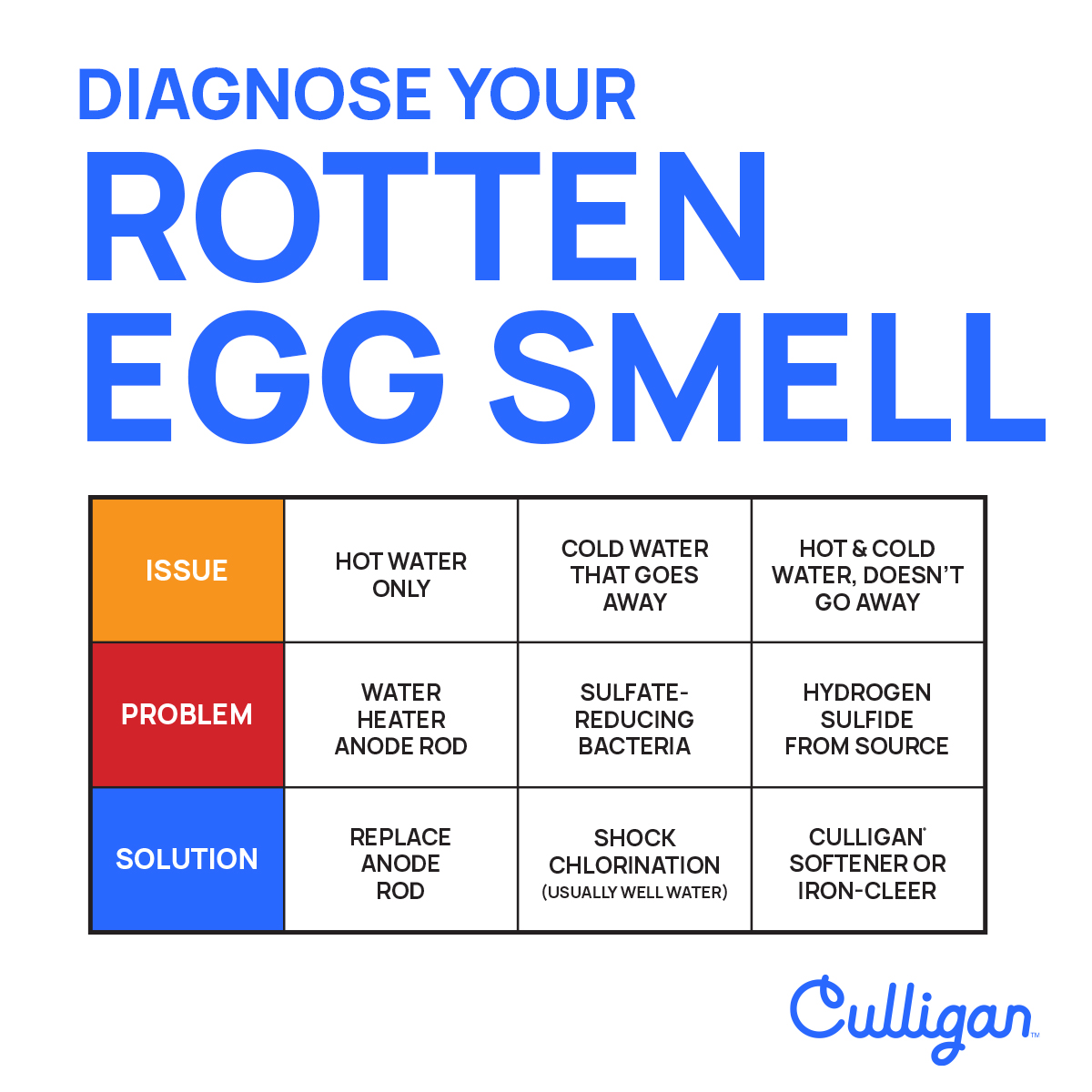
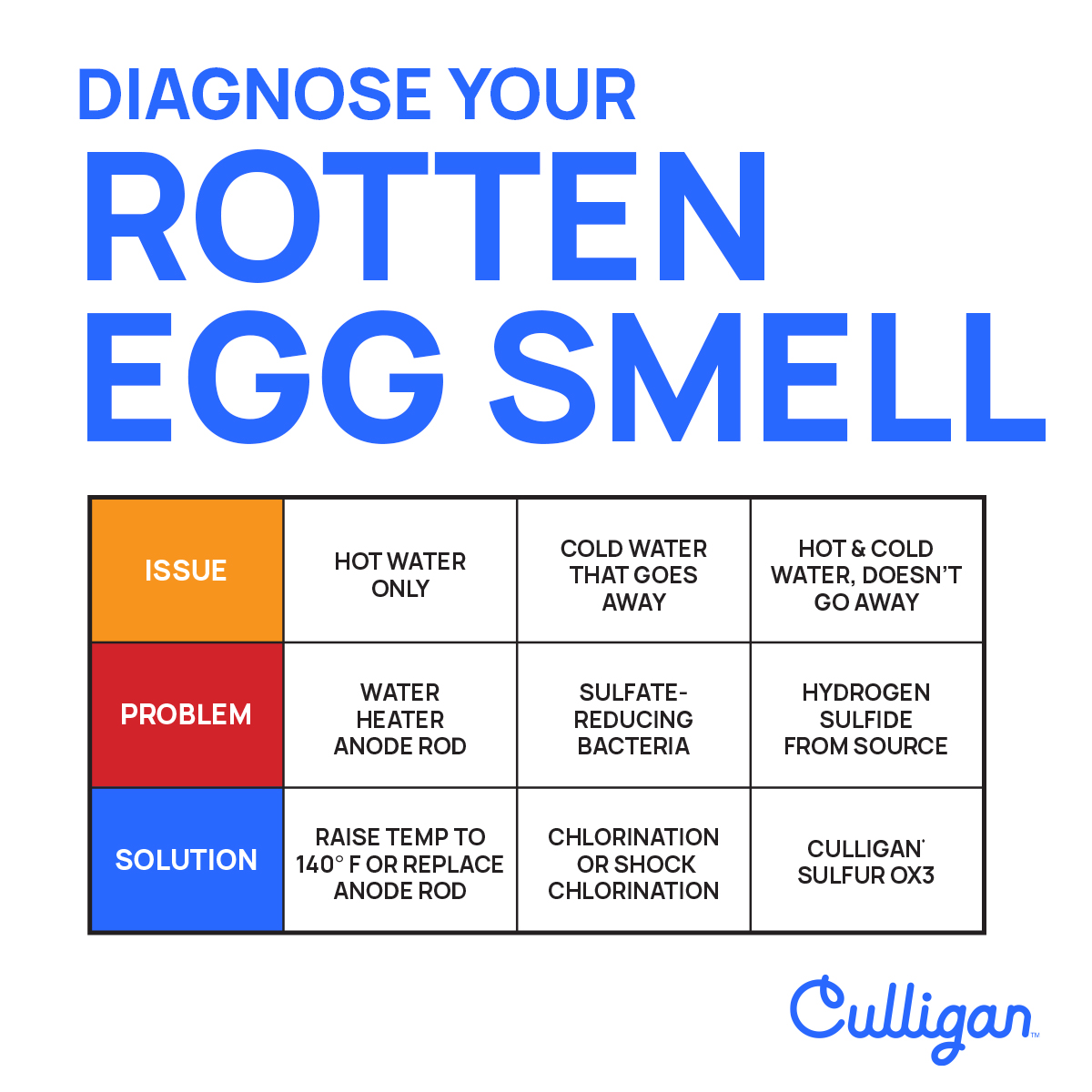
- Odor only in hot water: This points to the water heater as the source.
- Odor in all taps: Suggests the issue is in the well or main supply.
Step-by-step Guidance To Diagnose Sulfur Smell
To solve the sulfur smell, follow these steps:
- Test your water: Use a certified lab or home test kit. Check for hydrogen sulfide, iron, and bacteria. Results usually take 1–3 days.
- Identify affected taps: Note if the smell is present in all water or just hot/cold.
- Inspect the water heater: Turn off the heater, drain it, and check for odor. Replace the magnesium anode rod with an aluminum one if needed.
- Check the well: Inspect for organic matter or debris. Clean and disinfect the well if necessary.
- Review plumbing: Look for corroded pipes or fittings. Replace damaged parts.
- Consult local authorities: If using public water, contact your utility for help.
Common Problems And Solutions
Sulfur smell can be stubborn, but most causes have clear solutions.
Problem 1: Bacteria In Water Heater
Solution: Flush the heater. Replace the magnesium anode rod with an aluminum-zinc rod. Set the temperature above 140°F (60°C) for a few hours to kill bacteria.
Problem 2: Sulfur Bacteria In Well
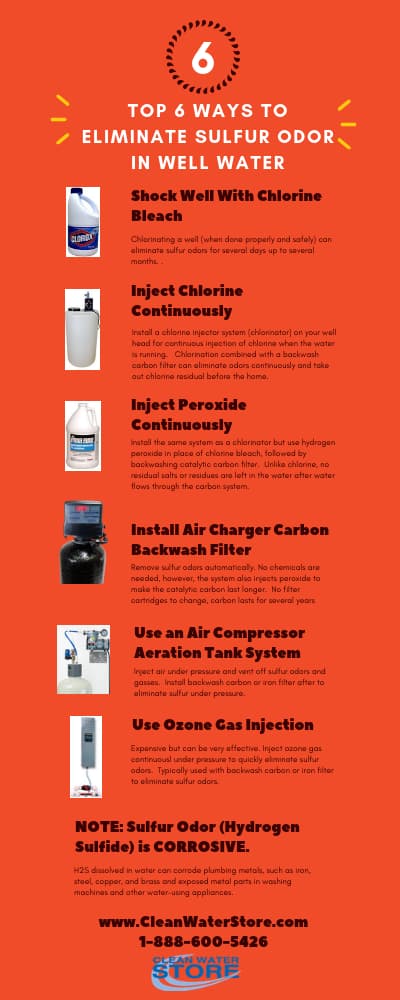
Solution: Shock chlorinate the well. Use 1–2 gallons of household bleach per 100 gallons of water. Let it sit 12–24 hours, then flush.
Problem 3: Natural Hydrogen Sulfide In Groundwater
Solution: Install an activated carbon filter or aeration system. Activated carbon removes odors, while aeration vents hydrogen sulfide gas.
Problem 4: Corroded Pipes
Solution: Replace corroded sections with plastic or stainless steel. Regularly inspect plumbing.
Problem 5: Seasonal Contamination
Solution: Clean wells after storms. Install well caps to prevent organic debris.
Maintenance Tips For Odor-free Water
Regular care can prevent sulfur smell. Here are expert tips:
- Test water annually: Use a certified lab to check for hydrogen sulfide and bacteria.
- Flush water heaters: Every 6–12 months, drain and flush to remove bacteria.
- Clean wells: Remove debris and disinfect after floods or heavy rains.
- Check filters: Replace carbon filters every 6 months.
- Inspect plumbing: Look for corrosion and leaks.
- Use aeration: For persistent odor, install an aeration unit or contact a water treatment professional.
Comparison Table: Causes And Solutions
Here is a summary of key causes and best solutions.
| Cause | Typical Hydrogen Sulfide Level (mg/L) | Main Solution | Cost Estimate (USD) |
|---|---|---|---|
| Bacteria in water heater | 0.1–1.0 | Flush heater, replace rod | 50–200 |
| Sulfur bacteria in well | 0.5–5.0 | Shock chlorination | 100–300 |
| Natural groundwater hydrogen sulfide | 0.1–5.0 | Carbon filter or aeration | 200–800 |
| Corroded pipes | N/A | Pipe replacement | 150–500 |
| Organic matter decay | 0.1–2.0 | Well cleaning | 100–400 |
Why Hydrogen Sulfide Is Often Overlooked
Many people ignore the sulfur smell, thinking it is harmless. However, hydrogen sulfide can cause real problems. It may hide more serious issues like plumbing corrosion or bacterial contamination. In rural areas, well owners may not test water regularly, missing rising hydrogen sulfide levels.
City water users often assume their supply is always safe, but events like floods or pipe breaks can introduce sulfur bacteria.
A non-obvious insight is that even small changes in water chemistry can increase odor. For example, using a new water softener or changing plumbing materials can release more hydrogen sulfide. Another overlooked factor is temperature. Warm water speeds up bacterial activity, making odors worse in summer or after heating.
Expert Insights For Long-term Water Quality
From years of fieldwork, I can say regular testing is the single most effective step. Many clients who ignored testing saw problems get worse—plumbing damage and higher repair bills. Proper maintenance, such as flushing heaters and cleaning wells, prevents most odors.
Another tip: Always check both hot and cold taps. If only hot water smells, the heater is likely the source. If all taps smell, test your well or main supply.
Frequently Asked Questions
What Is Hydrogen Sulfide And Why Does It Smell Like Rotten Eggs?
Hydrogen sulfide is a gas that forms when sulfur bacteria break down organic matter. It smells like rotten eggs because it is the same compound released by decaying eggs and organic waste.
Is Sulfur Smell In Water Dangerous To Health?
Low levels usually do not harm healthy adults. However, higher concentrations above 2 mg/L can cause headaches, nausea, or worsen asthma. Babies and elderly people are more sensitive.
Can I Drink Water With A Sulfur Smell?
While the odor is unpleasant, it is not dangerous at low levels. If the smell is strong or you notice health symptoms, have your water tested and use a filter before drinking.
How Can I Remove The Sulfur Smell From Water?
Common solutions include flushing the water heater, shock chlorinating the well, and installing carbon filters or aeration units. Regular maintenance and testing also help prevent the smell.
Will Boiling Water Remove The Sulfur Smell?
Boiling water may reduce the odor slightly, but it does not remove hydrogen sulfide gas completely. Filtration or aeration is more effective for lasting results.
Credit: culliganontario.com
Key Takeaway
The sulfur smell in water is usually caused by hydrogen sulfide gas from bacteria, organic matter, or chemical reactions. It can lead to health concerns, plumbing damage, and staining. Regular testing, proper maintenance, and targeted solutions are the best ways to keep your water clean and odor-free. If you notice a rotten egg smell, act quickly to find and fix the cause. For more detailed information, visit the EPA Drinking Water resource and Wikipedia: Hydrogen Sulfide.

Hasan Al Sarker is a Reverse Osmosis Specialist. He has worked for many years to ensure safe drinking water for all. His research paper has been published in several journals, including Issue, Medium, and Slideshare. He is recognized as a water doctor among specialists though he did not attend medical college.
Besides working as a researcher of reverse osmosis technology, he is also very fancy with the kitchen and cooking. His guides are reading thousands of people every day. As a head of content, he is responsible for all the published articles at RO System Reviews.