Are you worried about the chlorine in your tap water? Chlorine is commonly used to kill germs, but it can leave your water tasting and smelling unpleasant.
More importantly, too much chlorine might affect your health and the health of your family. The good news is, removing chlorine from your water is easier than you think. You’ll discover simple, effective ways to get rid of chlorine and enjoy cleaner, better-tasting water every day.
Keep reading to learn how you can take control of your water quality now.
Sources Of Chlorine In Water
Chlorine is a common chemical found in many water supplies. It is added to water to keep it safe from germs and bacteria. Understanding where chlorine comes from helps explain why it is present in your water.
Chlorine can enter water from several sources. These sources affect the taste and smell of the water. Knowing these sources helps when deciding how to remove chlorine.
Chlorine In Tap Water
Most tap water contains chlorine. Water companies add chlorine to kill harmful microbes. This process makes the water safe to drink. Tap water usually has low levels of chlorine.
The smell of chlorine in tap water is common. Some people find this smell strong or unpleasant. Chlorine levels are checked regularly to keep water safe.
Reasons For Chlorine Use
Chlorine is used to kill bacteria and viruses. It prevents diseases that spread through water. Chlorine keeps water clean during storage and transport.
Using chlorine is a simple and cost-effective method. It protects public health by reducing waterborne illnesses. Chlorine also helps remove harmful chemicals and impurities.
Health Effects Of Chlorine
Chlorine is a common chemical used to kill germs in water. It helps keep water safe to drink by removing bacteria and viruses. Despite this benefit, chlorine can affect health in different ways. Understanding these effects helps people decide how to treat their water.
Short-term Impacts
Chlorine in water can cause irritation in the eyes and skin. Some people feel itching or dryness after showering. Drinking water with chlorine may upset the stomach. It can cause nausea or a slight burning feeling. These effects usually stop when chlorine levels go down.
Long-term Concerns
Long exposure to chlorine may affect the lungs and breathing. Some studies link chlorine to asthma or other breathing problems. Drinking chlorinated water for many years might increase risks of certain cancers. Chemicals formed when chlorine mixes with organic matter may cause harm. Using filters can reduce these risks by removing chlorine.
Boiling Water
Boiling water is a simple and effective way to remove chlorine. It uses heat to change chlorine into a gas. This gas then leaves the water. Boiling also kills germs, making water safer to drink. This method works well at home and does not need special tools.
How Boiling Removes Chlorine
Chlorine is a gas dissolved in water. When water heats up, chlorine turns back into gas. This gas escapes into the air. Boiling speeds up this process. The longer water boils, the more chlorine leaves. Boiling also removes chloramine less effectively, so other methods may be needed.
Best Practices For Boiling
Use a clean pot for boiling water. Bring water to a rolling boil. Keep it boiling for at least 15 minutes. Cover the pot to avoid dust and germs. Let the water cool before use. Store boiled water in a clean, closed container. Use boiled water within 24 hours for freshness.
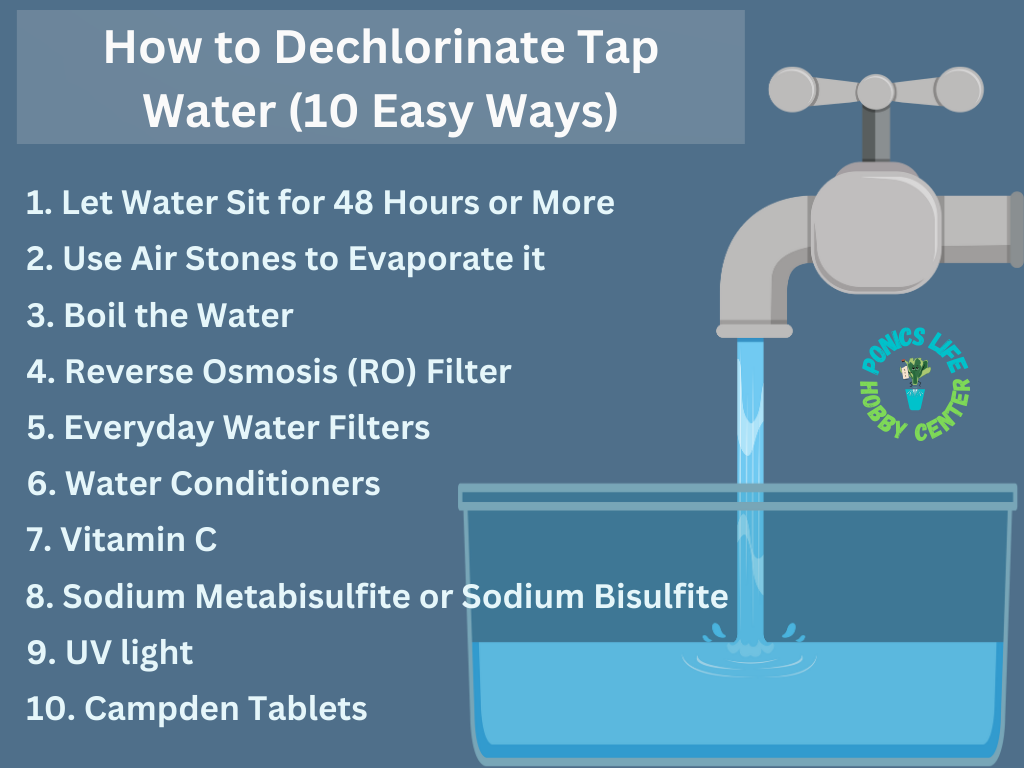
Credit: ponicslife.com
Using Activated Carbon Filters
Activated carbon filters are effective tools to remove chlorine from water. These filters trap chlorine molecules and improve water taste and smell. They work by adsorption, where chlorine sticks to the carbon surface. This process reduces chlorine levels quickly and safely.
Types Of Carbon Filters
Granular activated carbon (GAC) filters use small carbon particles. Water passes through these particles, allowing chlorine to get absorbed. GAC filters are common in home water pitchers and under-sink units.
Carbon block filters have compressed carbon material. They provide a larger surface area to capture chlorine. These filters usually last longer and remove more impurities than GAC filters.
Some filters combine activated carbon with other materials. This helps remove chlorine along with other contaminants. Choose a filter based on your water quality and needs.
Installation And Maintenance Tips
Install filters on the main water line or at the point of use. Follow the manufacturer’s instructions carefully for best results. Proper installation ensures water flows through the carbon effectively.
Replace carbon filters regularly to keep chlorine removal efficient. Most filters need changing every 3 to 6 months. Check water taste and smell to know when replacement is due.
Clean filter housings during each replacement to avoid bacteria buildup. Flush the filter after installation to remove loose carbon particles. Regular maintenance keeps your water clean and safe.
Chemical Neutralization
Chemical neutralization is a simple way to remove chlorine from water. It uses substances that react with chlorine. This reaction changes chlorine into harmless compounds. This method works fast and is easy to do at home. It is safe for drinking water and for plants and fish.
Using Vitamin C
Vitamin C is a natural and effective way to remove chlorine. Ascorbic acid or sodium ascorbate neutralizes chlorine quickly. You can add a small amount to the water. It breaks down chlorine into non-toxic substances. This method is safe for pets and aquarium fish. Vitamin C also removes chloramine, a chlorine-based chemical.
Other Neutralizing Agents
Sodium thiosulfate is a common chemical used to neutralize chlorine. It works by converting chlorine to chloride, which is harmless. This agent is often used in water treatment and aquariums. Another option is hydrogen peroxide. It reacts with chlorine to form water and oxygen. These agents are available in liquid or powder form. Always follow instructions for safe and effective use.

Credit: sciencenotes.org
Letting Water Sit
Letting water sit is a simple and natural way to remove chlorine. Chlorine is a gas that evaporates from water over time. This method does not need special tools or chemicals. Just pour water into a clean container and leave it uncovered. The chlorine will slowly disappear, making the water safer and better tasting.
Time Required For Chlorine Evaporation
Chlorine usually takes a few hours to evaporate from water. Most of it leaves within 24 hours. Leaving water overnight is often enough to remove chlorine. If you want faster results, pour water into a wide container. More surface area helps chlorine escape quicker.
Factors Affecting Effectiveness
Temperature affects how fast chlorine evaporates. Warmer water speeds up the process. Cooler water slows it down. Air flow also matters. A breezy or ventilated space helps remove chlorine faster. Covering water will trap chlorine inside. Use an open container for best results.
Ultraviolet Light Treatment
Ultraviolet (UV) light treatment offers a chemical-free way to remove chlorine from water. It uses light energy to change the chlorine molecules. This method is safe and does not add anything to the water. Many people choose UV treatment for clean and fresh water at home.
How Uv Breaks Down Chlorine
UV light breaks chlorine into harmless parts. The light energy causes a chemical reaction. This reaction splits the chlorine molecules. The process turns chlorine into chloride ions, which are safe. UV light works quickly and without chemicals. It also helps reduce other harmful substances in water.
System Options For Home Use
There are many UV systems made for home use. Some are small and fit under the sink. Others attach to your main water supply. Most systems have a UV lamp inside a protective tube. Water flows past the lamp, and the light treats it. These units need power and regular lamp changes. Many come with easy installation guides for homeowners.

Credit: www.youtube.com
Choosing The Right Method
Choosing the right method to remove chlorine from water depends on several key factors. Each method has strengths and weaknesses. Understanding these helps pick the best fit for your needs. Consider how much water you use, your budget, and the effort you can spend on maintenance. This guide will help you decide with clear points.
Water Usage Needs
Think about how much water you need every day. For small amounts, simple methods like letting water sit can work. For large families or businesses, filtration systems are better. Some methods treat water instantly. Others take time. Choose a method that matches your daily water volume. This saves time and ensures clean water is always ready.
Cost Considerations
Costs vary widely between chlorine removal methods. Some require a one-time purchase. Others have ongoing costs for replacement parts or chemicals. Set a budget before choosing. Low-cost options may need more effort or time. Higher-cost systems often work automatically and need less daily attention. Balance your budget with your water needs to find the best choice.
Maintenance Requirements
Maintenance affects how easy a method is to use over time. Some methods need regular cleaning or filter changes. Others only need occasional checks. Choose a method that fits your schedule and skills. Easy maintenance means less hassle and longer system life. Consider who will do the upkeep and how often. This keeps your water clean without extra stress.
Frequently Asked Questions
How Can I Remove Chlorine From Tap Water At Home?
You can remove chlorine by boiling water, using activated carbon filters, or letting water sit uncovered for 24 hours. These methods allow chlorine to evaporate or get absorbed, making the water safer and better tasting for daily use.
Does Boiling Water Remove Chlorine Effectively?
Yes, boiling water for 15-20 minutes helps chlorine evaporate. This method is simple and chemical-free. However, it may not remove chloramine, a more stable chlorine compound sometimes used in water treatment.
What Filter Types Remove Chlorine From Water?
Activated carbon filters and reverse osmosis systems effectively remove chlorine. Carbon filters absorb chlorine molecules, improving taste and odor. Choose a filter certified for chlorine removal for best results.
Is Chlorine Removal Necessary For Drinking Water Safety?
Removing chlorine improves taste and reduces exposure to harmful byproducts. Chlorine is safe in small amounts but can cause irritation or health issues with long-term exposure. Removing it ensures cleaner, fresher water.
Conclusion
Removing chlorine from water is simple with the right methods. Choose a way that fits your needs and budget. Using filters, boiling, or letting water sit works well. Clean water tastes better and feels safer. Keep your water fresh and healthy every day.
Small steps make a big difference in water quality. Stay informed and protect your family’s health easily. Clean water is key to a healthy life.

Hasan Al Sarker is a Reverse Osmosis Specialist. He has worked for many years to ensure safe drinking water for all. His research paper has been published in several journals, including Issue, Medium, and Slideshare. He is recognized as a water doctor among specialists though he did not attend medical college.
Besides working as a researcher of reverse osmosis technology, he is also very fancy with the kitchen and cooking. His guides are reading thousands of people every day. As a head of content, he is responsible for all the published articles at RO System Reviews.